
Charlotte has ‘other priorities’ than new Panthers headquarters, city councilman says
As the Panthers search for a new home for a headquarters after nixing an agreement with Rock Hill, South Carolina, the team could face challenges if it decides to build in Charlotte.
Last month, Tepper Sports & Entertainment, which is owned by Panthers’ owner David Tepper, terminated the deal with Rock Hill after the city failed to to issue $225 million in bonds to pay for construction of the facility.
Is Charlotte the next landing spot? When asked by The Charlotte Observer last week what’s next for the Panthers’ headquarters, Panthers owner and billionaire David Tepper said: “Everything makes sense if we can find the right situation.”
Similar to Rock Hill, a Charlotte facility could require public funding. But at this point, Charlotte is unlikely to commit public dollars to help build a new headquarters, Charlotte City Councilman Malcolm Graham told The Charlotte Observer.
“Yeah, right now, we have other priorities we’re working with,” said Graham, who heads the city’s economic development committee. “Dollars are limited. The biggest thing is we have other priorities.”
Those priorities include breaking ground on the former Eastland Mall site, which is expected to house Charlotte FC’s Academy headquarters, also owned by Tepper. The site also has faced delays, but it is expected to break ground in the next 30-45 days, Graham said.
The city is also contractually obligated to provide renovations on the Spectrum Center, where the Charlotte Hornets play.
“As we talk with the Panthers, we’re also talking with the Hornets,” Graham said. “It’s priorities and dollars, and making sure we’re focused on what we said we were going to do, and we do it right and we have the resources available to us to participate. It’s a matter of priorities.”
Another critical component is finding land to build another site. The South Carolina headquarters was supposed to be built on a 240-acre property. Tepper has expressed interest in the past in buying the Charlotte Pipe and Foundry land a few blocks away from the stadium. It was rezoned in December to allow for a new stadium.
But since it was rezoned, Towanda Long, a spokesperson for Pipe and Foundry, said there have been no discussions with the Panthers about purchasing the land. The property is 55 acres.
County officials also said they weren’t aware of any conversations between the Panthers and Mecklenburg County.
Commissioner Mark Jerrell said the county might get pulled into it one way or another if the city strikes a deal.
“The city leads these types of discussions, but there’s always not quite enough for them to come into these deals,” Jerrell said. “It always needs some level of county participation.”
Just before the deal with Rock Hill fell through, Mecklenburg County Board of County Commissioners Chair George Dunlap told the Observer that Rock Hill would be “missing out on a great opportunity — one I wish Mecklenburg County could have been involved in in the first place.”
.JPG "IMG_TK_Carolina_Panthers_3_1_CSM1PUDC_L713171708 (1).JPG")
Generating support
The Panthers hoped to move their headquarters from the 7-acre property at Bank of America Stadium to the 240-acre property in Rock Hill by 2023.
South Carolina offered about $115 million in incentives for the Panthers, while Rock Hill agreed to obtain bonds worth $225 million to pay for construction.
The nearly 700,000-square-foot facility was supposed to be a big economic boost for both the city and South Carolina. It would have been the largest such facility in the NFL and was intended to be a sports and entertainment venue for events from soccer games to high school sports championships and corporate events and concerts.
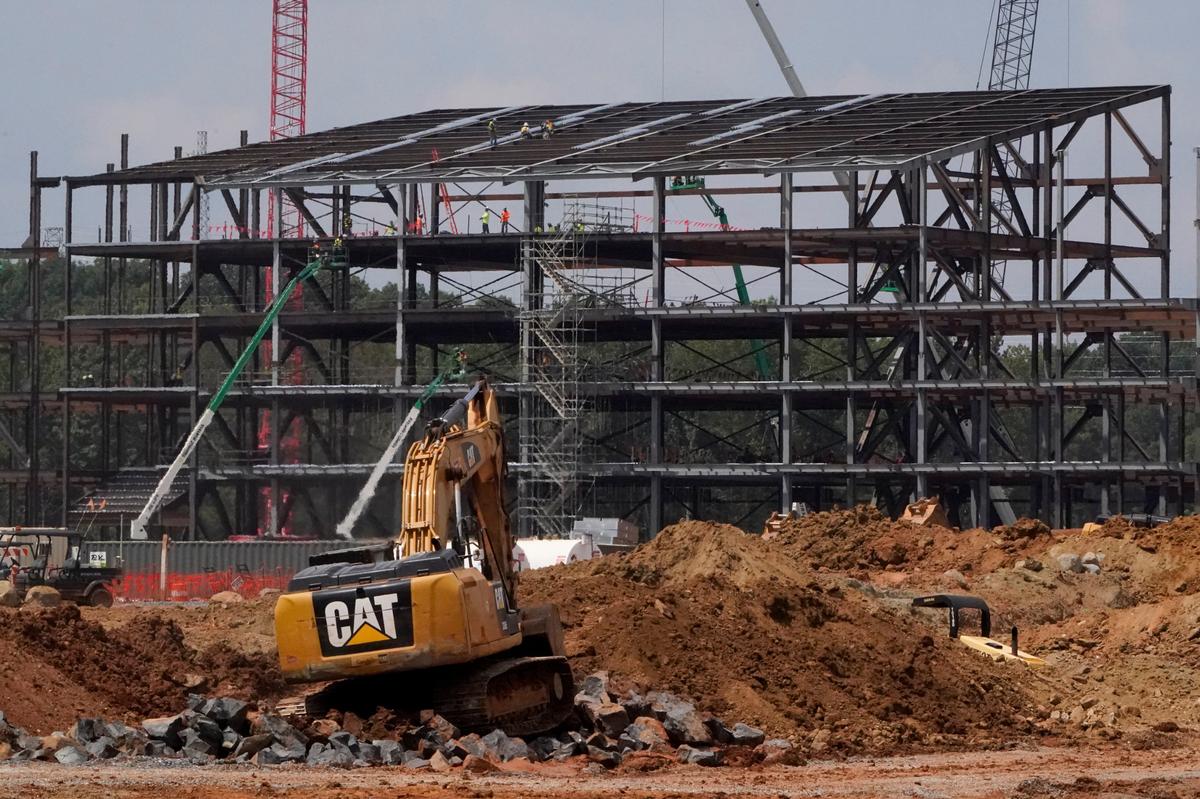
Construction on the facility began in 2020. Before construction came to a halt in March, Observer photographs showed a structure built with steel frames and a roof.
But where the Panthers go next remains uncertain. A source with direct knowledge of the situation told the Observer last month “the deal is dead” about the Panthers’ facility in Rock Hill.
Support of Charlotte’s City Council remains uncertain because it’s an election year, and the makeup of its members could change. Council members will play a big role in deciding how much to give the Panthers in incentives or whether to give any public incentives for new facilities at all.
The primary is May 17 and the general election for City Council is in July.
As part of its Voter Guide, The Charlotte Observer conducted a survey asking candidates their views on using public money to help build or improve private sports facilities or stadiums. Their answers ranged from flat out “No,” to candidates who are open about it as long as it benefits and provides jobs for its residents.
“Almost all economists and development specialists ... conclude that the rate of return a city or metropolitan area receives for its investment is generally below that of alternative projects,” wrote Cedric Dean, a Democrat running for a seat in District 4 who was not in favor of it. “In addition, evidence suggests that cities and metro areas that have invested heavily in sports stadiums and arenas have, on average, experienced slower income growth than those that have not.”
Wrote Marjorie Molina, a Democrat running for the District 5 seat: “While encouraging development, especially in East Charlotte where jobs aren’t created and naturally occurring affordable housing projects are the highest in our city, public money needs to be attached to incentives that encourage job opportunities for the constituents.”
Liz Millsaps Haigler, who is also running in District 5 as a Democrat, disagreed.
“I am so excited that Mr. Tepper has 2 pools of enthusiastic fans to buy seat licenses to finance a new stadium,” she wrote. “That is the only equitable way to fund these facilities.
Republican at-large candidate Kyle Luebke said the city should put its focus elsewhere.
“Our City is struggling with affordable housing, small business development, economic mobility and transportation issues,” he wrote. “With limited public dollars, right now our City resources should be focused on fixing those issues as opposed to funding more stadiums.”
Most candidates said they were supportive, but only under certain circumstances.
Former Mayor Patrick Cannon, who is running for an at-large City Council seat, said in his questionnaire response he opposes using public money to pay for stadiums if it requires raising property taxes. He does support other revenue sources for that money, including a hotel or motel tax paid by visitors.
James “Smuggie” Mitchell, a former councilman running at-large, wrote he supports using public money for private sports facilities.
“I was a strong advocate to fund the soccer academy at Eastland, and voted yes for funding golf tournaments at Quail Hollow,” he wrote. “I believe sports brings our city together, and its a great marketing for our city.
Efforts to reach Charlotte Mayor Vi Lyles, who is running for reelection, were unsuccessful.
Other priorities
So far, there haven’t been any discussions between Charlotte, Mecklenburg County or the state with the Panthers about a new facility.
Gov. Roy Cooper said during a visit to Charlotte last month the state looks forward to working with the Panthers, and that “we want the Panthers to succeed here.”
“You’ve seen Charlotte and the South Carolina area take a regional approach to economic development and (we) know that we can grow together,” Cooper said. “I hope things work out.”
Tepper declined to elaborate much about plans in a 30-minute press conference last month.
If it is Charlotte, Graham said, the city is willing to listen. It just won’t take priority.
“For them to come now, obviously we would listen,” Graham said. “But all that is speculation. They haven’t come to us at all. And we’ve got some priorities that we’ve already started working on.”
This story was originally published May 6, 2022 at 10:45 AM with the headline "Charlotte has ‘other priorities’ than new Panthers headquarters, city councilman says."

.jpg)