
Fan intimacy? Great. Fan hostility? No. Why NBA must do more to keep players safe
The NBA acted swiftly and firmly in response to a Golden State Warriors part-owner’s horrible behavior toward Toronto Raptors guard Kyle Lowry.
But the league has some culpability, too, in billionaire Mark Stevens shoving and verbally abusing Lowry, when Lowry ran into the front row Wednesday night chasing after a loose ball. In marketing an intimate fan experience, the NBA has let some fans think they’re part of the show. That’s dangerous.
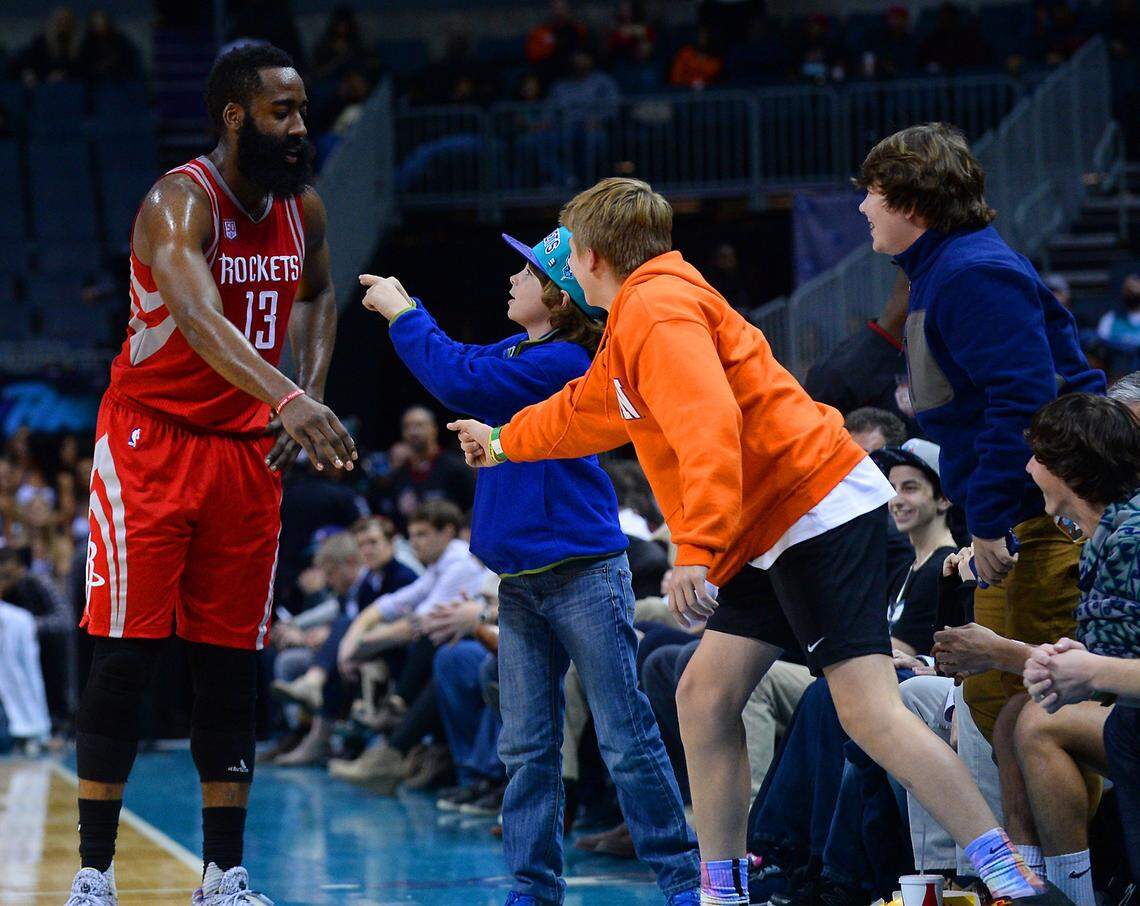
In football, hockey and baseball, there are barriers between the front row of the stands and the playing surface. In contrast, the best seats at an NBA game are inches from the court, and there is nothing that stops a fan from shoving a player or, in the case of rapper/Raptors superfan Drake, giving Toronto coach Nick Nurse a shoulder rub.
What Drake did was silly, but comparatively harmless. What Stevens did points the NBA toward resembling pro wrestling. I thought what Warriors star Stephen Curry said Thursday was important, when he praised Lowry’s “grace” for not retaliating against Stevens, which potentially could have turned this into something perilous.
Nearly 15 years have passed since the “Malice in the Palace,” the brawl at an Indiana Pacers-Detroit Pistons game that swept into the stands after a fan threw a drink at the Pacers’ Ron Artest (now Metta World Peace). That was a terrifying illustration of how fan-player interaction can go bad, but I think all the marketing since has dulled that lesson.
A lot of Hornets fans found it amusing when “Purple shirt guy” continuously heckled Miami Heat star Dwyane Wade during a 2016 playoff series. I didn’t. I thought that was crossing the line between a fan expressing passion and a fan thinking he was part of the show. That’s a line the league must enforce.
Selling intimacy
I have a friend who has paid massive charges over the past few years to sit up-close at Hornets games. When I once asked him why, he said it’s worth it to him to pay to hear the sneakers squeak.
NBA teams make hundreds of thousands of dollars off each front-row seat. They market a more intimate game experience than the NFL or Major League Baseball can provide. They romanticize this as “celebrity row” in places like New York and Los Angeles. Some fans sit so close to team benches that it’s hard for referees to distinguish between spectators and coaches.
Sports is entertainment, and being closer to the act has always cost a premium in entertainment. But proximity is not a passport to participation. We’ve already seen two examples in this season’s playoffs of fans not respecting that invisible line — one silly, the other dangerous — and that should thrust the league toward greater self-scrutiny and action.
I think the league did itself a disservice years ago when it allowed teams to have its in-game, public-address announcers sound partisan. Homers behind the mic just raise the temperature of fan hostility toward the visiting team. That’s worrisome.
‘Vulnerable’
NBA players know they must have thick skin, that horrible things will be said to them during every road game. Some tune it out. Some try coming up with clever retorts. Some lose their cool.
But they all feel vulnerable.
“I think players are definitely vulnerable,” Warriors forward Draymond Green said during a media availability Thursday. “Any time you’re in a situation where you can do no right, like in defending yourself, you’re vulnerable.”
Green added players are “essentially helpless” in interactions with overzealous opposing fans.
NBA commissioner Adam Silver has demonstrated he gets this: He took charge when a Utah Jazz fan verbally abused Oklahoma City Thunder guard Russell Westbrook this season. Silver also made sure rapper Drake knew he overstepped by touching Nurse during a game.
But if Stevens — who was vetted to own equity in an NBA team — didn’t respect that invisible barrier between fan and player, that’s a signal the league must do more: Whether it’s education about boundaries or more forceful security or not contributing to the adversarial frenzy at games.
An arena is where fans blow off steam. It’s also where players work. We all deserve to feel safe at our workplace; the millions these athletes earn doesn’t negate that.
This story was originally published June 7, 2019 at 1:22 PM with the headline "Fan intimacy? Great. Fan hostility? No. Why NBA must do more to keep players safe."