Denny Hamlin: NASCAR, Cup teams fight for same sponsors, ‘only one side’ is struggling
On the first day of the antitrust trial that could change the sport of NASCAR forever, Denny Hamlin highlighted a few different ways in which the money game is stacked against the Cup teams.
The main two?
That obtaining large sums of sponsorship revenue is a massive requirement to break even because of the way the sport’s financial system is set up — and that NASCAR is competing for the same sponsors that racing teams are.
Hamlin is the Cup Series driver who also is co-owner of 23XI Racing, a Cup team that is one of the plaintiffs in the trial. The 45-year-old star was the first and only witness called to the stand in district court in Charlotte on Monday, which was the first day of the antitrust trial that will levy a judgment on whether NASCAR operates as an “unlawful monopoly” — as in, one that engages in “anti-competitive” practices in order to maintain its monopsony power at the expense of its teams.
“Your costs aren’t covered to put on their show,” Hamlin told attorney Jeanifer Parsigian, a partner at Winston & Strawn, the firm representing the plaintiffs at trial. “And there’s only one side going out of business.”
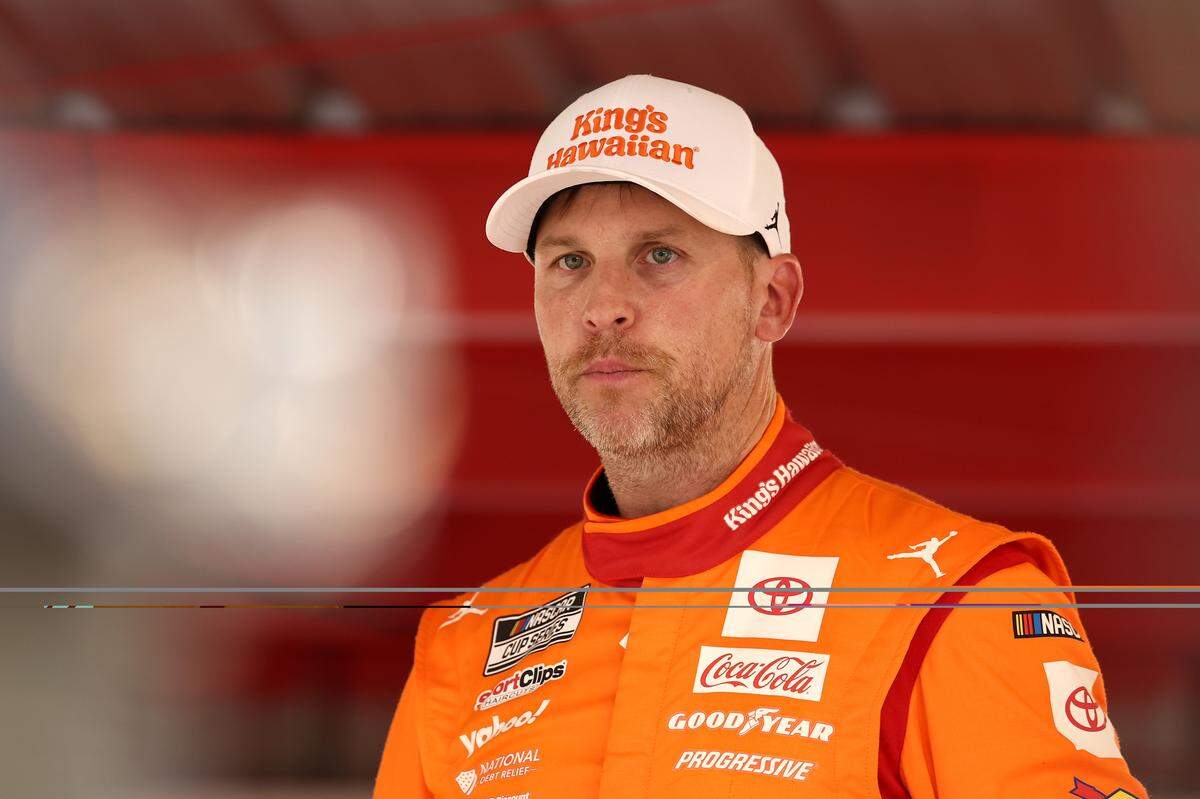
Hamlin began his time on the witness stand by answering how he got involved in racing, how he became interested in being an owner of a team and how he met and became business partners with Michael Jordan — an endearing story that involves a chance meeting at a Charlotte Bobcats game that he’s told several times before.
He then explained that he first became a co-owner of a race team called 23XI Racing in 2020. He did so by going in with Jordan and Jordan’s business partner, Curtis Polk, and paying 40% of an investment for a Cup Series charter that at the time cost $4.7 million. That turned into two charters by 2022 (purchasing the second charter for approximately $13.5 million), and then three charters by 2025 ($28 million).
A charter, for simplicity’s sake, is essentially a “franchise” in NASCAR. Being a chartered team in the Cup Series gives you access to a variety of benefits. Among them: It guarantees your spot in every race and thus a slice of every race’s purse.
The charter system was first established in 2016. It was a nine-year agreement. Negotiations for new terms of the charter agreement that would be implemented in 2025 went on contentiously for 2.5 years. Then, in Sept. 2024, the contract was finalized with 13 of the 15 previously chartered teams signing back on. The two teams who didn’t sign on — 23XI Racing and Front Row Motorsports — then joined in on a lawsuit the following month, which led to this trial 14 months later.
When asked if he thought the terms of the 2016 charter agreement were fair, Hamlin said no, citing the fact that 11 of the 16 teams that originally signed onto the agreement are no longer in the sport. (Hamlin in fact purchased the charters from previously chartered teams that couldn’t stay in the sport anymore, he said.)
Hamlin also said it costs approximately $20 million annually to get one car on the track for 23XI Racing. That number could be increased at the whim of NASCAR, too, Hamlin said — whether it be if NASCAR wants to put a Cup Series race in Mexico City, or if NASCAR requires a change to the car. All of that, Hamlin says, “changes our bottom line.”
In order to combat that $20 million annual charge — which doesn’t include the salaries of a bulk of the 140 employees who work at 23XI Racing, or the maintenance of the team’s $35 million facility called Airspeed — Hamlin and other owners must court sponsors unrelentingly to make up a sum of the money. Adding to this sponsorship conundrum, NASCAR has sponsors of its own it needs to operate and often approaches the same potential partners that teams do. Primary sponsors for 23XI Racing include Toyota, McDonald’s, Monster Energy, Jordan Brand and Mobil 1.
Such is not a new reality in NASCAR. But Hamlin still asserted that it wasn’t a sustainable business model for the teams, that the charter agreement in 2016 did not do enough to make it more sustainable — and that 2025 charter agreement, though some concessions were made, did not go far enough, either. (They aren’t “permanent,” or “evergreen,” for instance, as teams wanted.) And because NASCAR is a monopsony — an exclusive buyer in the stock car racing market, in other words — teams had no leverage or bargaining power in the charter negotiations, Hamlin said.
23XI Racing was one of the few teams that operated with a profit in 2024, Hamlin and lead attorney Jeffrey Kessler said. That fiscal year, the teams brought in approximately $40 million in sponsorship money, Hamlin said. But that was mostly a product of having Jordan — still among the most famous people in the world — as a massive driver of said partnerships, which is a luxury most teams don’t have.
Said Kessler, in conclusion of his opening statement, referencing owner and CEO of NASCAR, Jim France: “France ran this for his family at the expense of his teams.”
Other Day 1 notes from NASCAR-23XI Racing trial
— Monday’s opening statements were delivered by Kessler (plaintiff attorney) and John E. Stephenson Jr. (defendant attorney), and they mostly retread old ground. The plaintiffs asserted that NASCAR was an unlawful monopoly that engaged in anti-competitive practices that hurt teams and their worth because of their effort to maintain monopoly power.
The defendants denied those claims, citing that the 2016 charter agreement and the subsequent 2025 charter agreement were requested specifically by the teams. NASCAR also pointed out that the charter agreement helped attract Jordan into NASCAR in the first place because of its potential for growing fortunes. NASCAR added that in the two-plus years of negotiations ahead of the 2025 charter deal — which consisted of 70 meetings and several drafts of the deal — none of the “allegedly anticompetitive conduct” was raised. This has been a steady NASCAR argument throughout the last 14 months: The teams are using this litigation as a negotiation tactic.
— Exiting court Monday, Jordan was asked how he thought the day went. The sports icon smiled: “I can’t comment. They told me to shut up.” He then was whisked away in one of four SUVs waiting outside the courthouse for him.
— Jury selection was completed just after noon Monday. It is set as a nine-person jury comprised of six men and three women. Several potential people from the jury pool were dismissed for various reasons. At least one was dismissed because they were fans of Jordan and thus could not be impartial.
This story was originally published December 1, 2025 at 7:28 PM with the headline "Denny Hamlin: NASCAR, Cup teams fight for same sponsors, ‘only one side’ is struggling."