Cornbread Maxwell once almost quit on Lee Rose. Instead, they made it to Final Four
It was January 1976 when Cedric “Cornbread” Maxwell spoke the two words that could have changed the course of the Charlotte 49ers’ basketball history:
I quit.
Maxwell said that to then-Charlotte coach Lee Rose, who would eventually take two different teams to the Final Four in his starry career but who hadn’t made either one of those runs yet. And maybe Rose never would have had he handled Maxwell’s pronouncement differently, back when Rose was just a young coach who needed to find some common ground with his star player without losing his team in the process.
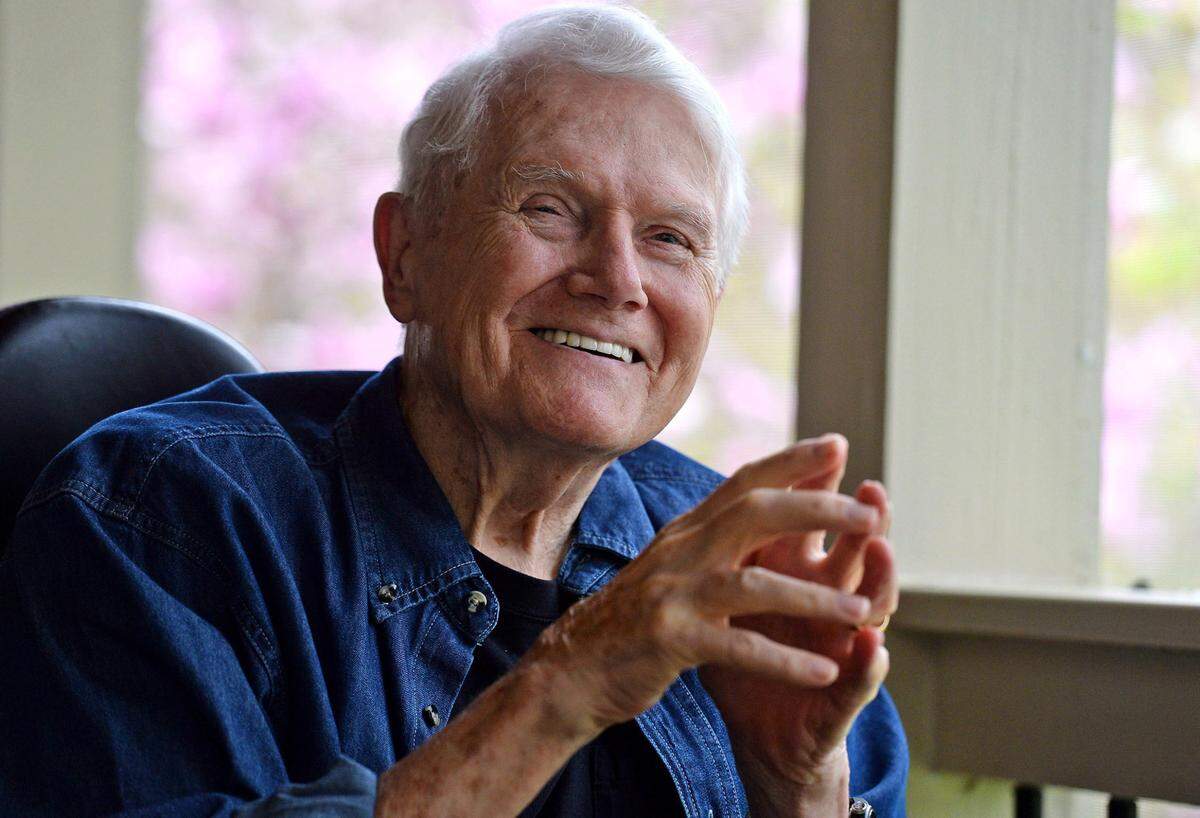
Rose, who fought Alzheimer’s disease for the final eight years of his life, died Tuesday in Charlotte at age 85. His death has provoked an outpouring of support around America.
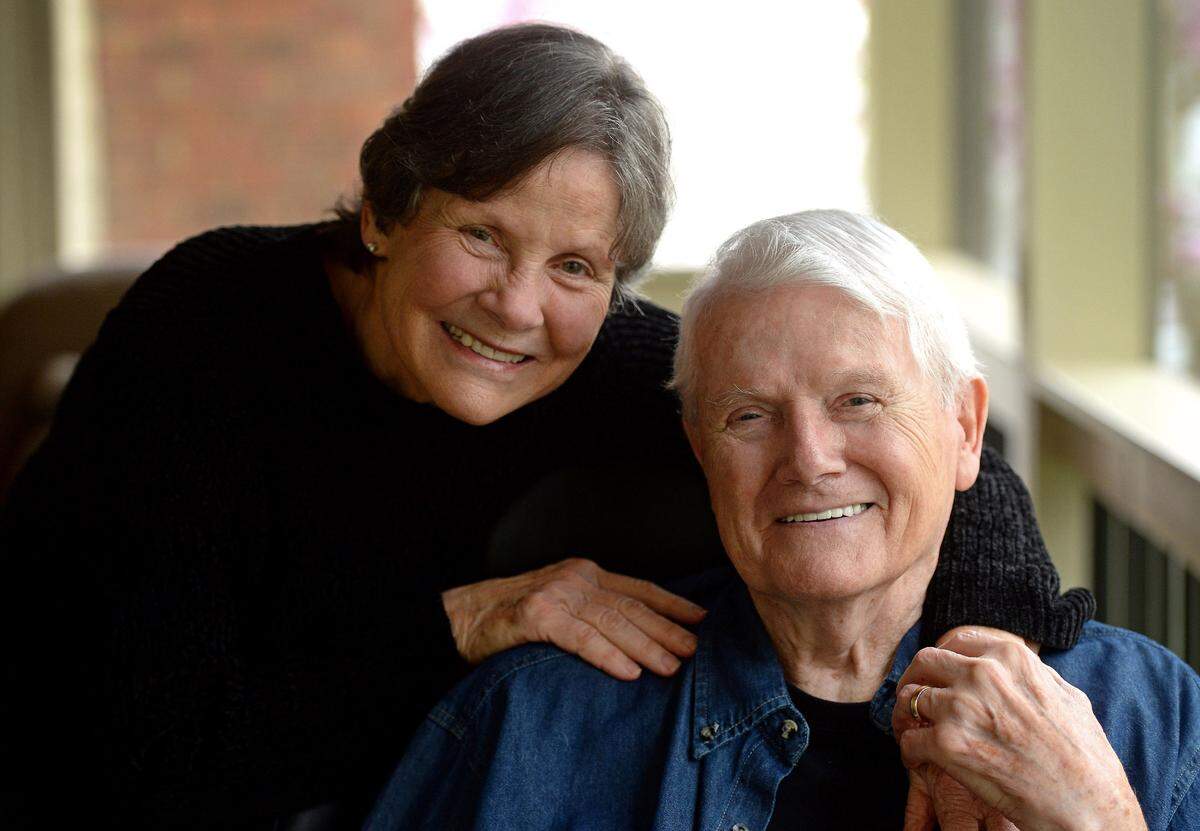
“It’s been wonderful and very humbling,” Eleanor Rose, Lee’s wife of 63 years, said Wednesday. “I’m getting calls and texts from players and coaches all over the country.”
A number of people I spoke with about Lee Rose talked about his capacity for adjustment, for finding the right mix of loose flexibility and stern discipline, for coaching without over-coaching.
No one spoke more eloquently about those subjects than Maxwell, the most famous former 49er player in history. Maxwell won two NBA championships with the Boston Celtics and also was named the Most Valuable Player of the NBA Finals in 1981. He has been a part of the Celtics’ broadcast team for the past 26 years.
Before all that, Maxwell was a standout player from Kinston, N.C., who turned into an All-American at Charlotte under Rose. The two men would lead the 49ers to the 1977 Final Four, where they might have won the whole thing except for a controversial non-call on Marquette’s game-winning buzzer-beater in the national semifinals.
None of that would have happened, though, if Maxwell had quit the team in 1976, as he briefly contemplated doing as a college junior.
“Lee was a leader and not a follower,” Maxwell said in a phone interview. “He always got the best out of his players. … And he and I had one actual blow-up, something my teammates and I still talk about.”
“That’s true — we still do,” said Melvin Watkins, also a starter for that Final Four team, an acolyte of Rose’s and later the Charlotte 49ers’ head coach himself in the 1990s. “Wait, Cedric really told you that story?”
Yes, he did.
Maxwell ‘has something to say’
The way Maxwell remembers it, the 49ers traveled to Lubbock, Texas, in early 1976 to face Texas Tech. Charlotte lost, 71-62. And Maxwell, a lanky 6-foot-8 center who didn’t have any sort of national name yet, had gotten pushed around by a beefy center for Texas Tech. “I didn’t play well, and I knew I didn’t play well,” Maxwell said.
Rose got the team together shortly after that and praised the Charlotte guards and forwards for their play against Texas Tech before asking if anyone knew who played center for UCLA and North Carolina. One of the younger players answered correctly, whereupon Rose asked if anyone knew who played center for Charlotte.
Before anyone answered, Rose said, according to Maxwell: “No one knows! Because he didn’t play worth a damn tonight.”
Then Rose kept criticizing Maxwell for a couple of minutes in front of the team. Maxwell said tears were welling up in his eyes, but he was determined not to cry. Rose finished and said, “OK, does anyone else have anything to say?”
Maxwell raised his hand.
“Yeah, I got something to say,” he said. “I quit!”
Coaches have had to handle tense situations like that for decades, and sometimes do so poorly. You may remember that Carolina coach Dom Capers basically fired quarterback Kerry Collins in similar circumstances early in the Panthers’ existence. Collins told Capers (according to the coach) in 1998 that his heart wasn’t in playing football anymore.
Capers decided that Collins couldn’t come back from that with his teammates and suddenly waived the quarterback, thereby getting nothing for a valuable player that the Panthers had invested the overall No. 5 draft pick on in 1995. Collins eventually had a 17-year NFL career and quarterbacked a New York Giants team to a Super Bowl.
Rose took a different approach. After saying, “I appreciate the offer” to Maxwell’s proclamation, Rose let things simmer down.
Maxwell didn’t really want to quit. And Rose — known as “The Silver Fox” back then because his hair had started going gray in his 30s — certainly didn’t want his best player to quit.
The key was not escalating the situation. Teammates and assistant coaches interceded. No one did anything that couldn’t be forgiven. And the two men soon found their way back to each other, and to a stronger team.
The story of the day Maxwell “quit” has been one that teammates from that Charlotte 49ers team have repeated among themselves for 46 years, and it has a happy ending. Maxwell matured a little and learned how to take criticism. Rose learned how to get the best from Maxwell both on and off the court. The coach eventually gave the center the freedom to bring the ball up himself against the press — a nearly unheard-of innovation for the times.
“From there, I don’t think I ever had another bad game under Lee,” Maxwell said. “And after that, he also never said anything that was harsh to me. He didn’t need to. We compromised, knowing we both wanted the same thing, and we found some middle ground. That was our ‘Come to Jesus’ moment.”
The Final Four loss
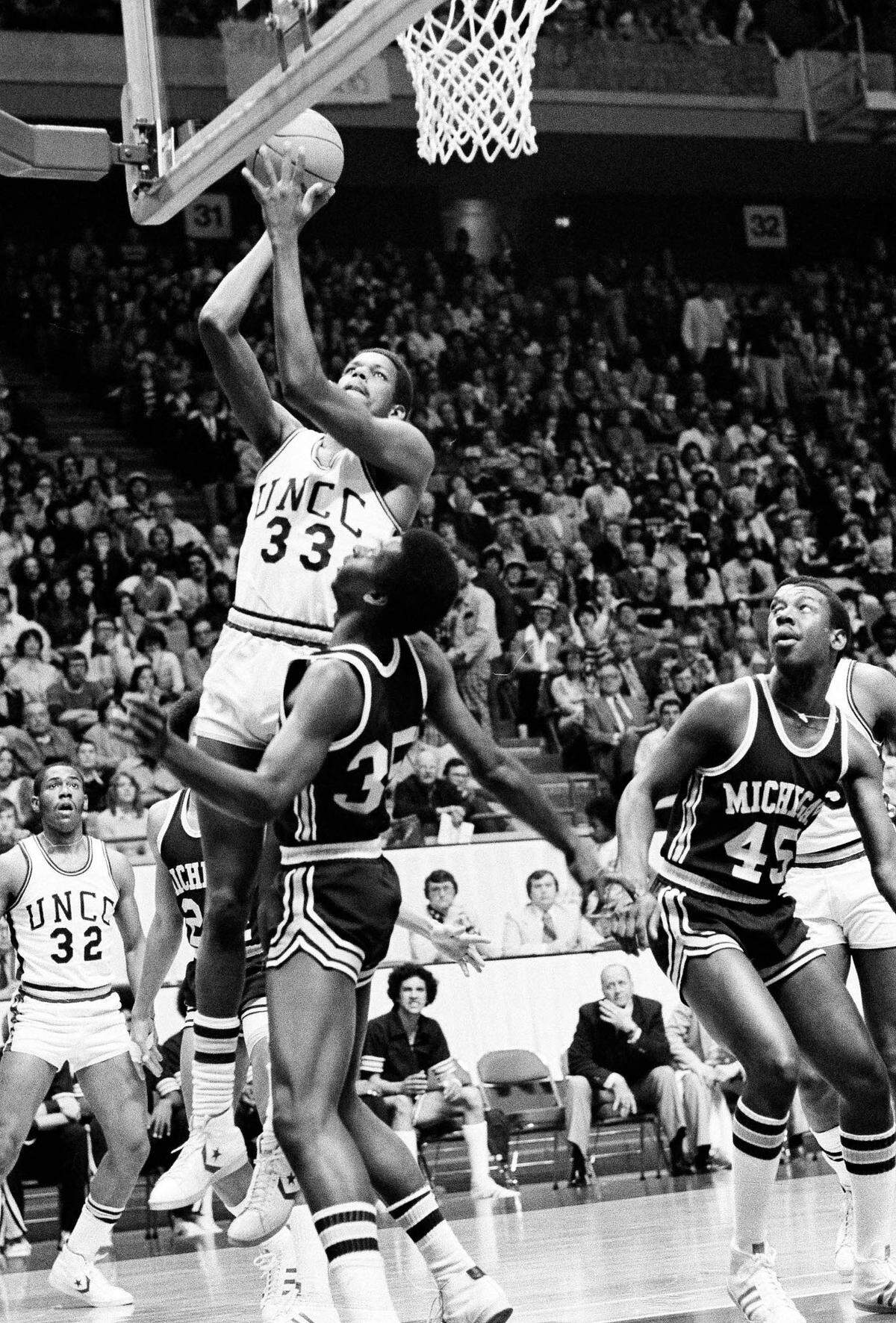
That Charlotte team would go on to make the 1976 NIT — after Rose lobbied hard to get them into the still-prestigious tournament — and got all the way to the final before losing to Kentucky. The next season produced the biggest magic, as the 49ers won the Sun Belt Conference, earned a spot in the NCAA tournament, upset both Syracuse and No. 1 Michigan and earned what remains the only Division I Final Four appearance for a Mecklenburg County team (Davidson has come close, most recently making the Elite Eight in 2008, but has never gotten there).
It was in that 1977 Final Four, in a 49-49 game that appeared headed for overtime, that Marquette’s Jerome Whitehead reached over the back of Maxwell to snag a length-of-the-court pass from Butch Lee and lay it in at the buzzer. Dean Smith, whose Tar Heels would also lose to Marquette in that same Final Four, told Rose afterward that Whitehead clearly fouled Maxwell on the play while trying to catch the ball.
“I don’t think Jerome Whitehead fouled Cedric,” Watkins said this week. “I know he did.”
But no foul was called, Whitehead’s basket counted, and the 49ers were out of the tournament. They still believe they could have been the team beating UNC in the national final that year, rather than Marquette, if only the potential foul on Whitehead had been whistled.
Still, 1977 was a glorious year, and one that still impacts many people decades later.
“Lee Rose was a great motivator,” said Watkins, who later coached two Charlotte 49er teams to the NCAA tournament himself in 1997 and 1998. “And his work ethic was off the charts. He could look into a situation a little more deeply than most people. He was demanding, but that’s because he wanted to get the best out of you. All players say they want that, and that’s what he could give you. We all became better players because of it.”
Rose later took Purdue to a Final Four as well and coached six years at South Florida. He moved back to Charlotte in the 1990s and worked as an assistant for the Charlotte NBA franchise, both when they were named the Hornets and the Bobcats. In his last years, he was in a wheelchair, due to a fall in which he broke his femur and suffered spinal cord damage. Eleanor kept him at home and was his primary caregiver.
“Alzheimer’s is a horrible disease,” she said. “But Lee always had a great spirit about him.”
‘There is always somebody to thank’
One of the texts Eleanor received this week was from Dwane Casey, now the head coach of the NBA’s Detroit Pistons. Casey had attended several of Rose’s basketball camps at Transylvania University in Lexington, Ky., when Rose was coaching at his alma mater in the 1960s and ‘70s. Casey told Eleanor Rose that he still remembered what Rose would say at the end of every camp to the young players and that he had taken that lesson to heart. Eleanor heard the speech many times, too.
“Lee would always say, ‘Somebody helped get you here, to this camp,’ ” Eleanor recalled. “A coach, a parent, somebody. I doubt if you earned all the money to get to this camp. And when you go back home, I want you to thank that person. And I want you to remember that, in life, you should be thankful for what you have. Don’t take it for granted. Because there is always somebody to thank.’”
Eventually, Rose would say, the players should make sure they are doing things that other people thanked them for, too. Rose certainly did, going back home to eastern Kentucky dozens of times over the years to speak to school and civic groups and try to give students from one of the poorest areas of the country hope for their future.
“And Lee gave us hope, too,” Maxwell said of the 1977 Charlotte Final Four team. “In the 1970s, we were a country team that made it to the big time. Back then, you always had to say Charlotte and then add ‘North Carolina,’ because people didn’t even know where it was. Then we came along under Lee Rose, and we were a really big show. And things kind of went on from there. In my opinion, Lee Rose helped modernize Charlotte. He helped change the whole perception of an entire city.”
This story was originally published April 6, 2022 at 2:48 PM with the headline "Cornbread Maxwell once almost quit on Lee Rose. Instead, they made it to Final Four."