A mother’s memory, a son’s tribute: Coach K’s legacy beyond basketball
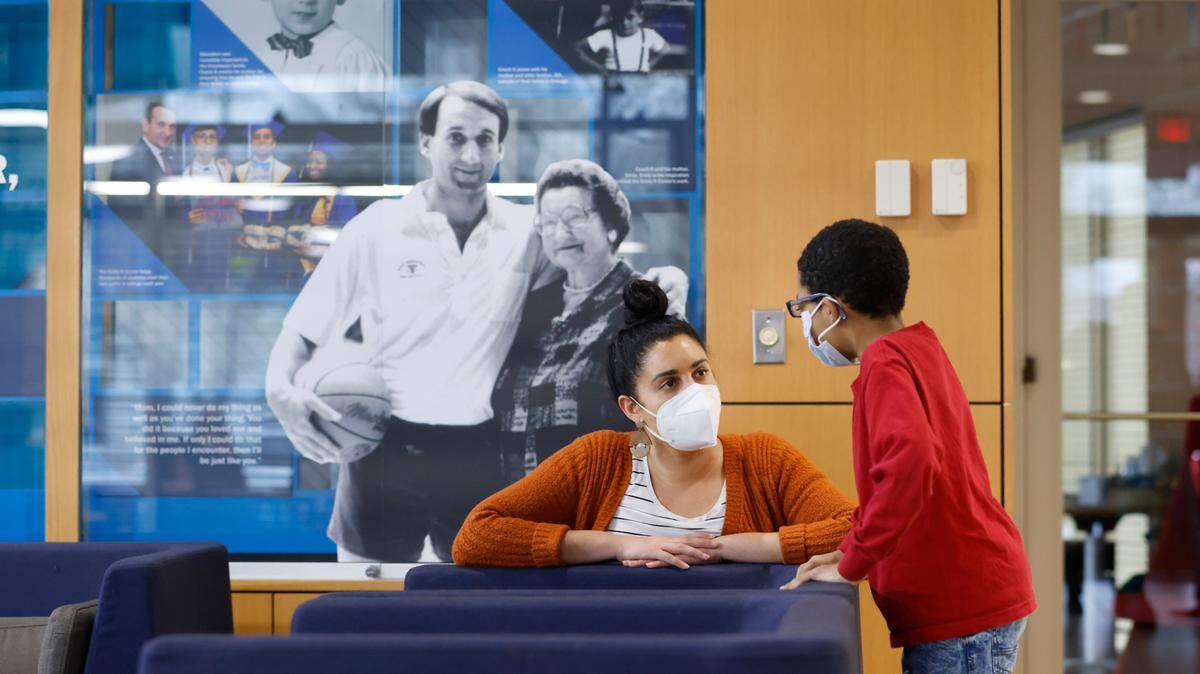
As 4 p.m. approaches, the gym starts to fill up with grade-schoolers chasing each other around and dribbling basketballs. This is the blowing off of steam, the storm before the calm.
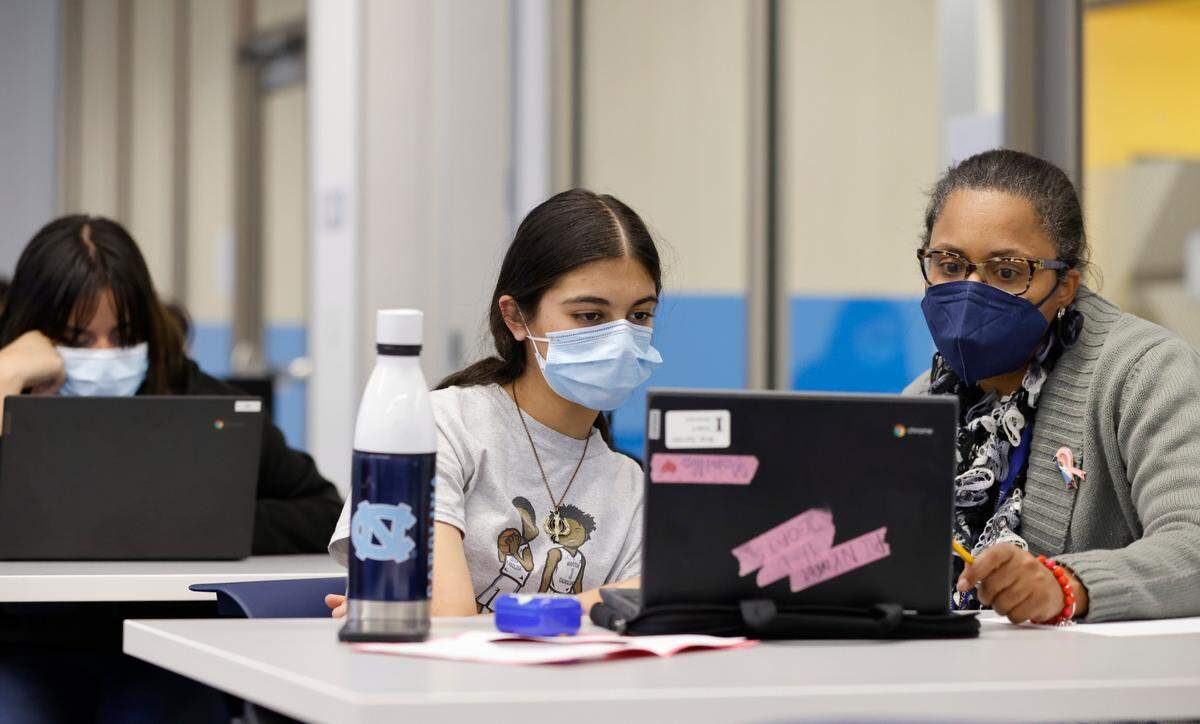
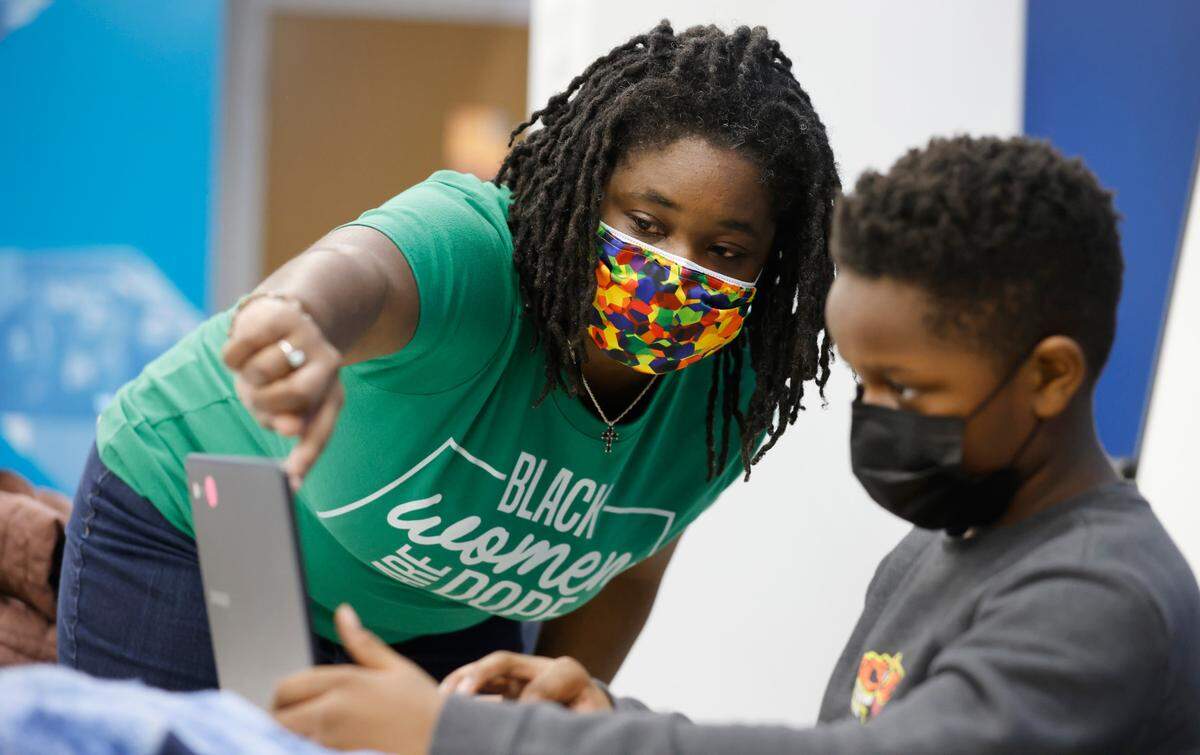
It takes only a few minutes for chaos to give way to study as these young students find their way to desks in classrooms, past tables full of Goldfish crackers and clementine oranges. The volume level drops. Laptops are handed out and opened. Another afternoon of study has begun at the Emily K Center.
Later, the high-school students who are the Emily K Center’s most important clients will replace their younger predecessors for tutoring and meetings with college counselors. The biggest entry point for the center is in ninth grade, with students who spend four years in the Scholars to College program and then ideally remain in the Scholars on Campus program, which helps kids stay in school.
The work goes on, for a full-time staff of 28 and a dozen core volunteers, day after day after day.
Since opening in 2006, the Emily K Center has helped hundreds of Durham students attend college who might not have otherwise. There are several nonprofits and organizations that do terrific work alongside Durham Public Schools to improve access to higher education. The Emily K Center is the only one that shares a name with Durham’s most famous current resident.
As Mike Krzyzewski has gone through his final season of basketball at Duke, Florida State coach Leonard Hamilton, Boston College and Clemson commemorated his departure with donations to the Emily K Center upon his final visits, and encouraged their fans to do the same. As gestures go, it was more meaningful than any physical item, as much as Krzyzewski appreciated those.
Contributing to the Emily K Center, named after the coach’s late mother — that was truly personal.
“We’ve been in existence for 16 years,” Krzyzewski said. “Really have touched thousands of youngsters. Hundreds have gone through our program and have gone to college, and a number of them have come back into the community and made the community better.”
Legacies, tangible and ephemeral
Basketball stars Pau Gasol and Shane Battier are both distinguished fellows at the Coach K Center for Leadership and Ethics at Duke’s Fuqua School of Business, which tries to teach first-year MBA students the same principles of leadership Krzyzewski learned at West Point, sharing that title with a retired general and admiral.
It’s one example of Krzyzewski’s attempts to leave an enduring mark outside of the world of basketball, and the COLE program codifies his belief that leadership is a teachable skill, not a gift. His reinvention of USA Basketball will linger as well, ending a pattern of Olympic embarrassment by getting NBA stars onto the same page.
There are also openly intentional attempts to reach out into the future: Duke’s basketball fundraising arm is called the Legacy Fund, overseen by one of his three daughters. The transition to Jon Scheyer was orchestrated to ensure continuity in the program.
These are all, unavoidably, ephemeral legacies. Both Duke and Duke basketball existed before Krzyzewski and will exist after him, still a nationally prestigious academic institution, albeit one perhaps slightly better known for its basketball team than it was 40 years ago.
No matter what high moral principles one may ascribe to sports, whatever personal growth individuals may derive from it, in its highest forms it’s still an entertainment industry at the core — and a venal and corrupt one at that, especially at the international and collegiate levels where Krzyzewski made his mark.
But at the corner of Main and Buchanan, just west of downtown Durham, on a plot of land owned by the neighboring Immaculate Conception church where Krzyzewski ritually attends 7 a.m. mass when able, the Emily K Center is a concrete and physical contribution to the community where he made his home, one that can outlast anything Krzyzewski has achieved in the game of basketball.
“I don’t think basketball is his gift or his legacy,” said his daughter Jamie Spatola, the Emily K Center’s vice chairman. “Basketball was the vehicle.”
The Emily K Center isn’t exactly what Krzyzewski imagined when his parish priest first presented the idea to him. It evolved into something far more representative of what he once was, and evocative of what he became.
“You know how emotional Mike gets when he talks about his family and his upbringing in Chicago,” said retired Gen. Martin Dempsey, a close Krzyzewski friend. “It is interesting how he’s built, I’m not sure he would call it his legacy, but how he’s built this foundation of what’s important to him in his life. And it’s reflective of what’s important to him in his life.”
A priest and a basketball coach
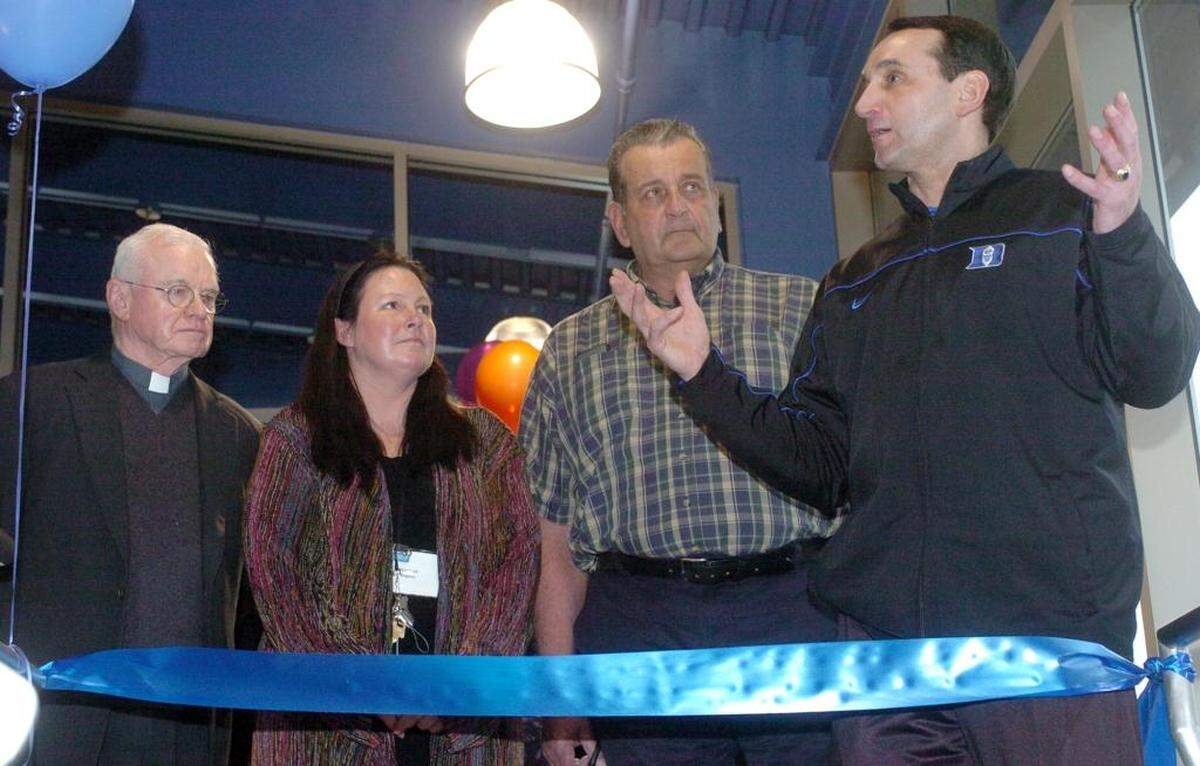
The distance between St. Francis of Assisi, nestled among the leafy cul de sacs of north Raleigh, and Immaculate Conception is merely a few dozen miles, but a pastoral gap of light years. Fr. David McBriar, a Franciscan friar, made that jump in 1996, landing among the hard edges of Durham’s West End. Krzyzewski was his most famous parishioner, sitting in the back pews and leaving after communion to avoid gathering a crowd.
McBriar believed then, and believes now, that his calling was to serve the needs of his community as much as the spiritual needs of his parish, or perhaps merely that the two were inextricably linked. Even now, in semi-retirement in Manhattan at age 87, he oversees a soup kitchen that serves breakfast to 200 people a day. Upon his arrival in the West End, he could sense many unfilled needs, especially in the Burch Avenue area that sits in the shadow of the Durham Freeway, that Immaculate Conception could help fill.
One of those needs in particular needed the help of someone powerful and connected, with access to people of wealth. Someone like Krzyzewski, who at the time was trying to delegate and consolidate his commitments outside basketball in the wake of the disastrous 1995 season he now admits was a collapse of both his physical and mental health. The timing, actually, was not great. Any other idea, from anyone else, might not have landed as softly.
McBriar secured an appointment to visit the coach in his office and made his pitch: The students in that part of Durham lacked anywhere to go after school, a place where they could safely hang out, away from the streets. Immaculate Conception would throw open the doors to its own small gym, but McBriar imagined a larger one, perhaps a manufactured building on vacant land next to the church.
Krzyzewski listened. If he was going to help with that, his ambitions ran higher, rooted deeply in his own past. There had been a community center where he grew up on the West Side of Chicago. He and his pals — “The Columbos,” after the nearby Christopher Columbus elementary school — would gather there after school, not just Polish kids like himself, but second-generation children of many nationalities.
This was something he knew and believed in. He had a vision, and if the ties to his own past weren’t clear enough, naming it after his mother left no doubt. Krzyzewski put together a board of trustees and started raising money for a much grander facility, with a gym and classrooms and an entire infrastructure of programs that went beyond merely being a safe space.
“The design of it was something I never expected would take place,” McBriar said. “He was not settling for second best.”
In 2006, a decade after McBriar first had the idea, the Emily K Center threw open its doors to Durham. The early years were tenuous, both financially as a fledgling nonprofit, and spiritually as a community asset finding its niche. Like any new endeavor, it took the Emily K Center time to find its greatest value. That it turned out to be primarily educational was fitting, but not inevitable.
‘It’s the beginning for some of that’
Emily Krzyzewski cleaned office buildings at night. William Krzyzewski was an elevator operator who later ran a bar. Their older son, a Chicago firefighter, never went to college. Only Michael, their younger, went to West Point, opening a world of opportunities not only for Mike Krzyzewski but for his children, and their children.
Increasing access to higher education for Durham high-school students was part of the original program at the Emily K Center, but it soon emerged that there was no greater need to fill, and the greatest allocation of resources pivoted that direction. As the mission evolved, it circled closer and closer to issues that touched on Krzyzewski’s past, touched at his core.
“Once that seed was planted, then it was an easy connection for my dad, a first-generation college student,” Spatola said. “He didn’t say, ‘I have a passion for college access, let’s build a program.’ It’s a nice story but it’s not the story.”
The first educational program at the Emily K Center served 38 students. Now, between the students who come to the center and those who interact with it within their schools, there are about 2,000 who benefit in some way from the center’s programs, whether they’re going to college or not.
About 1,700 of those are enrolled in Game Plan: College, which is a mentoring and assistance program that works in the schools themselves, outside of the center, an attempt to cast a wider net. Many of the students speak English as a second language; all of the signage at the center is in English and Spanish.
“What the center is, as much as it is programs and tactics and commitments to students and families, what it’s ultimately about is economic opportunity for students and opportunity for young people and social mobility for young people,” said Adam Eigenrauch, who started as the center’s director of academic programs and has been its executive director for the past 12 years.
The embrace of that vision over the next decade meant that what the center became wasn’t necessarily what the center was built to be. There quickly developed a dire need for more classroom and meeting space as the college-access programs bloomed. In 2018, the center launched an $18 million capital campaign to fund expansion and an operating endowment, starting with $3 million from Krzyzewski himself.
Last November, the center opened the doors on 7,500 additional square feet of classroom and meeting space that wrapped around the original building like a hug. The old part feels like a neighborhood school, with cinder-block walls and low ceilings. The addition feels like an art museum, spun out of glass and exposed concrete and light.
The founder and the future
Duke won the national title in 2001 in Minneapolis, Krzyzewski’s third. As most champions do, the school purchased the floor on which the game was played. That is now the gym floor at the Emily K Center. A few new lines have been painted for more courts and more sports, like any school gym, but the giant Final Four logo at the center leaves little doubt of its origins.
And just as every day, the students move from the gym to their classrooms as a studious quiet settles over the hallways, the center itself spiraled out of basketball and into education. At this point, to a degree, the center has become a self-fulfilling prophecy. Students graduate, attend college and return as counselors. The cycle continues. Set in motion, funded and grounded for the long term, it will endure. It will outlast.
In his retirement from coaching, Spatola expects Krzyzewski to take an even more active role, leveraging all the networking he’ll be doing in his free time into more resources, more money for the Emily K Center.
“Most boards I’ve served on, people do their homework,” Spatola said. “You hear stories about people who don’t. My dad is not one of those people. He’s up on the finances. He’s a very involved board chair. You talk about this being the end of certain things, but when it comes to the Emily K Center, his legacy beyond basketball, it’s the beginning for some of that. There are new opportunities that open up as a result of not being the head coach of Duke men’s basketball every day.”
What, of Krzyzewski, will resonate with the next generation? The 1,000-plus wins? The five national titles? The most polarizing college basketball program in the country, for better or worse?
Or this building and these programs, next to his church, close to his heart?
“It’s not what people are going to say first,” said ESPN’s Jay Bilas, a former Duke player and former Emily K board member. “Maybe we should.”
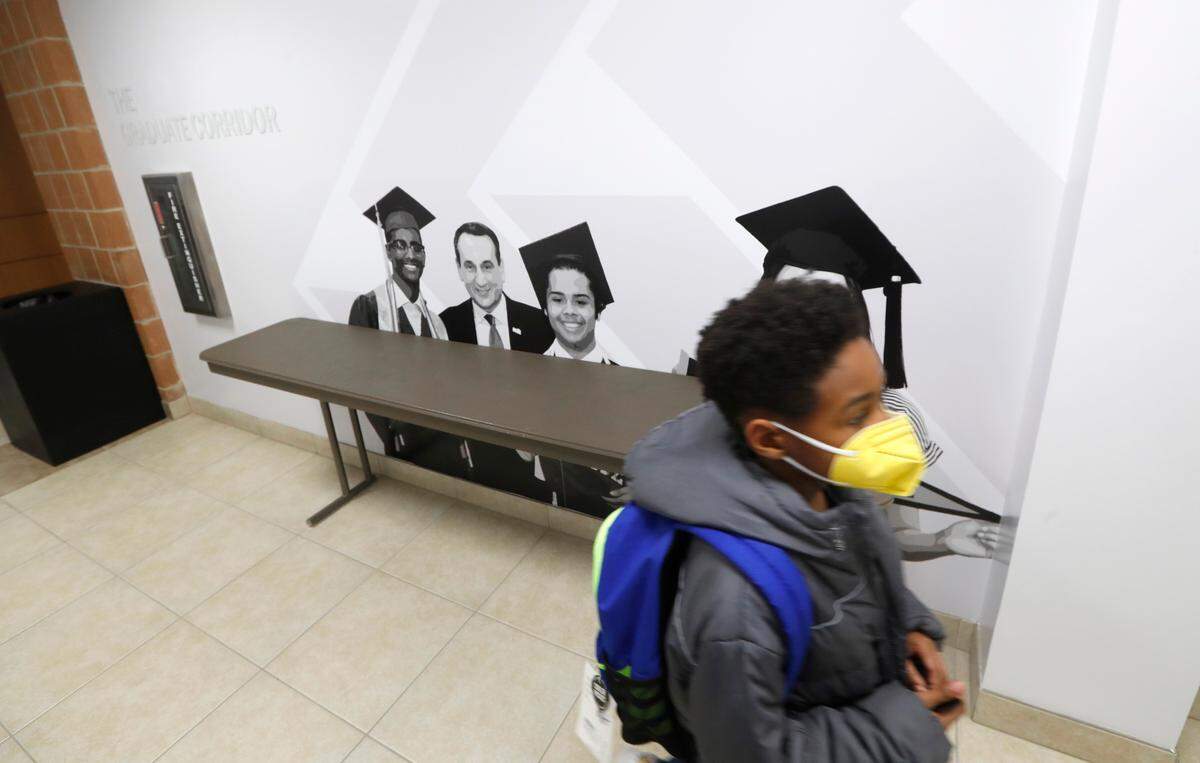
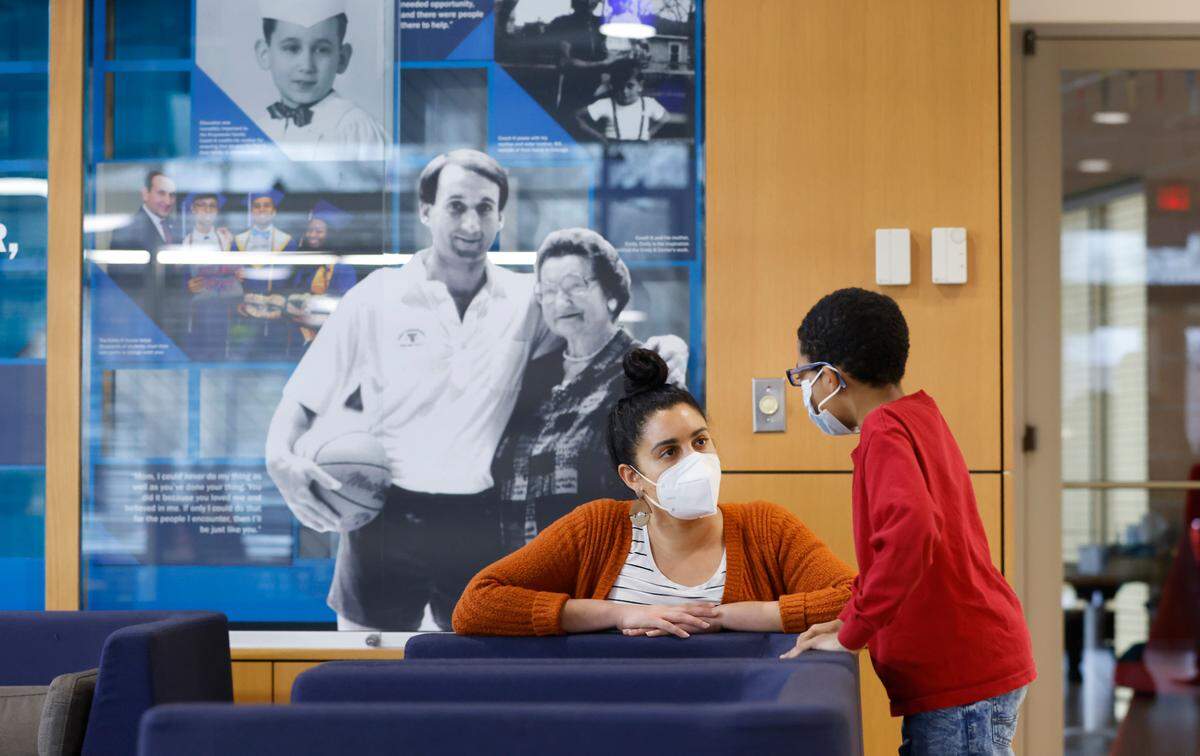
Krzyzewski attends the graduation festival every May, giving the keynote speech. His likeness is painted on the walls alongside the students the center helps. His last name is on the building. His personal history propels it forward. His true legacy lies within.
Never miss a Luke DeCock story. Sign up at tinyurl.com/lukeslatest to have them delivered directly to your email inbox as soon as they post.
This story was originally published March 19, 2022 at 6:04 AM with the headline "A mother’s memory, a son’s tribute: Coach K’s legacy beyond basketball."