
JOHN LEWIS 1940-2020: Civil rights warrior for freedom and justice also inspired many others
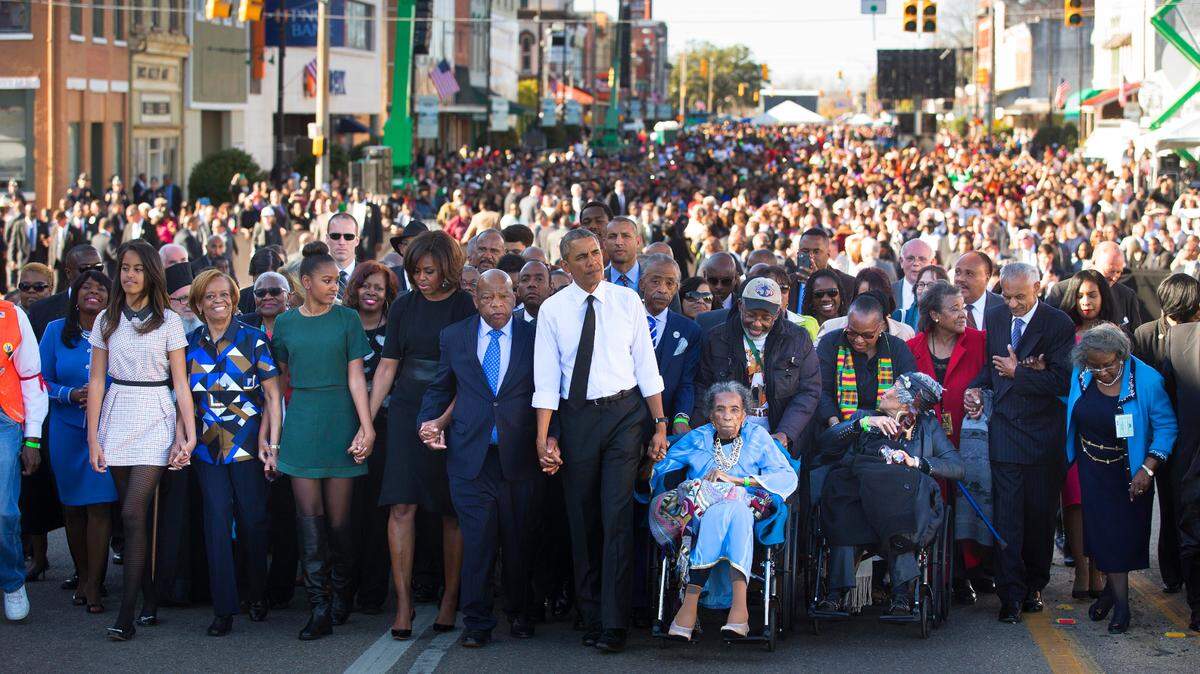
Of the notable public figures who died in 2020, few leave a legacy with the impact of civil rights icon John Lewis.
A U.S. representative from Georgia for three decades, Lewis, 80, left us on July 17, within hours of the passing of the Rev. C.T. Vivian, 95, whose civil rights efforts dated to a 1947 Peoria, Illinois, lunch counter sit-in. Back then, retail stores such as Woolworth and Walgreens had popular gathering spots for coffee and sandwiches. Like other services, in the North as well as the South, the counters were segregated, and were targets for civil rights advocates.
A year ago, Lewis announced he had Stage 4 pancreatic cancer – and he would fight it. “I have been in some kind of fight – for freedom, equality, basic human rights – for nearly my entire life,” he said.
Lewis and Vivian were the last of the so-called Big Six of the 1960s Civil Rights Movement, including the Rev. Martin Luther King Jr. Their cause continues.
TIPPING POINTS
On Bloody Sunday (March 7, 1965) Lewis led a march across the Edmund Pettus Bridge in Selma, Alabama. State troopers mercilessly beat and bloodied the peaceful marchers. Television viewers were shocked by the broadcast images of Alabama police officers beating Lewis and other marchers. Bloody Sunday was a tipping point in the 1960s battle for civil rights, similar to the global reaction to the death of George Floyd in Minneapolis this year, who died after a police officer put his knee on Floyd’s neck for several minutes.
These real-time news coverage events helped change attitudes of white Americans about how they viewed Americans of color struggling for basic equality, including the right to vote.
This is among the points made clear in Jon Meacham’s biography of Lewis (“His Truth Is Marching On: John Lewis and the Power of Hope”) released not long after Lewis passed.
In an Afterword, Lewis wrote: “We won the battles of the 1960s. But the war for justice, the war to make America both great and good, goes on. We the People are not a united people right now. We rarely are, but our divisions and our tribalism are especially acute.”
SON OF SHARECROPPERS
Like many in the Civil Rights Movement, Lewis was a clergyman. Growing up near Troy, Alabama, he preached to chickens on his sharecropper parents’ farm. In the Afterword, Lewis makes clear that “His Truth …” in the Meacham book’s title is God’s truth. Lewis wrote: “I have long believed – I have long preached – that our nation’s moral compass comes from God, it is of God, and it is seen through God.”
British Dame Vera Lynn, 103, also died in 2020, the month before Lewis. She was the hugely popular singer of “We’ll Meet Again” during WWII. British soldiers sang along with her, then were on their feet, applauding and cheering. Lynn said she reminded the soldiers of their girlfriends, their sisters back home. “Keep smiling through, just like you always do, / ‘Til the blue skies drive the dark clouds far away.”
John Lewis kept on smiling through, believing deeply he was on the right side of a righteous cause. Former President Barack Obama said of Lewis: “He loved this country so much that he risked his life and his blood so that it might live up to its promise. And through the decades, he not only gave all of himself to the cause of freedom and justice, but inspired generations that followed to try to live up to his example.”
_
D.G. Schumacher is a senior writer for The Sun News Editorial Board.