
Reader recommends reversing Commerce Department’s lumber tariffs and reducing exports
Reverse lumber tariffs
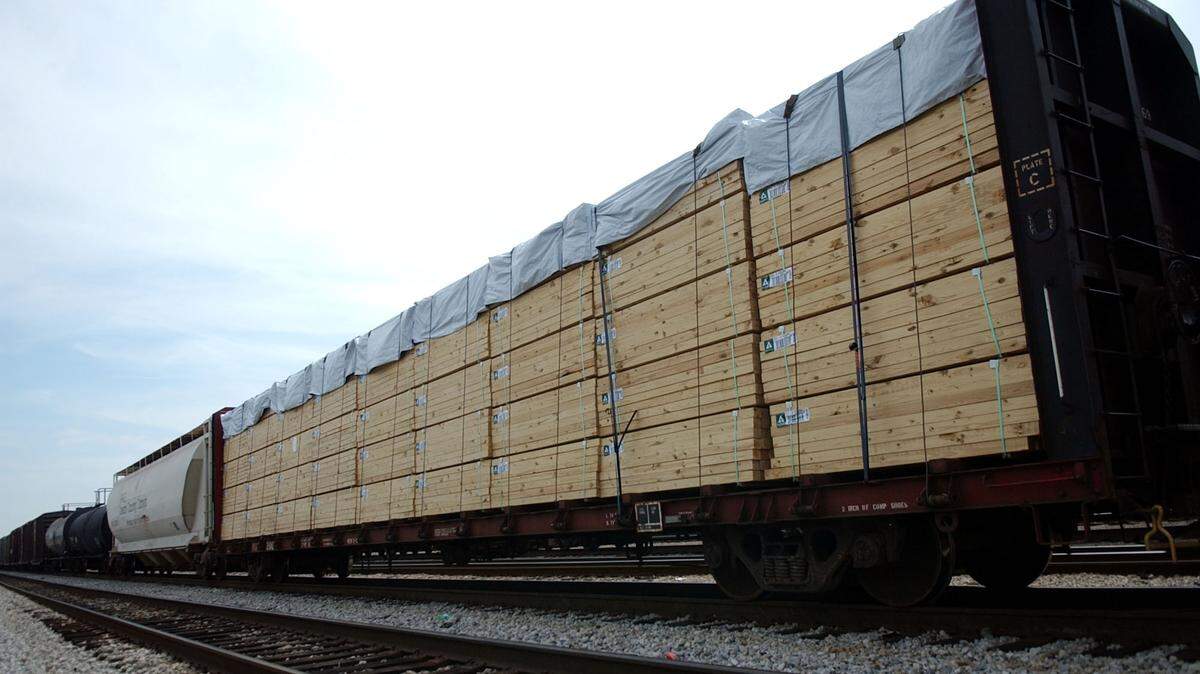
President Biden and his Administration should reverse the U.S. Department of Commerce’s decision on tariffs on softwood lumber imported from Canada. The decision increased tariffs up to an average of 17.9% from 8.99%. Softwoods like spruce and pine are heavily used in construction.
Lumber prices have increased significantly, adding about $30,000 to the cost of a new median priced single-family homes. These soaring prices are unsustainable since housing affordability has become more strained. If something is not done to address the cost of lumber, this will hurt the housing sector and the economy.
The following should also be done by the administration:
- Negotiate with Canada for a new, long-term softwood lumber agreement.
- Increase timber production from federally owned lands.
- Reduce U.S. lumber exports. Domestic producers are selling in other countries to increase profits. Lumber used in construction should remain in the U.S. while there is an unmet demand in the U.S.
- Identify new source markets and work with countries already exporting softwood lumber to the U.S. to increase their exports here.
Robert Dickson, Bluffton
Children need recess
If our mental health crises are to ever be solved, we must quit abusing our teachers and our students with unhealthy schedules.
Social media and the pandemic may have affected our mental health, but the mental health problem has been in our schools since their deregulation in the late 1990s.
We need to treat the causes and not the symptoms.
If the legislature will restore ample recess time and kindergarten nap times, mental health will improve. Bullying will decrease. Children make friends during recess time and bond.
Children are not learning to care for each other because they have little time to interact and play together.
Healthy schedules need to be reinstated. Healthy, happy children learn more efficiently.
Patricia Milley, Conway
Revise S16
The S. C. Revenue and Fiscal Affairs Office estimates that State Senate Bill 16 (S16) will cost the state $4,463,000.
Financial education has been proven to increase graduates’ credit scores and lower their risk of defaulting. These higher credit scores allow for cheaper interest rates on loans -- especially home loans which are a first step to building personal wealth.
S16 implements a half-credit-hour course on financial ed into the graduation requirements of South Carolina schools, but the problem is the bill acts like a Band-Aid. The state Senate is proposing to spend $4,463,000 on a bill that does not fully tackle the issue when the same amount could be spent to fully address it. When comparing states with partial-credit courses to those with full-time courses, the states that have full-time courses have more financially capable young adults.
With 44 out of 46 senators voting yes to advancing the bill, it is obvious it shares wide support, so now is the time to ensure that it is rewritten to do the job it was created to do.
This is why we need to all call upon our state representatives and ask them to rewrite S16 to address financial education appropriately.
Stephen Hilton, Mt. Pleasant