
Letter | Offshore testing not the danger to sea life many claim
Much has been written in recent years about the prospect of conducting marine seismic surveys in the waters off the Atlantic Coast. Unfortunately, some of that information is either at odds with published scientific data on marine mammals or neglects the experience from decades of marine seismic operations both here in the U.S. and worldwide.
The information provided by the opponents of marine seismic surveys regretfully is misleading to the public and requires analysis based on scientific studies.
Seismic surveying is not new to the Atlantic offshore. From the late 1960s through the mid-1980s, more than 240,000 line miles of 2D seismic reflection profiles were acquired from New England to the Florida Keys. A small 3D survey was also acquired in 1982; however, this technology was in the very earliest stages of this now-standard technique. While much of these data were collected in support of a previous stage of oil and gas exploration on the Atlantic Outer Continental Shelf (OCS) from 1978-1984, numerous surveys were conducted for research purposes by the U.S. Geological Survey or through projects funded by our National Science Foundation in the public interest.
Only six months ago, 3,000 line miles of new seismic reflection profiles were acquired for scientific purposes off the coast of North Carolina. Using an airgun source (the more appropriate term for “sonic cannons”) larger than that for the proposed new commercial surveys, these data are now being evaluated to provide fundamental new insights on geologic evolution of the Atlantic basin and development of the North American continent.
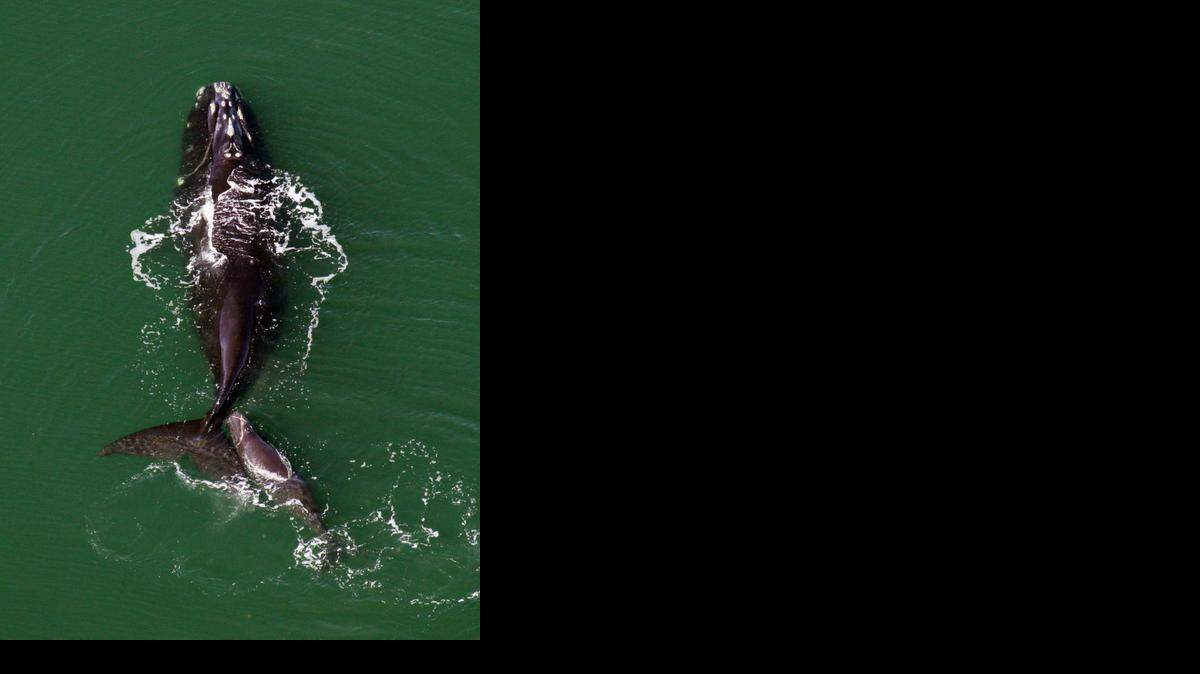
One of the most commonly cited criticisms of marine seismic operations is the alleged “devastating effects” on marine life, in particular on marine mammals. Established in 1991, The Working Group on Marine Mammal Unusual Mortality Events (UME) within the National Oceanic and Atmospheric Administration (NOAA) has formally identified a total of 60 marine mammal UMEs in U.S. waters over the last 24 years. In most cases (29) where a cause has been determined, infections and/or biotoxins were indicated. Of the 60 documented UMEs, not a single one has been attributed to marine seismic operations.
The incidence of UMEs is statistically the same between the Atlantic, Pacific, and Gulf of Mexico (GOM) regions, during a period when extensive commercial marine seismic surveys have been conducted in the GOM, but not in the Atlantic and Pacific regions. The two states with the most declared UMEs are California and Florida, neither of which has been the site of commercial marine seismic operations during the period in which the records have been compiled. Based on these existing data, it appears that mass mortality events of marine mammals show little if any correlation with marine seismic surveys.
The current process for considering new geological and geophysical surveys on the Atlantic OCS began in early 2009 with a request for public input. Five years of extensive review, public comment, and compilation of scientific data by the Bureau of Ocean Energy Management led to the 2,100-page, three-volume Programmatic Environmental Impact Study (PEIS) mandated by the National Environmental Protection Act before any new survey permits might be considered. Included in this process was a 370-page opinion by the National Marine Fisheries Service under NOAA evaluating the potential risks to marine populations, and particularly risks posed to marine mammals.
One of the most authoritative studies extensively quoted in the BOEM PEIS is provided by Southall and co-authors. The study, “Marine Mammal Noise Exposure Criteria: Initial Scientific Recommendations” appeared in the journal of Aquatic Mammals in 2007. The BOEM estimates for impacts on marine mammals use thresholds much more stringent than those recommended by Southall and colleagues.
The beauty of science is that through regular observation and experiment we can greatly increase our ability to determine the behavior of the world around us. One generation may discover new facts countering a previously held status quo.
In public policy, it is essential to use science in a way that constantly refines conventional wisdom and dismisses the misinformation campaigns that so often clog political discourse. When used properly, science is an exceptional tool to fine tune public policy and make society a better place for everyone. As we consider the use of seismic surveying off our coasts, we must look to the evidence, not politics, for answers.
The writer is a graduate of Stanford and MIT, and is currently a professor at the University of South Carolina.
This story was originally published April 9, 2015 at 5:35 PM with the headline "Letter | Offshore testing not the danger to sea life many claim."