
Behind one parent’s mission to ban books in all South Carolina schools | Opinion
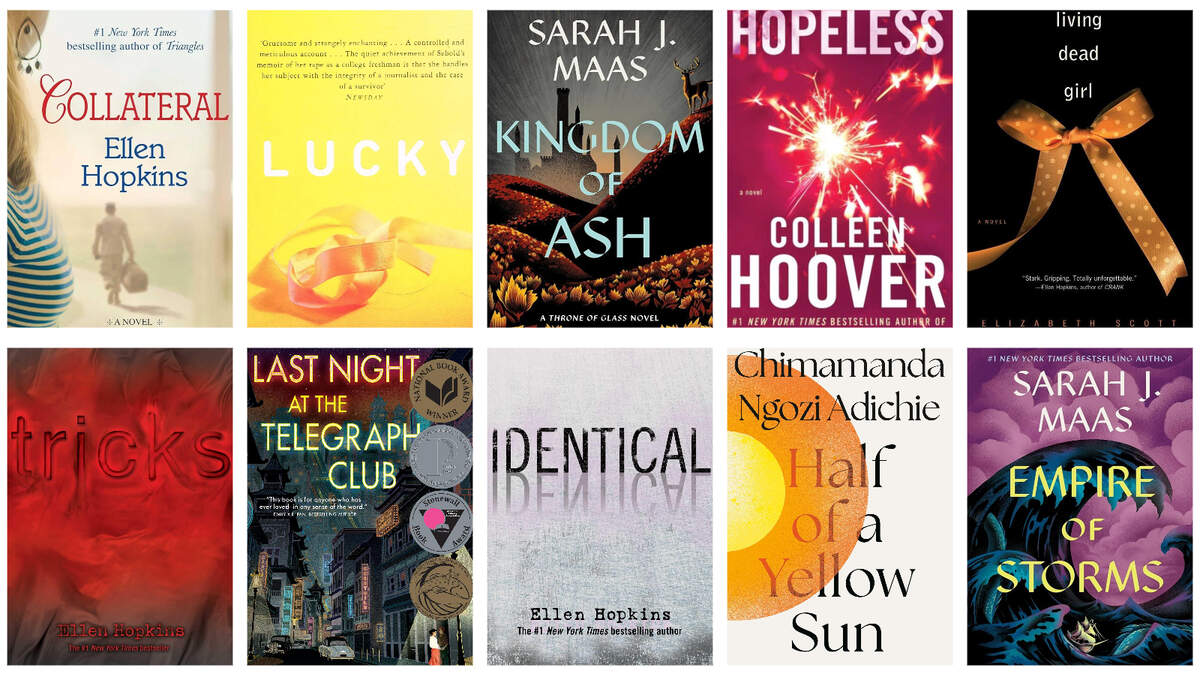
South Carolina pulled more books from its public school library system than any other state in the nation this school year.
The state Board of Education banned 10 more titles from bookshelves Tuesday, and has now removed or restricted 22 books since November, surpassing Utah’s 17.
It’s an ignominious distinction, and it seems South Carolina is just getting started.
This should prompt second thoughts by everyone, because 14 of the 22 books, including all those banned Tuesday, were challenged by just one parent — Beaufort County mother Elizabeth “Ivie” Szalai.
Szalai is well known in Beaufort County for asking the school district to remove 97 books. That list was compiled with a rating system used by the conservative national nonprofit Moms for Liberty that considers books and literature with profanity, nudity and sexual content objectionable, even for high schoolers who sometimes swear and may be having sex, even if adults swear they don’t.
At a cost of thousands of dollars to taxpayers, Beaufort County schools ultimately removed five of the 97 challenged books. That suggests Szalai may try to ban dozens more at the state level.
Realizing this, I set out to get a better understanding of — and help readers understand — Szalai’s mission.
It’s a lot of power for one parent in a state with almost 800,000 public school students and a million-plus parents with different definitions of what’s appropriate for kids, especially theirs.
“The state is continuing to leave educational decisions for all students up to one parent,” Josh Malkin, Advocacy Director for the ACLU of South Carolina, said in a statement on Tuesday. “This is problematic and counter to the foundational democratic ideals of public education.”
‘When does this thing stop?’
The state Board of Education’s Instructional Materials Review Committee recommended banning the 10 latest books two months ago for descriptions of sexual conduct that are prohibited by a policy that took effect last year.
Last month, the state Board of Education delayed its decision amid questions about a policy criticized as vague, overly general and ripe for abuse by just one parent.
Board members are not required to read any books that get challenged. They read only short passages considered overly sexual in books that could be hundreds of helpful pages long. Some at least seem to be realizing there’s got to be a better way.
“Looking at these books outside of the arc of their full stories is a mistake, in my view,” board member Tony Vincent said in April.
“I’m not sure if we’re shooting at the right target, or if we’re shooting whether our range finder is accurate,” board member David O’Shields added.
“When does this thing stop?” asked board member Ken Richardson. “I do not like to come up here every single meeting and vote on books nobody in my area is even talking about.”
Tuesday, the board members met in closed session to discuss the policy and apparently emerged satisfied because they then voted 15-2 in open session with no discussion to ban the 10 books — as if the decision was too trivial to even talk about.
Absent was any deliberation the board owes to students, parents and the public.
It’s as if this is Szalai’s state and we’re all just living in it.
‘Innocence of young minds’
Szalai didn’t return two voice mails I left Wednesday and Thursday about her book challenges, but her Facebook page from March offers insight into her thinking and the broader debate.
On March 9, a commenter seemed to question Szalai’s cause, writing, “I just can’t understand why some people can’t grasp the concept of choice. One size does not fit all.”
“It’s not a choice when it comes to protecting the innocence of young minds,” Szalai replied. “Some can handle the content. Some cannot. Why do you oppose protecting those who can’t? That’s what bewilders me.”
A week later, on March 16, Szalai wrote, “I want to be clear. Never have I said that excerpts of sexual assault in books are MEANT to be arousing (although sadly, to some it is and to some it’s a visceral reaction and they cant help it). Somebody is putting words in my mouth.”
She continued, “Simply stating page 47 violates regulation with touching of breast, describes molestation of young boy and forced vaginal sex, does not equate to shaming and blaming victims. Just because someone thinks that it does does not make it true.”
A commenter wrote, “I just stopped talking to the idiots. I was losing too many brain cells. They are just not worth the air we breathe.”
Szalai wrote back with one word: “agree.”
“Using survivors of sexual assault as an excuse to provide minors with sexually explicit material is gross,” Szalai wrote a day later, on March 17.
Someone replied with a long comment, “I’m a survivor and reading about others’ sexual trauma has NOT helped me in the least… in fact it makes me think that’s just normal and part of life. You are correct and I can’t think of the best word to use when describing this type of thinking…
“It’s just insane to think a traumatized child would want to read a book that talks about another child having suffered what they suffered. It’s like saying to a ten year old who has been traumatized… ‘here read this book about another child who got traumatized too’ … What???
“I don’t want to read it and relive what I went through! Insane… it’s just insane to think reading a fictional book is going to make me feel better about sexual assault.”
Szalai reacted to the comment with a “care” emoji of a heart being held — even though trauma is complex, traumatized people of any age don’t react the same and many are helped by books about any number of issues because not sugarcoating, sanitizing or ignoring certain aspects of life helps people make better decisions.
The next day, on March 18, Szalai shared a post from a parent whose 12-year-old’s teacher had first marked a number of passages in a book the child borrowed from the Pickens County library system then showed it to the parent, who was shocked to find “drugs, sexual stuff. And nudity.”
Szalai wrote, “Super proud of the teacher for making the mom aware. This is the problem. As parents, we shouldn’t have to read every book our child wants to read to make sure it is safe. We should be able to trust the librarians and teachers to not provide the material in the first place.
“Is it too much to ask that they use the degree they went to school for?” she continued. “I’m so sick of hearing highly trained professionals. Highly trained professionals with an ounce of moral decency would see the issue and not be part of it.”
A lost point about free access
I have many thoughts about her Facebook comments.
One, Szalai is a very caring mother who wants the best for her child and the same for every other child in the state of South Carolina. Two, she is a very controlling mother who wants to protect her child — and all children — at all costs, other points of view be damned. Three, she seems to think at least some people — it’s unclear exactly who — are “idiots” who “are just not worth the air we breathe.” Four, she may think even less of librarians, whom she clearly doesn’t trust or value. Five, this is who is calling the shots on which books the children of South Carolina have free access to.
This point about free access is often glossed over by those inclined to remove school library books and who scoff at critics calling it a ban. You often hear the argument that it’s not a ban because the books are available at book stores or on Amazon.
But those books cost people money, and library books do not cost patrons anything other than the time it takes to browse for them.
For many families of lesser means across South Carolina and other parts of the United States, library books are the best and often only way to get books for kids.
Such complexities are being lost in the state’s rush to ban — yes, ban — school library books. And that rush is leaving 18-year-old high school seniors who are already past the cusp of adulthood without access to books that are less about sex than about navigating life, all while peers elsewhere eagerly borrow popular books that kids actually want to read at a time when the phrase “books kids want to read” is too rare.
Somehow the discussion over what’s appropriate for our kids to read has gone beyond a really worthwhile conversation — that parents and children should be having — to mudslinging you’d find in a playground sandbox.
Idiots? Not worth the air we breathe?
I’d suggest anyone who approaches this conversation on either side by slinging insults should probably be reading more books, starting with “All I Really Need to Know I Learned in Kindergarten” by Robert Fulghum.
This is a more complex issue than either side acknowledges.
School library books should be age-appropriate, but that shouldn’t necessarily mean banning books for all K-12 students.
And while it may be well-intentioned, the state’s policy is so myopic and rigid — akin to “1984” and the 1980s movie “Footloose” — it’s hard not to wish someone like the Kevin Bacon character from that movie would just show up and throw a book-reading party to have the people in charge see the error of their ways.
I’ve long thought we need to find more ways, not fewer, to get children, especially teenagers, to read books when they barely read the captions on a vertical video.
I’ve long thought that parents really need to listen to and respect their teenage children more. I have two, and I know how tricky these conversations can be, but any relationship is built on trust and communication.
I’ve also long thought there is a very easy way to respect both the parental rights of those who want to restrict their children’s access to some books and the societal responsibility to educate all children with age-appropriate material.
That is to let parents choose to opt their children out of reading particular books that the parents deem inappropriate with a note to a school district or a school librarian.
As I’ve written before, a blanket ban on descriptions of sex would ban the Bible. On the flip side, a parent talking to a child about a book they are reading or might read is a healthy conversation for any family.
I don’t agree with Szalai’s approach. And I don’t think one South Carolina parent should be able to decide what should be available to every public school student.
When will it stop?
This is a bad policy that empowers the one at the expense of the many and it should be revisited as soon as possible.
This story was originally published May 9, 2025 at 6:00 AM with the headline "Behind one parent’s mission to ban books in all South Carolina schools | Opinion."