
Is Myrtle Beach getting the ‘dirty side’ of Idalia’s wrath? What to know about the term.
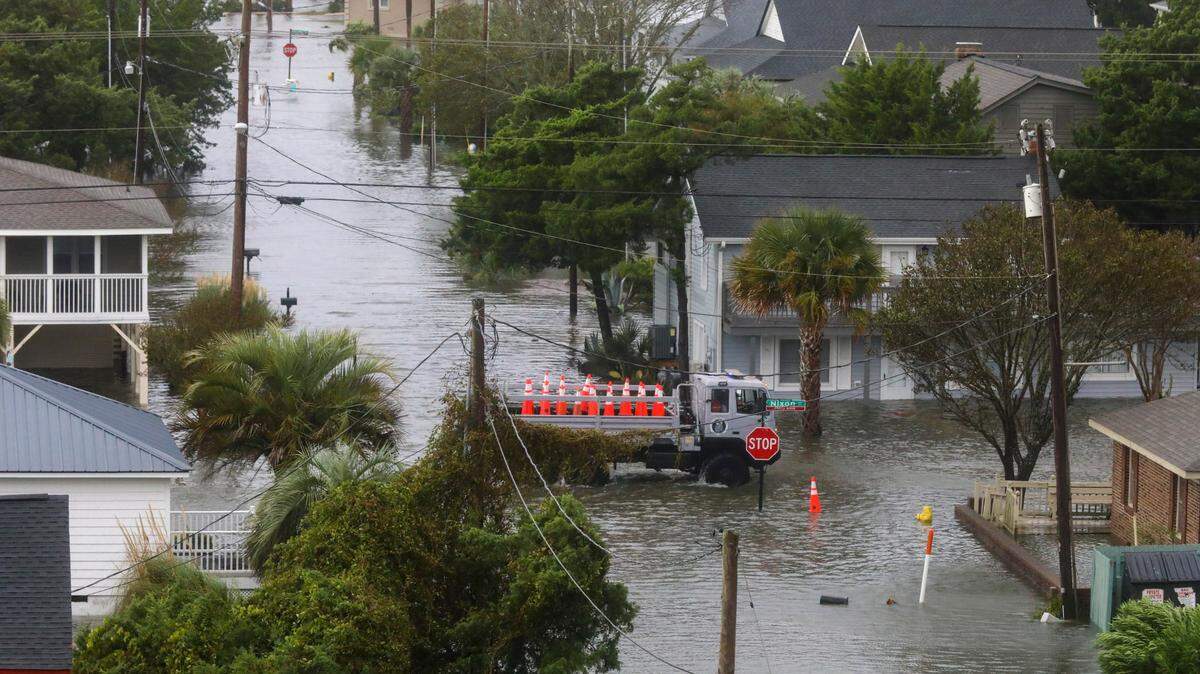
Myrtle Beach lovers may not like the city’s “dirty” moniker, but as Hurricane Idalia nears the South Carolina coast, the description could become literal.
Even if Idalia downgrades to a tropical storm, the Grand Strand could get its dirty side — an unofficial meteorological term to describe areas in the same direction as the wind’s path that are more susceptible to damaging rain and higher gusts.
Typically, the right side of a storm brings more of a wallop, and that’s the case with Idalia, according to the latest NWS models.
“For example, a hurricane with 90 mph winds moving at 10 mph would have a 100 mph wind speed on the forward-moving side and 80 mph on the side with the backward motion,” NOAA explains on its website. “Weather forecast advisories already take this asymmetry into account and, in this case, would state that the highest winds were 100 mph.”
The winds spiral counterclockwise around the storm’s center in addition to its forward movement. So as the storm moves forward, the winds are moving in the same direction and therefore their speeds are combined, as the Biloxi Sun-Herald describes.
On the other side of the storm, winds will be slower because “you must subtract the wind velocity from the forward velocity,” NOAA says.
“You don’t have to be that close to get the storm surge,” Brian McNoldy, a senior research associate at the University of Miami’s Rosenstiel School of Marine and Atmospheric Science who researches hurricanes and tropical cyclones, previously told the Miami Herald when discussing the “dirty side” of hurricanes.
This story was originally published August 30, 2023 at 9:09 AM.