
SC has studied wind energy for almost 20 years. Why there’s still no pay-off
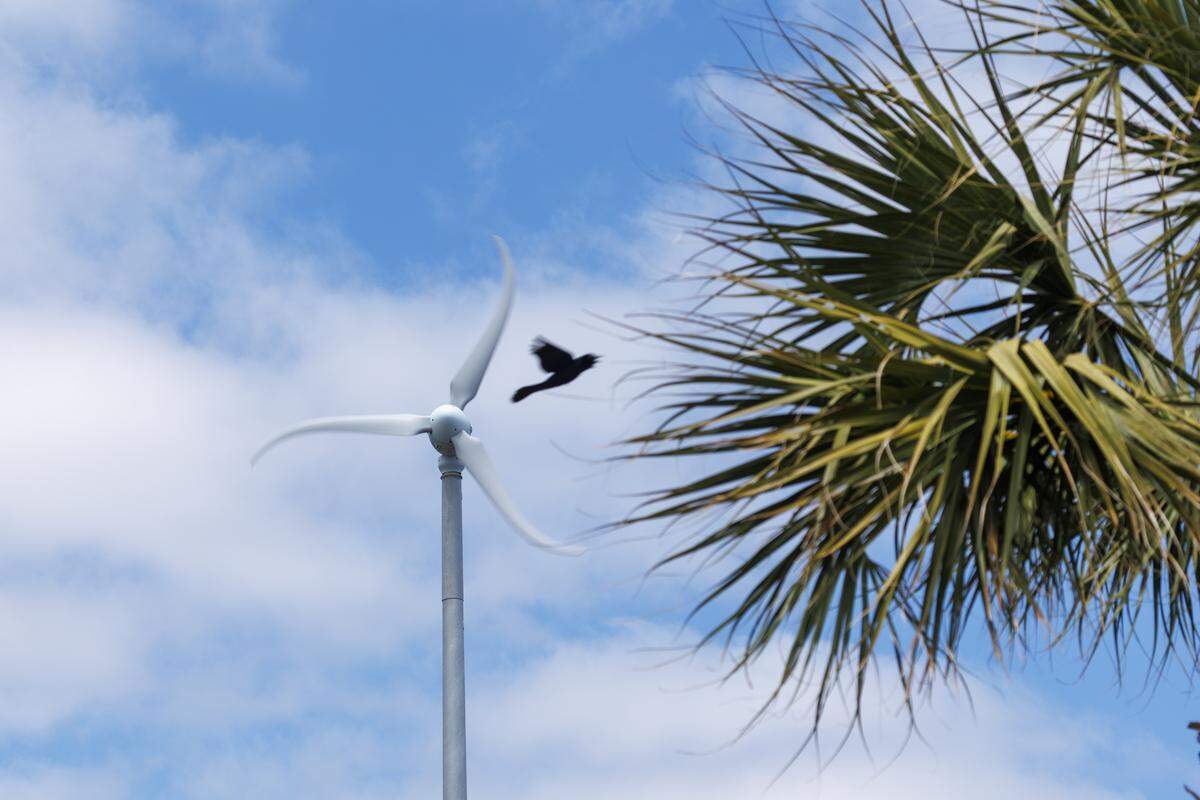
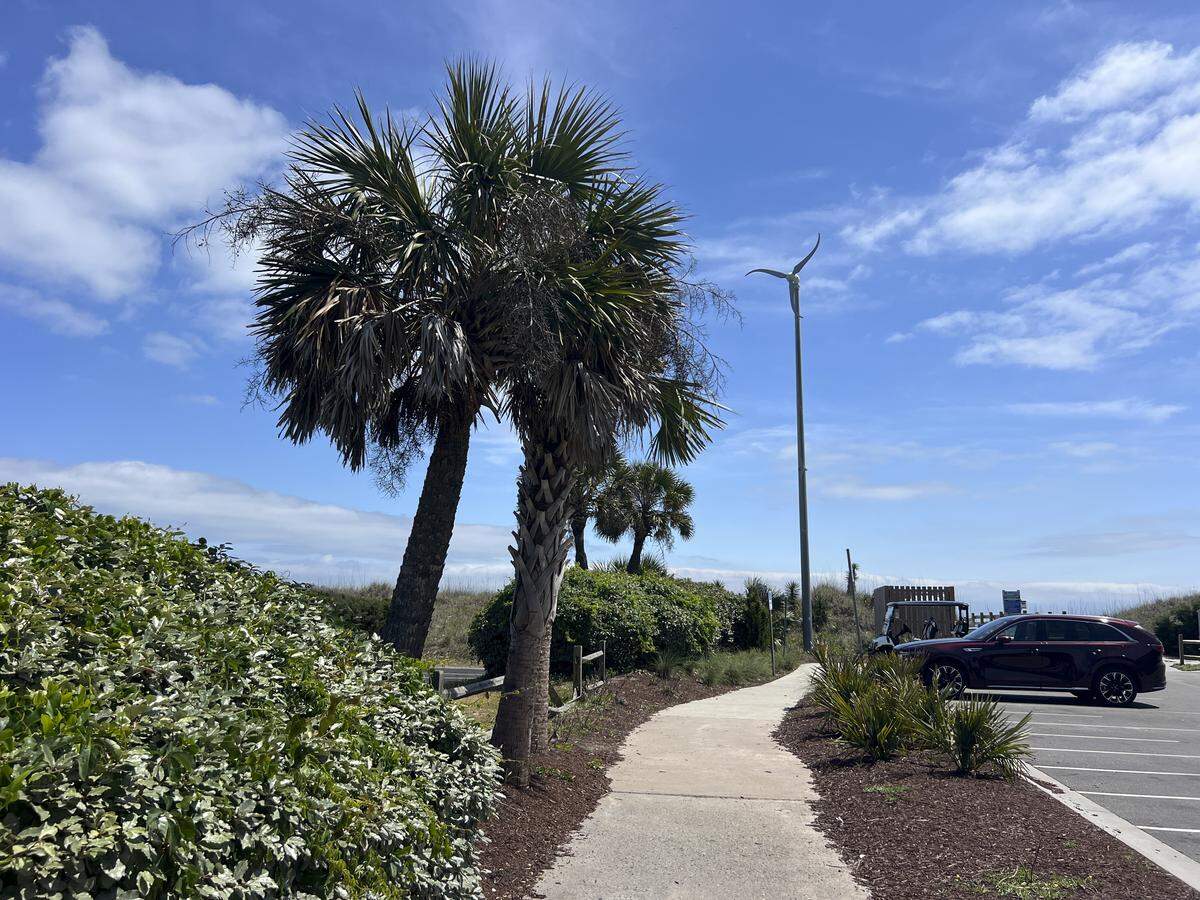
When the wind is blowing in North Myrtle Beach, small-scale turbine blades spin in the breeze at three beach-access locations.
These turbines are not powering cities, spanning miles and standing hundreds of feet in the air. But they are part of South Carolina’s plan to test wind energy potential, a plan that has been in the works for almost two decades.
Today South Carolina is home to one of the most advanced wind turbine testing facilities in the world and has years of mapping and feasibility studies under its belt, yet it is still one of six states in the U.S. without usable wind power generation.
In 2008, South Carolina Act 318 created a committee staffed by the state energy office to study and make recommendations for wind capability in the state. The study intended to understand the state’s wind potential to determine its investment worth, and the committee submitted 18 recommendations to promote future projects.
Over the years, dozens of involved scientists, economic strategists and local governments joined to put motions into place by studying the economic opportunity, mapping sea floors and critical habitat and testing wind potential at different heights. Mainly funded by federal grants, the studies took hundreds of thousands of dollars, and researchers poured years of their time without knowing their progress would eventually be halted.
Dr. Paul Gayes, Coastal Carolina University executive director for the Burroughs and Chapin Center for marine and wetland studies, has spent his career studying renewable energies and the effects of carbon in the atmosphere. He’s been part of the wind conversation from the start, but has seen other states jump on the opportunity before South Carolina.
“South Carolina wasn’t slow necessarily,” Gayes said. “It just takes forever to do things.”
Now nearly 20 years later, the state sits with the same potential and no finish line in sight.
Cost of South Carolina energy and the need for renewables
Offshore wind energy started in the northeast where the resources and cost of energy were higher, but as technology has evolved, cost and resources in the southeast became less of an issue positioning the region for a better chance at success.
Gayes said initial investment for offshore wind energy can be costly, but onshore farms could be built tomorrow and be economically competitive.
Santee Cooper residential customers consumed over 2 million megawatt hours (MWh) in 2024, and Dominion Energy residential customers consumed nearly 9 million MWh in 2025. The average South Carolina residential customer paid $149.51 a month for power in 2024, and $155.14 in 2025, according to the U.S. Energy Information Administration.
“We are an area that is growing at an enormously rapid rate,” Gayes said. “The demand for power is going up.”
In 2024, about half of South Carolina’s energy generation came from nuclear plants, which don’t release carbon or greenhouse gases, but nuclear is not a renewable energy source as it relies on uranium extraction and poses challenges with radioactive waste management. Only about 4% came from solar and hydrokinetic power, and the rest came from coal, natural gas and oil.
Considering the impact the state has already seen from a global carbon issue, wind energy has become a cost-effective way in other regions to reduce carbon emissions.
But the tug-of-war of political power and desire for renewable energy at the federal level has stunted progress nationwide, leaving South Carolina’s potential for pay-off still up in the air.
History of wind energy in the state
The southeast is the last region in the country to develop any sort of wind energy dependence. It’s mainly due to the lack of resources with the technology that was available. But South Carolina and nearby states started to play catch up in the 2000s during the country’s push for renewable energy solutions.
One of the recommendations of a 2008 state feasibility study was to develop a Regulatory Task Force for Coastal Clean Energy, studying the potential for wind, wave and tidal energy development. Leaders of the task force wanted to know what a wind energy industry would look like for South Carolina’s economy and if current regulations could foster an industry.
Initial modeling and reports suggested offshore wind farms could bring a significant amount of jobs, particularly with construction crews, engineers and mechanics.
In 2009, the U.S. Department of Energy awarded $45 million to Clemson University to develop a full-scale wind turbine testing facility using drive-train technology. Another $53 million of state and private donations led to its opening in 2013. It’s now one of the most advanced turbine testing facilities in the world and serves a global market.
Clemson declined to be interviewed for the story.
Proponents of offshore wind pointed to the facility as an enormous asset for South Carolina’s ability to transport the turbines due to its port location at the former U.S. Naval Base in North Charleston.
While recognition of offshore potential was slower statewide, one city welcomed the idea from the start.
North Myrtle Beach and Santee Cooper constructed a few small turbines, mainly under the guise of public awareness. The effort was to introduce locals to a technology they weren’t familiar with and to educate about the economic benefits of wind.
Members of the North Strand Coastal Wind Team, Monroe Baldwin, former NMB Chamber of Commerce head of economic development; Greg Duckworth, former NMB councilman; and Gayes, partnered with the city to build an advocacy for wind energy in the area. Public outreach was a huge contributor to the support that was lacking in the rest of the state.
The City of North Myrtle Beach had a proclamation to become a wind powered city, Baldwin said, and he promoted the idea of using the turbines as a tourism opportunity for fishing charters, diving and sightseeing.
“North Myrtle Beach is the only coastal community that said ‘Yes,’” Baldwin said. “Everybody else up and down the coast around us said, ‘We don’t want to see them.’”
Researchers continued the process of mapping areas of the state’s coast and testing wind speeds, all steps that needed to occur before offshore wind leases could be granted. The Palmetto Wind Project, led by Gayes as an initial offshore study for Santee Cooper, found that winds get better as you go offshore and higher, and in the state they get better from south to north.
“Off the Grand Strand, there actually is, that was known at that time, a healthy potential for wind,” Gayes said.
The area was also well-positioned for offshore leases because of the shallow depths of the area’s outer continental shelf. If sea floors were deeper, offshore turbines would need high-scale floating systems to keep them stabilized, which cost an exorbitant amount to build. However, every mile further offshore raised the cost to build even traditional towers, Gayes said.
“While our wind fields were not necessarily stronger than it might be, say in Massachusetts or Maine, the cumulative effect of having a much bigger area that could be cheaply realized and the character of the winds is... I think South Carolina had the potential to be one of the top wind (production) states,” Gayes said.
Since the Grand Strand area’s power grid is relatively new, it could take a significant amount of energy from offshore without a major overhaul like it would in other parts of the country. Habitat mapping found minimal environmental impacts. There were no significant cultural resources or important shipwreck sites in the mapping area. Things appeared to be moving in a positive direction.
But since the offshore areas available to lease were in federal waters, they required federal action, and the administration handoff in 2016 changed the outlook for renewables across the country.
How federal politics interrupted state energy plans
In 2006, the Gulf of Mexico Energy Security Act created a moratorium banning oil and gas leasing in parts of the Gulf of Mexico and was set to expire on June 30, 2022.
But at the tail end of President Donald Trump’s first administration, he extended the moratorium to ban offshore leasing in North Carolina, South Carolina, Georgia and Florida for another decade, and included offshore wind leases.
When President Joe Biden’s administration took over, efforts to revitalize investment in offshore wind escalated. The U.S. Department of Energy made a goal to reach 30 gigawatts of offshore wind energy production by 2030, kickstarting the leasing processes for other offshore projects in a more ready position. (One offshore wind turbine in future U.S. projects would produce between 12 and 14 megawatts, meaning there would have to be roughly 2,000 to 2,500 operational wind turbines to reach the goal).
While South Carolina was still getting its footing, offshore wind leases were granted in North Carolina in May 2022 in an attempt to secure them before the initial moratorium deadline. The Bureau of Ocean Energy Management auctioned the leases just across the border of the Grand Strand to TotalEnergies, a French energy company, and Duke Energy.
The Biden-Era Inflation Reduction Act of 2022 included a provision for every 60 million acres of oil and gas leasing put up for auction, offshore wind leasing must also be offered to create certainty for wind availability.
When administrations changed hands again, Trump doubled down on his stance against renewable energy, revoking the ability to lease offshore wind.
His latest action consisted of canceling offshore wind leases in New York and North Carolina in March 2026 and other projects in New Jersey, New York and California in April, essentially refunding the companies what they paid for the leases plus interest.
Karly Brownfield, senior program manager of the Southeastern Wind Coalition, said when the administration sends signals implying investors can follow all the rules to get a project permitted and approved but still face an extreme risk that a project could get stopped after significant investments have been made, it is not a signal an investor wants to see.
“At the end of the day, I think the biggest impact that the Trump administration has had on the offshore wind industry, (and) the clean energy industry as a whole, is uncertainty,” she said.
While the lease canceling did not directly affect South Carolina, Gayes said because of the industry’s halt the state won’t see offshore production for likely another 15 years.
What could be next for South Carolina wind?
With offshore wind off the table for the time being, Brownfield recognized the state’s opportunity to pivot to onshore wind investment.
Onshore wind farms are not typically seen in the southeast because of its presumptive lack of wind resources. But early models of wind potential were “tremendously different” than actual speeds, according to Gayes. Evolved turbine designs and taller towers can help accommodate the region, but transportation becomes an issue.
What’s different about onshore projects in the southeast versus the Midwest or western regions is building wind farms on private land, Brownfield said. Building on private land, typically on someone’s farm, offers economic benefits to rural communities.
“Because they’re built in rural areas, the onshore wind farm, nine times out of 10 becomes the largest taxpayer in the county,” she said.
In Chowan County, North Carolina, Timbermill Wind started construction in May 2023 and began clean energy generation in December 2024. It’s projected to generate $50 million in tax revenue to the county in its 30-year lifespan. The landowners themselves also receive lease payments, providing a reliable source of income.
Brownfield said after the construction period, each tower takes up less than half an acre and still leaves significant usable land, but success of the projects depends on community support.
Gayes said he was working to put together proposals for a test bed site in South Carolina to prove the capacities and economics of onshore wind potential, but the change in administration, and with it interest in wind power, has put things on hold.
The lack of support for projects like onshore and offshore wind development often comes from a rejection of the world’s climate issue caused by increased carbon output, Gayes said.
As a coastal state already seeing the effects of a warming climate — increased inland flooding, beach erosion and sea-level rise — Gayes said doing nothing is not an option.
The smarter option would be to invest in all types of energy production, including oil and gas, but at varying degrees, Gayes said, but the reality of transforming an oil-based economy overnight is impractical.
“There is no magic bullet,” he said.
While the future of wind in South Carolina is uncertain, the preparation is already there for when the time comes for offshore leasing, and Gayes is certain it will come.