
Tropical Storm Gabrielle may form in Atlantic soon. Here are the risks to SC
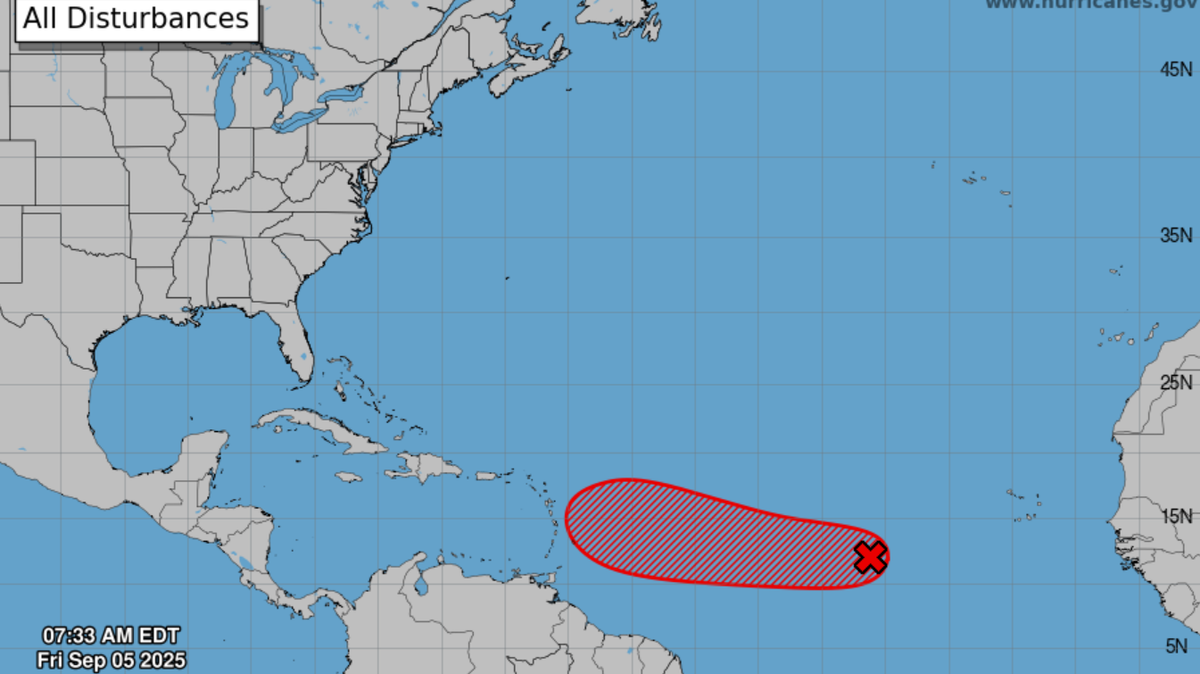
A tropical wave in the eastern tropical Atlantic will more than likely develop into the Atlantic hurricane season’s next tropical storm. The broad area of low pressure is producing showers and thunderstorms as it slowly moves west across the Atlantic.
As of Friday morning, the National Hurricane Center (NHC) predicts the disturbance has a 60% chance of forming into a tropical storm in the next 48 hours and a 90% chance of forming in the next week. If and when a cyclone forms it will be Tropical Storm Gabrielle, the sixth storm so far this season.
The westward storm’s path is still developing, but according to meteorologist Adam Weiner with the National Weather Service, it probably won’t hit South Carolina with direct impacts.
“Ultimately, the majority of the guidance that we have turns it well away from the United States,” Weiner said. “It has it turning, perhaps, somewhere near, north of or around Puerto Rico, and then perhaps affecting Bermuda and turning away beyond there, as the area of high pressure with the Atlantic that would normally be located close to Bermuda is expected to be well to the east over the Azores islands.”
Weiner predicts the mainland United States won’t see any concerning impacts from the tropical Atlantic for at least the next 10 days, but if Gabrielle becomes a stronger storm or a weak hurricane, South Carolina could see surf impacts from storm swells.
“At this point, the probability for anything related to central weather impacts, like heavy rainfall or wind, that is essentially zero chance at this point, and would not be a concern, for probably at least 10 days if it were to get close,” Weiner said.
Although this storm isn’t expected to slam South Carolina, experts stress that residents and visitors should prepare for bigger storms later this hurricane season. Tropical storms and hurricanes most frequently hit South Carolina in September, and the storm peak continues through October.
“Even though the pattern that we have is resulting in no tropical systems right now, as we get near the peak, the inhibiting factors can only last so long,” Weiner said. “Perhaps we’ll end up lucky, and we’ll have things to stay on the lower side of activity through the peak, but with this relatively quiet period, people should always be preparing for what might be coming later.”
This story was originally published September 5, 2025 at 8:44 AM.