
Hurricane season predictions for SC just changed for the year. Here’s the latest forecast
.JPG "Ocean Boulevard in North Myrtle Beach flooded as Hurricane Ian made landfall in 2022.")
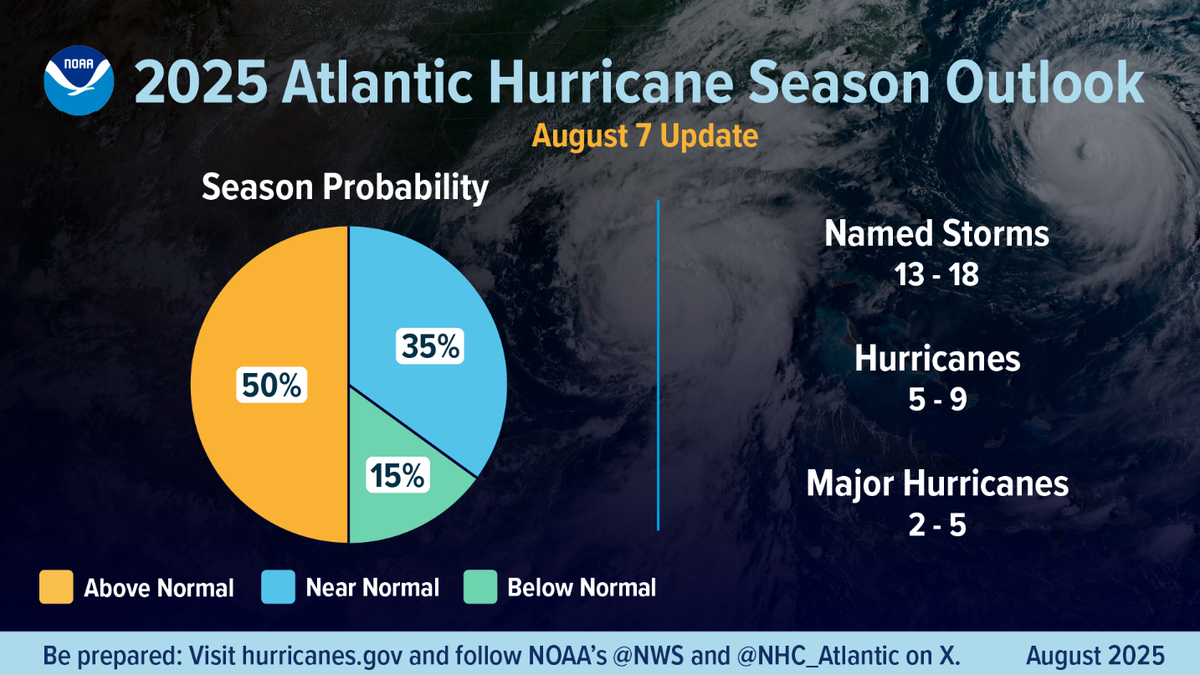
Two months into the official hurricane season, National Weather Service (NWS) forecasters have updated their earlier predictions, now expecting the Atlantic basin will see nine to 14 more named storms this year, five to nine of which could become hurricanes, including two to five major hurricanes.
Those ranges are all in line with an average year, which sees 14 tropical storms, seven of which develop into hurricanes, including three major hurricanes.
This week the National Oceanic and Atmospheric Administration dropped the chance of an above-normal Atlantic hurricane season from 60% to 50%. While the possibility of a more intense season remains strong, there’s a 35% chance of a near-normal season and a 15% chance of a below-normal season.
Although hurricane season officially runs from June 1 to November 30, historically the majority of tropical storms and hurricanes strike South Carolina in August, September and October.
“We’re heading into the more climatologically favorable time of the season, when activity typically ramps up, so as we head into now to early-to-mid September, it’s kind of like the peak,” NWS meteorologist Bob Bright said. “So it does generally look like conditions have become more favorable with potential for some storms that develop and potentially impact the area in the next few weeks.”
But the number of named storms doesn’t necessarily determine the impacts of a given season. Tropical Storms Andrea, Barry, Chantal and Dexter have already moved through the Atlantic Basin this season, though none majorly affected South Carolina.
“We’ve seen seasons where there’s a lot of storms, but most of them stay off-shore and don’t really affect anyone,” Bright said. “So it’s really no strong correlation with the number of storms all together and the impacts.”
Heading into the peak of hurricane season, experts stress the importance of storm preparedness. South Carolina is among the states most vulnerable to hurricanes and tropical storms, according to the state’s Emergency Management Division.
Experts recommend establishing multiple ways of receiving emergency alerts, identifying your home’s flood risk and evacuation zone, learning predetermined evacuation routes and creating a family emergency plan.
“It only takes one, and everybody should be prepared no matter what the seasonal outlook is, because we have seen seasons where the total number of storms maybe isn’t that high, but we still get significantly impacted by storms,” Bright said.