
Alligators are crossing people’s paths in SC this summer. Here’s how to keep family & pets safe
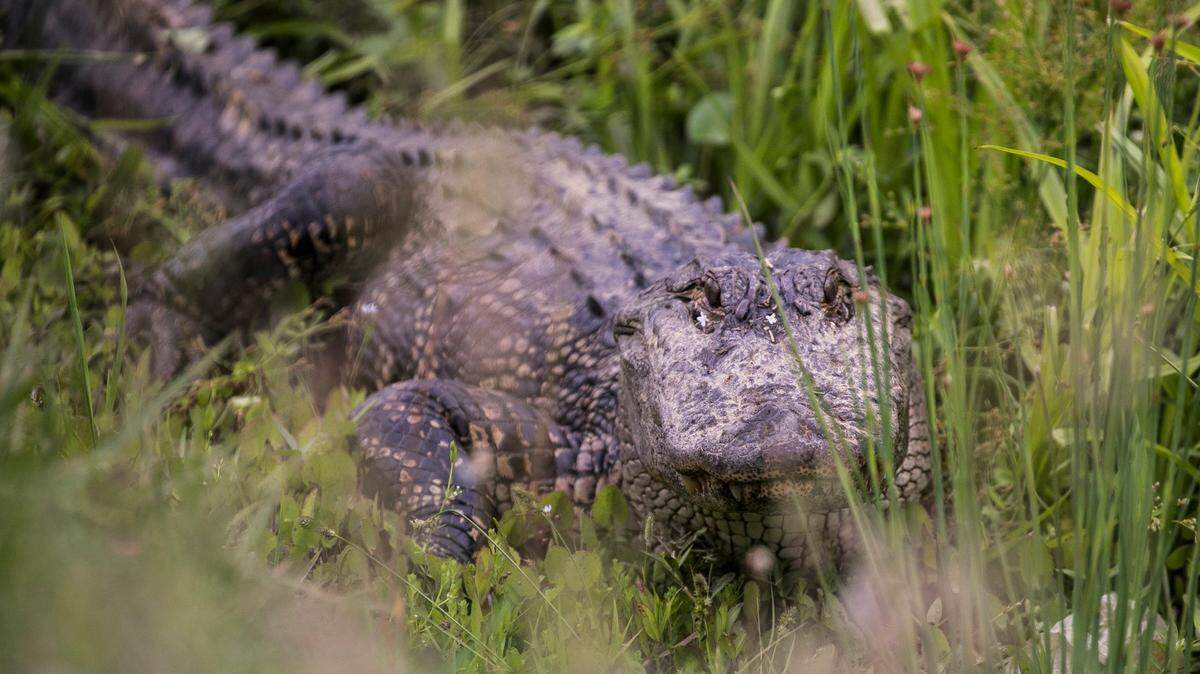
From state parks to social media, alligators crossings, like this one seen in Murrells Inlet, are racking up attention this summer.
Growing up to roughly 13 feet in length in the Palmetto State, alligators are an essential part of South Carolina’s ecosystem. Here’s what you need to know to protect yourself, your pets and even gators this mating season.
How common are alligator attacks?
Although the apex predators can be deadly, alligator attacks are incredibly rare. According to South Carolina Department of Natural Resources Alligator Project leader Morgan Hart, alligators are responsible for just six deaths in South Carolina since 2016.
“You’re actually more likely to be struck by lightning twice than you are to be killed by an alligator,” she said. “So, the risk is still very low, even when doing things in waterways [or] around waterways, especially if you are staying aware of your surroundings.”
And while attacks are rare, alligators are fairly common. Some people safely encounter the large reptiles without even realizing it. Contrary to the frightening image alligators might conjure, they’re far more likely to hide from humans than chase them.
“They’re ambush predators. They’re pretty lazy,” Hart said. “They really just would rather let the food come to them right so they will just kind of hang out in the water, right on the edge and wait for something to kind of stumble upon them.”
Staying alligator safe
However, alligators are still dangerous and it’s important to take precautions in areas where you might encounter one.
“They certainly can be dangerous, and if you do stupid stuff around an alligator, you might get really hurt,” Hart said. “But also, they’re not monsters.
The large reptiles can be found lurking in any body of water below the fall line, and humans frequently don’t spot them, so experts recommend always behaving as though a gator’s around. Here are some tips to remember.
Give gators space
“Giving them space is the most important thing,” Hart said. “Usually when people are injured on land, or something like that, it’s because they have walked up on the alligator, the alligator is scared and it bites out of defense.”
If you see an alligator, don’t approach it. Stay calm and immediately move a safe distance away.
“Back away from the water,” Hart said. “You don’t have to run in a zigzag or any kind of crazy thing like that. Just give them space.”
And if the gator is interested in something you have, like fish you’re reeling in, let the alligator take it. It’s best to avoid a fight with a gator at all costs.
Be careful around water with pets
“Alligators are more likely to actually hunt from the waters, and larger alligators will hunt small mammals like raccoons and possums and things like that, and sometimes will confuse pets for those animals,” Hart said.
When walking or playing with pets, keep them on leash at a distance from the water. According to Hart, three South Carolina alligator fatalities in the last 15 years have been partially attributed to walking dogs.
“The alligator approached the dog, the person tried to rescue the dog, or got in the middle of the situation, and was then drowned by the alligator,” she said. “It was actually going for the animal, so sort of a mistaken identity kind of thing.”
Don’t get between a gator and water
Alligators can move quickly on land, but they tend to run as an “escape mechanism” when they feel threatened.
“They’re going to run towards the water, because that’s where they feel the safest,” said Hart. “So, try to give them space and not get between them in the water, so they’re not accidentally running at you.”
Stay situationally aware
Alligators like to swim and lounge in areas with dense vegetation. Even if a gator isn’t in the water, one may be relaxing in the plants. They’re also more active from sunset to sunrise.
“You want to avoid swimming at dawn and dusk, because that’s when alligators are most active and most likely to be feeding, and it’s harder for you to see,” Hart said.
Never feed gators or dump potential food
Alligators don’t view humans as a food source, unless they’ve been taught to overcome their natural fear of people. Gators that associate people with food are a threat to humans.
It’s critical never to intentionally feed alligators, throw fish scraps in the water or feed other wildlife near water, which can attract gators.
If an alligator attacks you
In the extremely unlikely event of an alligator attack, fighting back is the best course of action. According to Hart, a gator’s eyes, nose and throat are the softest parts of its otherwise bony body.
“You definitely want to fight as much as you can,” she said. “But again, a much better thing to think about, rather than just fighting if you get grabbed by an alligator, is not to let yourself get in the situation where an alligator could get you.”
Despite their big jaws and sharp teeth, it’s important to remember that alligators are essential members of South Carolina’s natural ecosystem that rarely attack humans.
“They’re just animals that are trying to live their lives, and they’ve been here a lot longer than we have,” Hart said. “So, respect their space, give them space to do what they do and observe them from a distance, and they’re pretty fascinating.”