
What should you do if you find a stranded shark? This is what SC experts recommend
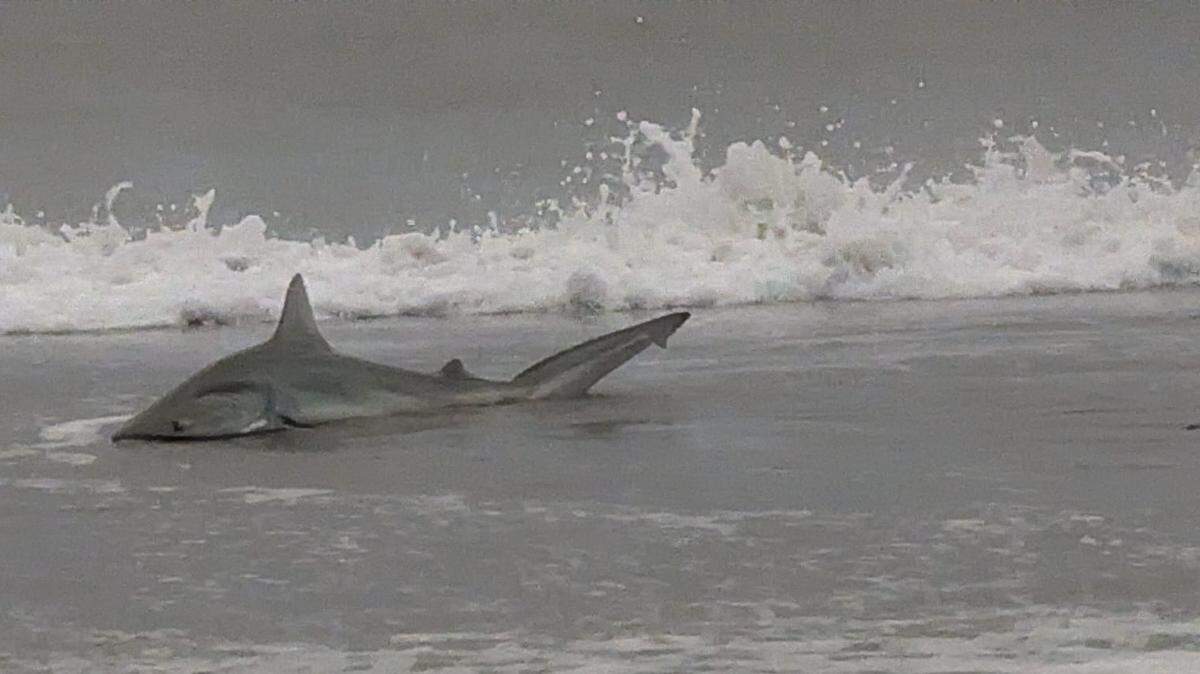
When Iowa resident Randi Willard came across a shark stranded in shallow water on her Myrtle Beach vacation, she wanted to help the animal but wasn’t sure how.
Willard was next to a swash on the beach near Damon’s Grill in Myrtle Beach Monday night when she noticed the shark and rushed to try to help maneuver it back to the ocean.
“Any animal I see in danger, I’ll run right towards it,” Willard said. “My heart was pounding as I ran up. I was like, ‘I’m not exactly sure what I’m doing here,’ but I was going to figure it out.”
But before Willard could reach the shark, a wave washed it farther inland. Now in deeper water and out of Willard’s reach, the shark was able to swim but still on the beach.
“I stood around for a while to see if I could see it any longer. The water was pretty deep. I couldn’t see it, so I headed back,” said Willard.
Still concerned, Willard took to Facebook for help. On the advice of commenters, she reached out to the Myrtle Beach Police Department’s non-emergency line and was told to contact the South Carolina Department of Natural Resources (DNR).
Willard contacted DNR and local wildlife groups on Facebook, but said Tuesday she hadn’t received responses.
In situations like Willard’s, where sharks are caught on the beach, marine biologist and DNR principal investigator for shark research Bryan Frazier recommends calling the DNR hotline at 1-800-922- 5431.
The hotline is actively manned 24 hours a day and callers can report wildlife emergencies and situations immediate law enforcement assistance from a natural resources officer.
Because each situation is unique, there’s no single recommended course of action when dealing with a stranded shark. Experts are best equipped to assess factors like the species of shark, area of beach and tides.
“In some areas of our state, we have 7-and-a-half-foot tides, so if a shark is in a pool at low tide, that shark’s likely going to be able to get out in 6 hours when the tide comes up,” Frazier said.
Although circumstances when dealing with trapped sharks vary, DNR’s primary concern is always safety. Sharks are wild animals and predators, and even humans with the best intentions can get seriously injured.
“Certainly, a shark struggling in shallow water isn’t going to know that you are trying to help them, and even small sharks can inflict a pretty nasty bite if they get their jaws on you,” Frazier said. “So, the big thing is, we always want people to be concerned about their own safety first.”
Because biting is a shark’s only defensive move, if a shark feels threatened it will either try to flee from a human or bite them. In situations where a human does handle a shark, Frazier says the circumstance depends on the size of the shark and the depth of the water.
“I’ve handled a lot of sharks, and I would still be leery handling a shark in the water, because they can turn quickly and, like I said, they may not understand you’re trying to help them,” Frazier said.
For those who decide to risk handling a shark, controlling the animal’s head is most important. Although sharks have powerful tails, their teeth are far more dangerous, he said.
“Sharks are a lot like alligators; If their jaws are closed, they don’t have very strong muscles to open them, so you can control that a little better,” Frazier said. “But in general, unless it’s a very clear situation where you can handle them, I would recommend not.”