
Have you noticed fuzzy brown patches on your porch in SC lately? Here’s why & if they’re dangerous
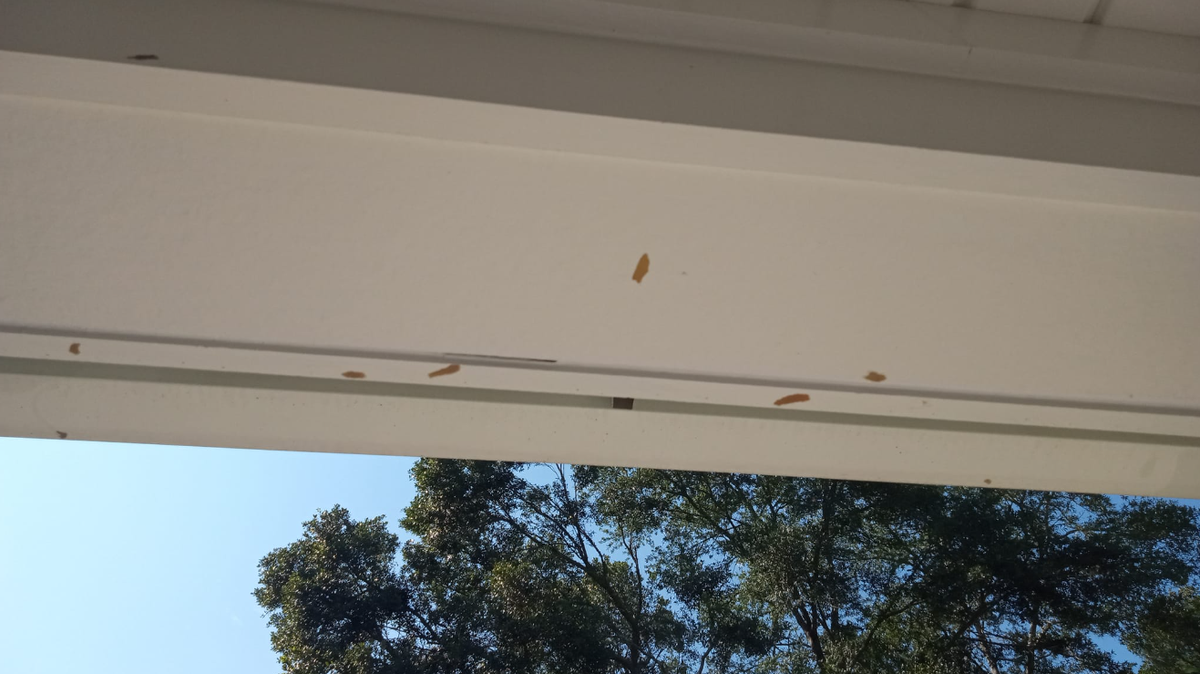
If you’ve noticed dusty, brown patches around your porch or the exterior of your house, you could be looking at eggs. Lots of different moth species lay fuzzy clusters of small round or oval eggs, which appear brownish at some point during development.
Although other insects lay eggs with similar appearances, clusters located on walls and ceilings outside of buildings are often moths. Here’s why.
Typically, larval moths will hatch on or near a host plant and use it as a food source to grow. Because of this, an egg laid on the ceiling of a porch isn’t a promising start for a caterpillar, and the insect probably won’t survive without a host plant nearby.
So why do gravid, or pregnant, moths lay eggs high up on the exteriors of houses? The same reason moths are drawn to houses in general: light.
“Moths are attracted to lights so lots of times they’ll just lay eggs where they are in clusters,” said Ben Powell, extension specialist with Clemson University’s Apiculture and Pollinator Program.
Why are you seeing more in SC now?
Like many insects, moths are partial to the warmer and wetter months. Lots of moth species overwinter, or enter more dormant phases in the colder season, which is why you don’t see them flying around.
As temperatures drop in the next few months, moth activity will slow until the weather warms again next spring.
Are they harmful?
While eggs laid on your house aren’t likely to survive, other clusters in your yard might. South Carolina has hundreds of common moth species and some are definitely considered pests.
Unfortunately, distinguishing between moth species by examining egg clusters is extremely difficult.
“Egg identification is probably the hardest thing to do in all insect identification … unless you rear them out, like you raise the caterpillar and develop the caterpillar to the point where you can identify it, you’re not going to know which ones these are,” Powell said.
One way to protect your yard is to grow native plants, which have adapted to survive the native moths that feed on them, Powell said.
If you do notice an abundance of caterpillars and damage to your yard, you could have an influx of fall armyworms. To check, the Clemson University Home and Garden Information Center (HGIC) says you can lure armyworms out by pouring a mixture of water and lemon-scented dish soap over one square yard of healthy turf next to a damaged area.
If you have an infestation of armyworms, HGIC recommends using an insecticide with bifenthrin, Bacillus thuringiensis (B.t), cyfluthrin, cypermethrin, lambda-cyhalothin, permethrin or spinosad.
But moths aren’t necessarily cause for concern. On the contrary, they’re a natural part of South Carolina’s ecosystem. Moths eat plants but, like butterflies, they also pollinate them. Additionally, the insects are a food source for birds and other animals.
“These are all creatures that have a role in the environment and, if we can leave them to their devices, then the system works,” said Powell, “And we benefit from the ecological services that all these creatures provide.”
Should you remove egg clusters from your house?
Clusters of moth eggs can be easily wiped off your house, but according to Powell, you don’t need to remove them. Far from a viable host plant, the eggs are unlikely to grow to moths or caterpillars and won’t have the chance to help or hurt your yard.
If you do want to remove them for aesthetics or other reasons, it shouldn’t have any negative consequences.
“The likelihood of these caterpillars surviving is probably pretty low. If people wanted to clean and remove them off of their siding they could, and I don’t think they’re going to have any significant impact on the moth population,” Powell said.
This story was originally published August 23, 2024 at 6:00 AM.