
South Carolina

Great horned owls take over famed SC live streamed nest. Here’s how to watch

The great horned owl has recently claimed a well-known nest on Hilton Head Island that is recorded by a Raptor CAM that is monitored by the Hilton Head Island Land Trust and is live-streamed to interested viewers.

Earlier this month, a great horned owl mother laid a single egg, which she and her mate will incubate for the next month.

To view the live stream, click here.
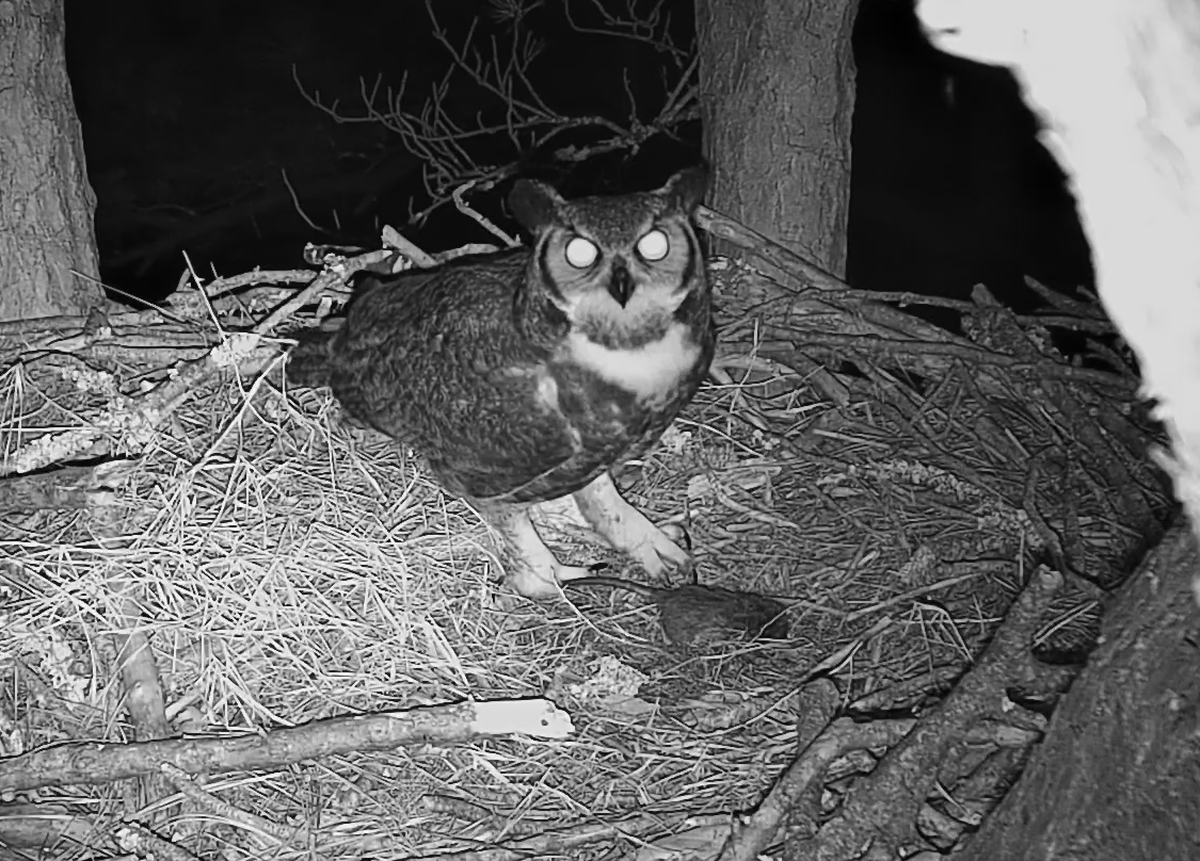
A great horned owl dines on a mouse in what was once an eagle nest on Hilton Head Island. Formerly Eagle CAM, the Hilton Head Island Land Trust has renamed the livestream to Raptor CAM after two of the owls claimed the nest.
A great horned owl dines on a mouse in what was once an eagle nest on Hilton Head Island. Formerly Eagle CAM, the Hilton Head Island Land Trust has renamed the livestream to Raptor CAM after two of the owls claimed the nest. Image courtesy of the Hilton Head Island Land Trust

So what should viewers know about this particular kind of owl?

What are they?

The great horned owl is the largest breeding owl in South Carolina and is one of the country’s most common owl species.

Named for their prominent ear tufts, these owls are gray-brown in color with mottled patterning on most of the body, a white throat patch and yellow eyes.

A half-dozen types of owls make their home in North Carolina, including the great horned owl, a large raptor.
A half-dozen types of owls make their home in North Carolina, including the great horned owl, a large raptor. JOHN SLEEZER JSLEEZER@KCSTAR.COM

What do they eat?

These owls prefer to prey on mammals but will commonly dine on birds, reptiles, amphibians, insects, fish, crustaceans, carrion, and even scorpions, according to Hawk Mountain Global Raptor Conservation.

Generally speaking, these owls will eat what is available to them in their respective habitats.
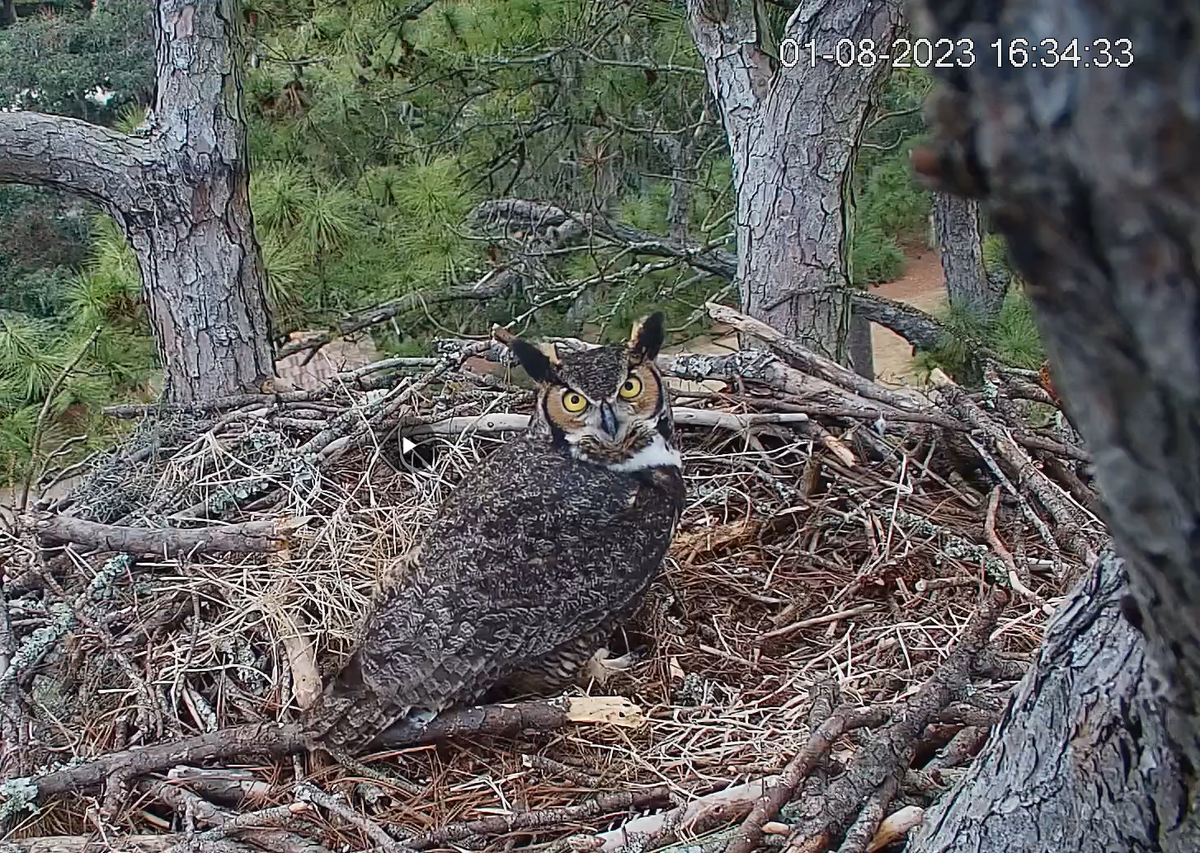
A great horned owl sits in what was once an eagle nest on Hilton Head Island. Formerly Eagle CAM, the Hilton Head Island Land Trust has renamed the livestream to Raptor CAM after two of the owls claimed the nest.
A great horned owl sits in what was once an eagle nest on Hilton Head Island. Formerly Eagle CAM, the Hilton Head Island Land Trust has renamed the livestream to Raptor CAM after two of the owls claimed the nest. Image courtesy of the Hilton Head Island Land Trust

Where do they live?

Great horned owls can be found nesting pretty much everywhere in the state, so one shouldn’t be very difficult to find if you are hoping to spot one. A great place to start looking would be in trees, ledges and buildings.

They have many habitats, including forests, wetlands, grasslands, deserts and urban environments.

“I took this photo of great horned owlets near a golf course in Conway this April,” said Donna Livasy.

What are their breeding habits?

Great horned owls are one of the earliest breeding raptors in the country, as they begin their courtship as early as the fall, and typically use secondary nests often from red-tailed hawks to lay their eggs in December or January.

“Incubation lasts for an average of 33 days and is done entirely by the female. Clutch size ranges from one to five eggs with an average of two. Great-horned owls are capable of double-clutching, meaning that if the first clutch fails the female may lay another. However, usually fewer eggs are laid the second time, and they are smaller,” detailed Hawk Mountain.

Baby great horned owls made their debut on Valentine’s Day at a nest they borrowed from osprey at the Pascagoula River Audubon Center in Moss Point.
Baby great horned owls made their debut on Valentine’s Day at a nest they borrowed from osprey at the Pascagoula River Audubon Center in Moss Point. Erin Parker/Pascagoula River Audubon Center
Sarah Claire McDonald
The Island Packet
Sarah Claire McDonald worked as a Service Journalism Reporter for The Island Packet and Beaufort Gazette. She specialized in writing audience-focused, unique, spotlight stories about people, places and occurrences in the Lowcountry. Originally from the Midwest, Sarah Claire studied news media, communications and English at the University of Alabama in Tuscaloosa, where she graduated in 2021.
Get unlimited digital access
#ReadLocal

Try 1 month for $1

CLAIM OFFER