A partial eclipse will darken SC skies soon. Here’s when and how to watch
When the sky darkens at midday, the temperature drops and nighttime insects start chirping later this October, it won’t be a catastrophic event, but a solar eclipse.
On Oct. 14, a solar eclipse will be visible in the United States, and curious South Carolinians can experience it.
Learn how you can experience this rare astronomical phenomenon.
When can I see the eclipse in South Carolina?
The partial solar eclipse will be visible on Oct. 14, 2023, weather permitting. The peak of the eclipse will occur a little after 1 p.m.
What is a partial solar eclipse?
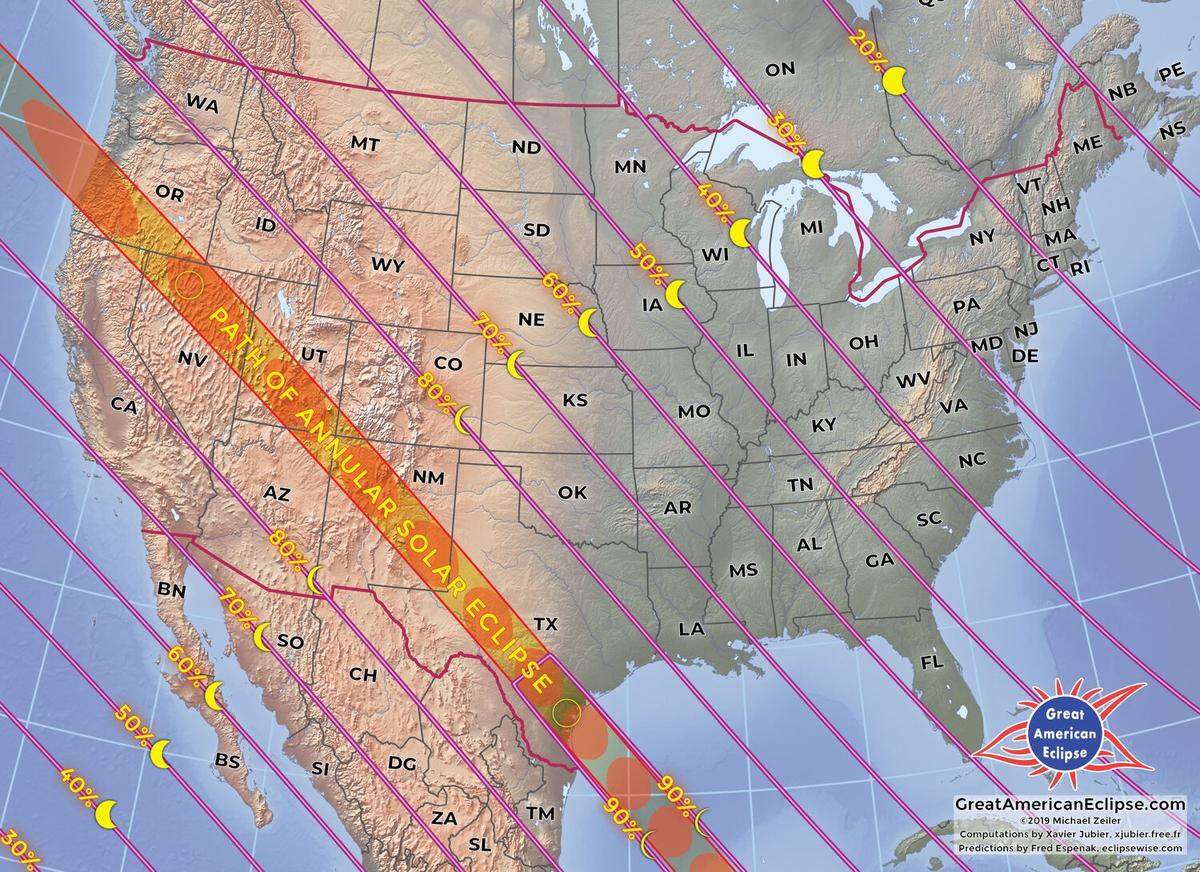
A solar eclipse occurs when the moon comes between the Earth and the sun, blocking the sun’s light on Earth. When the moon blocks out some of the sun, that is what’s called a partial solar eclipse. Those in the path of totality can see the moon entirely in front of the sun.
This October there will be an annular eclipse, where those in the path of totality will see a “ring of fire” around the moon, when the sun isn’t entirely blocked out.
In 2017, South Carolina experienced a total solar eclipse, where the whole sun was covered in the path of totality. This is because the moon was closer than the Earth and appeared larger than it will be this October.
How rare are solar eclipses?
The most recent solar eclipse passed through the United States in 2017 and the last annular eclipse happened in May 2012. An annular solar eclipse won’t pass through South Carolina again until January 2028.
How dark will it get?
In South Carolina, 40-50% of the sun will be covered at the peak of the eclipse, according to Time and Date.
Shadows appear sharper and light looks different during an eclipse, said Ian Hewitt, astronomy instructor at Coastal Carolina University.
“Your brain is telling you something’s off,” Hewitt said.
How can I safely watch the solar eclipse?
While you may be tempted to look at the eclipse with your bare eyes, that causes eye damage. Even observing through dark sunglasses, a camera or a standard telescope is harmful.
If you want to see the eclipse from home, Hewitt recommended buying eclipse glasses from a reputable source or making a simple pinhole camera out of paper.
Many local astronomy clubs or universities are also planning viewing parties, with specialized solar telescopes and other equipment.
What if there’s bad weather?
The eclipse is going to occur when it occurs, regardless of the weather, Hewitt said. If clouds or rain fill the sky during October’s eclipse, unfortunately you won’t be able to see it. “That’s just kind of to deal with astronomy, it’s very weather dependent,” Hewitt said.
What other astronomical events are coming up?
On April 8, 2024, a total solar eclipse will cross North America, with the path of totality passing through states including Texas, Ohio and Maine.
Next year will also bring two lunar eclipses, one in March and another in September.
This story was originally published October 4, 2023 at 6:00 AM.