$10M could be set aside annually to combat erosion on SC beaches. Here’s what’s proposed
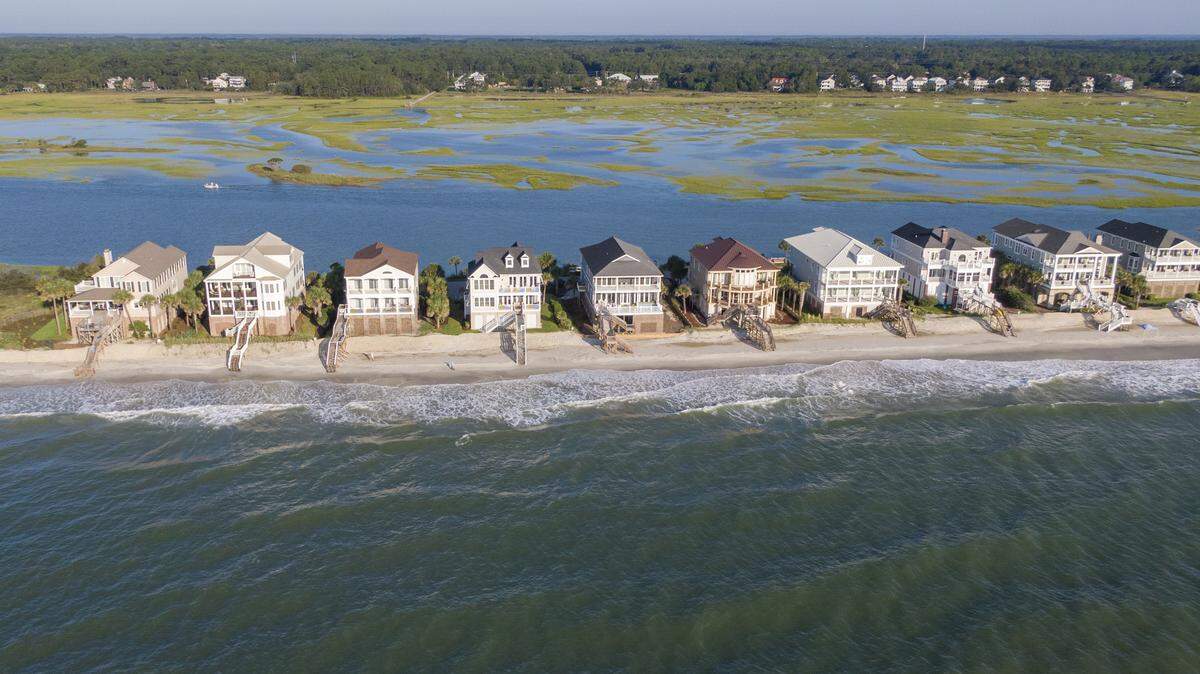
State legislators and a beach advocacy group are proposing a permanent beach renourishment fund that would rake in $10 million each year and be controlled by the S.C. Department of Parks, Recreation and Tourism.
Maintaining South Carolina’s shoreline, advocates and legislators say, is vital to the economic health of the state’s tourism industry. It also provides resilience during hurricanes, reducing flooding and other damage.
Carving out a “predictable source of income” would enhance long-term planning for battling coastal erosion, Sen. Tom Davis, R-Beaufort, said. The plan is included in a bill to permanently fund renourishment.
“The only difference here is instead of every year having to go in and argue for a beach renourishment appropriation, that’d it be almost on automatic pilot,” Davis said.
Since Hurricane Hugo hit in 1989, more than 40 beach renourishment projects have been launched in the state, costing federal and state taxpayers over $300 million, according to The State Media Co. reporting.
Currently, beach preservation funds reside under the S.C. Department of Health and Environmental Control’s Office of Coastal Resource Management. But for many years, the efforts have not been fully funded, said Nicole Elko, executive director of South Carolina Beach Advocates, the group pushing for the bill.
PRT received non-reoccurring funds for beach management between 2016 and 2018, which were used to fund projects through 2020, said Justin Hancock, the department’s recreation, grants and policy director.
If passed, the bill would set aside 25% of revenue from the already-existing state admissions tax for a state beach renourishment trust fund. The 5% tax is assessed on most places of amusement that charge for admission. Currently, 26% of the tax goes to the S.C. Film Commission and the remainder goes into the state’s general fund, Hancock said.
Setting aside a quarter of the revenue would raise roughly $10 million annually, Elko said. The DHEC fund would be transferred to the PRT, which would be charged with doling out the money.
“When the tourists are coming to the beaches, they’re spending admission taxes, they’re going golfing, they’re going to ride the SkyWheel at Myrtle Beach,” Elko said.
Simply put, the admissions tax is a type of user fee.
Vying for renourishment, local governments would have to submit a grant request to the PRT for renourishment funds. Requests would be ranked, taking into account aspects such as the beach’s erosion rate and how many people use it, Davis said. If granted, local governments would need to make a dollar-to-dollar match with the state funds.
As the bill is written now, the preservation funds could not be used for beaches with private access, Hancock said.
While South Carolina beaches are technically state-owned, a handful of beaches do not have public access to the seashore. That means unless people could reach the beach via a watercraft, they would need to make it through a set of gates or through private property.
Historically, federal renourishment funds cannot be applied when there is no public access. Communities such as Harbor Island in Beaufort County and Debordieu in Georgetown County have suffered drastic shoreline erosion but have not been able to use public renourishment funding. Debordieu property owners have spent millions of dollars on private renourishment, including one project last year.
While the legislation’s language is not entirely fleshed out, Elko said the intent is to use the money for the state’s publicly accessible beaches. Davis agreed with Elko about the purpose of the renourishment fund.
Hancock said private-access beaches would not qualify for the fund — only beaches that provide full and complete public access fit the bill. If it’s behind a gate, it’s not eligible.
For example, the Isle of Palms’ county park, which includes a beach, would qualify. But the Wild Dunes area, an oceanfront resort in the city, wouldn’t qualify, because its lack of full and complete access.
“There’s lots of boxes to check,” Hancock said about the fund.
Part of the requirements would include the project being permitted by OCRM and the local government having the funds to meet the dollar-to-dollar match, he said.
Davis said he does not believe the bill allows for funds to be used to remove hazardous structures on the state’s shorelines. In December, The Island Packet reported on the legal wrangling over three abandoned Harbor Island homes that sit near the ocean at high tide.
Elko said because dilapidated structures can a pose risk to the public access beaches, amending the bill to pay for removing structures is “certainly on the table.”
On Wednesday, the bill for the proposed beach preservation fund passed out in the Senate Fish, Game & Forestry Committee.
This story was originally published February 16, 2023 at 5:00 AM with the headline "$10M could be set aside annually to combat erosion on SC beaches. Here’s what’s proposed."