Carolina Squat truck owners say ‘leave us alone.’ Why SC might ban trucks some see as menace
You’ll see them cruising the streets on any busy night in Myrtle Beach — “Carolina Squat” trucks, tricked out with undercarriage lights and modified mufflers to make them louder, often blaring even louder music.
But their true defining feature is their signature lean, the front end of the truck raised much higher than the back end.
Many people, from locals to tourists to police and now lawmakers, despise these Carolina Squat trucks for causing a ruckus and, more severely, believe they pose a safety hazard to others on the road. Because the trucks are angled toward the sky, opponents argue, the truck drivers’ view of the road must be impaired; there’s a risk they could hit a pedestrian or another vehicle without ever seeing them.
Owners of the trucks believe those concerns are overblown. They can see the road just as well as anyone else, the argument goes.
Government officials and lawmakers, however, don’t really believe them.
In just a few weeks, South Carolina could be the latest state to pass a law banning the vast majority of Carolina Squat trucks.
North Carolina banned them last year. Virginia banned them last month.
“I’ve seen several instances where the wheels have literally run off these vehicles,” North Carolina state Rep. Brenden Jones, who owns a used car dealership in Tabor City and sponsored his state’s ban on the trucks, told The News & Observer last May.
The debate over whether the trucks deserve to be on South Carolina’s roads represents the latest battle in the war between “personal freedom” and “public safety.”
Opponents of the trucks, seem to have the upper hand, with legislation to severely restrict the trucks moving steadily toward becoming law.
What’s the problem with Carolina Squat trucks?
Lawmakers and police interviewed for this story say they don’t care about the flashier elements Carolina Squat trucks are known for — the bright lights, the loud music, the noisy engines.
Their two main concerns: Visibility and the heightened potential for catastrophic damage and injury in a crash.
The Myrtle Beach Police Department, which testified before the South Carolina Senate in favor of a bill to heavily restrict the trucks, tested out a few different heights on one of their own Chevrolet Tahoes. They used their public information officer, Tom Vest, and his 6-year-old son as reference points.
With no lift on a truck, both Vest and his son were almost entirely visible, standing about 15 feet in front of the vehicle. But with a truck’s front end lifted 4 inches higher than its back, a little over half of Vest was visible, and one-third of his son. At a 5-inch differential, Vest’s son all but disappeared from view, with just his hair showing.
Many Carolina Squat trucks, however, have height differentials of 10, 12 or even 20 inches. Vest said their example showed how easy it could be for a Carolina Squat truck to hit a pedestrian without ever seeing them.
Last summer, a pedestrian was killed in Myrtle Beach after being hit by Carolina Squat truck. Myrtle Beach Police presented that incident to lawmakers when testifying in favor of the bill to restrict the trucks.
“The pedestrian, rather than striking the front of the vehicle and rolling off, was actually caught underneath the car and was killed,” Vest said.
Another concern is the increased hazard Carolina Squat trucks present in the event of a collision, government officials said.
Most automobiles, Vest said, are designed to meet bumper-to-bumper when colliding. That design allows the cars to distribute the force of the crash and reduce impact on the passengers of either vehicle, he said. Most of the damage to the cars will be restricted to the sides, where there is more metal to take the impact.
With Carolina Squat trucks, however, the truck might simply drive right over another car, Vest said. Or, the truck’s front bumper might crash into the back windows of the other car.
In example of those concerns playing out on the road was when a Virginia man named Jody “BJ” Upton died in February after a head-on-collision with a Carolina Squat truck. When Virginia Gov. Glenn Youngkin signed his state’s law banning the trucks, Upton’s family was present.
“Nothing can bring BJ back, but with faith, time and love we can begin to heal from the pain of losing him,” Youngkin said in a statement the day of the bill signing.
For pedestrians, the danger is that the person will be sucked under the vehicle and possibly even run over, injuring them more than if they had been hit directly by the car’s front end, Vest said. That’s what happened to the Myrtle Beach pedestrian who was hit and killed by one of the trucks last summer.
“The reality is, if you modify a vehicle with an extreme difference between the front and the back, it absolutely makes it more difficult to see what’s in front of you,” Vest said. “That’s why those trucks don’t come from the factory like that.”
‘Leave us alone,’ truck owners say
Shane Wilson has one overriding thought on the efforts to ban Carolina Squat trucks.
“This is b------t,” he said.
Wilson, who lives in Orangeburg, has had six Carolina Squat trucks. He owns two currently. He sold the first four after getting bored with them and wanting to build new ones.
He’s been building them “since I’ve had a driver’s license” — about five years. One of his trucks, a red 2007 Chevrolet Silverado, has an 11-inch lift in the front and is lowered 2 inches in the rear.
“To a certain point, yes. I think that they are a danger (when) people overdo it,” Wilson said, calling lift differentials of 20 or more inches excessive. “But 90% of the time, they just mess with us just because they don’t like it. I can see perfectly fine in my truck the way it sits.”
If the Carolina Squat bill working its way through the State House were passed in its current form, Wilson’s truck would be illegal to drive on South Carolina roads. The bill would restrict the front-to-back-end differential for all trucks to just 4 inches. That’s the level Vest said allows drivers some freedom of expression without risking anyone else’s safety.
“One of the things that’s kind of a misconception is that it bans the modification completely,” Vest said. “That’s not true. You can still express yourself with modifications to a vehicle as long as it’s within safe guidelines.”
Wilson, who works with his father and grandfather on the trucks and has a cohort of friends who drive them, said restricting the trucks to 4 inches would make them barely noticeable compared to anything else on the road.
Wilson said it feels like government officials have a vendetta against the Carolina Squat trucks because they are loud, both in noise and appearance. He pointed to the Myrtle Beach Truck Week, which was canceled this year after being told by the city officials that it could no longer be held outside the Myrtle Beach Convention Center. The event normally happens during the spring or summer.
“We never want to give bad news. Unfortunately there will not be a MBTW2022,” Myrtle Beach Truck Week said in a post on its Facebook page in January. “Due to changes in the City of Myrtle Beach we are not able to continue hosting shows at the Myrtle Beach Convention Center. For now we will be suspending 2022 activities and reevaluating for the future to bring y’all another show. We hope that you understand and continue to support us.”
The city, however, said it had nothing to do with trying to stop the show altogether. City spokesman Mark Kruea said the truck show was no longer allowed to happen at the Convention Center because the property isn’t “set up to host outdoor events” because of the lack of restrooms, concessions and other necessary facilities. The other problem, Kruea said, is outdoor events take up parking that might need to be used for other events happening indoors at the Convention Center, for example.
Canceling the event won’t stop anything for Carolina Squat truck enthusiasts, Wilson said. There are plans to meet down in Myrtle Beach sometime this summer for an informal gathering, he said.
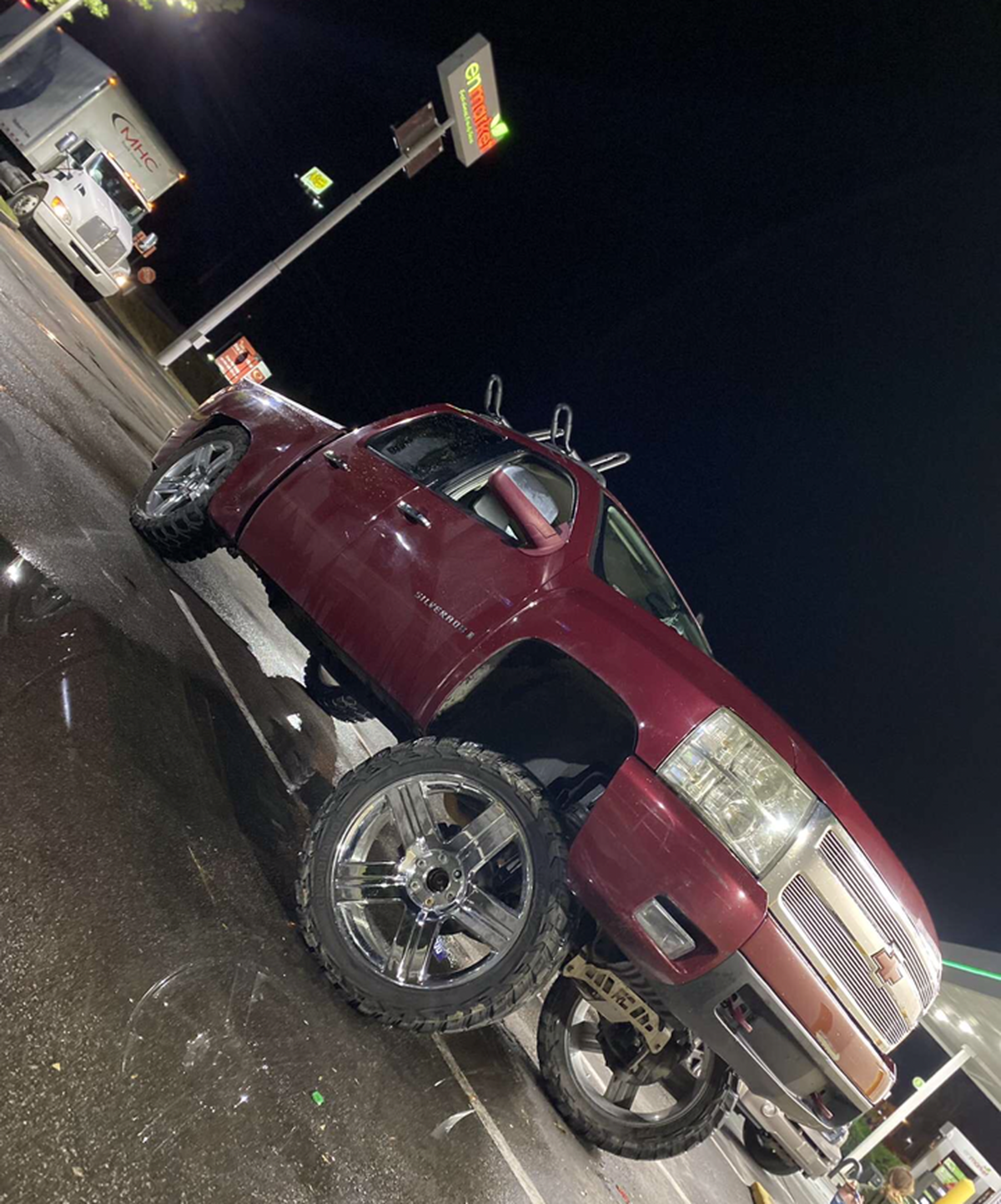
Wilson said he and other truck owners have to deal with regular harassment from people who hate the trucks. It’s not hard to find discussions online with people throwing expletive-laden barbs for why they think the Carolina Squat should be banned.
“To begin with, I thought it was cool,” he said. “The reason I still do it is just to not give the people what they want.”
One bill to ban (most of) them all
Senate Bill 908, proposing the restrictions on Carolina Squat truck modifications, is halfway through the South Carolina Legislature on its way to becoming law. It was passed by the Senate in February. It now awaits a hearing in the House Labor, Commerce and Industry committee.
State Rep. William Bailey, R-Horry County, will be the first to say he hates restricting what people can do with their own property, with their own money.
But he said he draws the line when those actions present a danger to others.
“I don’t think our goal is to impact their right to be able to do whatever they want to do with their own personal property,” Bailey said. “Our intention is to make sure that the vehicle is safe when you’re adding other people into the mix.”
Bailey said he’s seen the damage these trucks can cause up close. One of his neighbors was hit by one, destroying the back half of his Toyota Camry. Bailey said it was because the truck accelerated and didn’t notice the Camry in front.
“You’re sitting at a stoplight, you get a little closer than you do in typical traffic,” Bailey said. “Your sight is obstructed, and you accelerate because you’re listening to the radio or got your mind somewhere else or your phone rings, and next thing you know you’re over the top of a vehicle.
“It could be a pedestrian just as easy as a vehicle.”
State Sen. Larry Grooms, R-Berkeley, said that right before a phone call with a reporter he saw “one of the worst offenders” he’d ever seen among Carolina Squat trucks. The driver “had to be leaning over the steering wheel” to see, Grooms said.
“You can’t drive drunk because you’re impaired,” said Grooms, a co-sponsor of S. 908. “And when it comes to vehicle design, you can’t jack your vehicle up so that you can’t see the highway because you will endanger the lives of others — taking away their freedom and their ability to have quiet enjoyment of their life.”
Every time he passes a Carolina Squat truck, Grooms says one thought always goes through his mind.
“They’re about to kill someone if they can’t see the road,” he said. “The vehicle, I just passed no more 15 minutes ago, I noticed the driver was having a difficult time, even looking left and right before he pulled out onto a major U.S. highway.
“In customizing his vehicle and expressing his antics and expressing his freedom, he’s now endangering the lives of others.”
The bill still has to make it through the House, and time is running out. The legislative session ends in early May. Grooms said even if the bill doesn’t get passed this year, he has “no doubt it will become law at some point.”
“It’s my hope that it will be done before anyone else loses their life or their liberty or impaired physically because of it,” Grooms said.
Bailey said he is confident the bill will be addressed in the coming weeks, adding that there is “tremendous support” for the bill in the House.
“I think in the long run, it’s going to be something that encourages people to come to our area (and) makes them feel safe,” Bailey said.
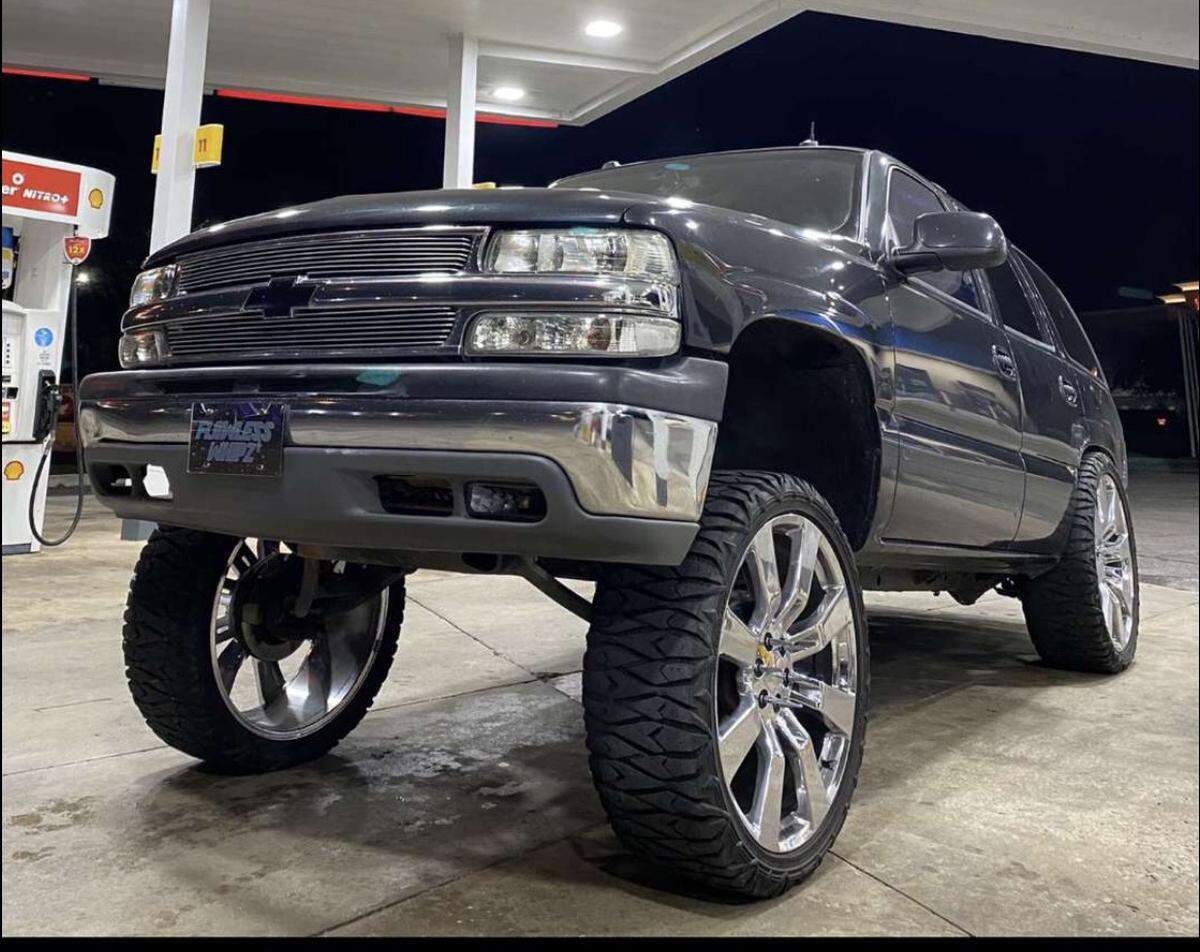
The trucks are not exclusive to Myrtle Beach. They exist all over the state. The Chamber of Commerce in Florence, host of several car shows in the area, did not have any comment on whether Carolina Squat trucks should be banned; neither did the Charleston Metro Chamber of Commerce.
Even if S. 908 becomes law, Wilson said he’s not giving up.
Instead, he’ll just switch to an airbag system that allows him to raise his truck to a level height when driving and lower it when he wants to show off or attends a car show.
“Leave us alone and let us do it,” Wilson said. “You can put a limit on it, but it shouldn’t be just 4 inches.”
Vest, for his part, said he doesn’t mind that.
“It’s about safety on the roadways,” Vest said.
This story was originally published April 15, 2022 at 5:00 AM.