COVID killed a year’s worth of cleanups. Now SC streets, waterways are full of trash
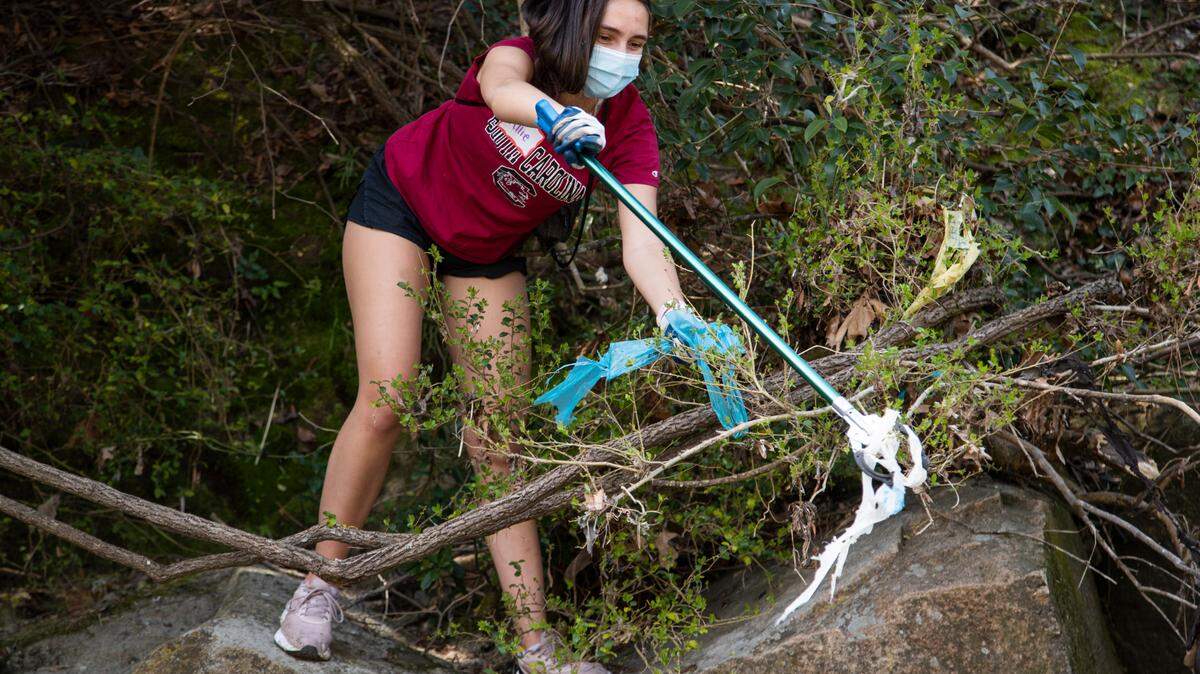
Trash that would normally be collected by volunteers is littering highways, forests, rivers and beaches across South Carolina because the coronavirus pandemic shut down major cleanups last year.
Its a messy scene that has many people grumbling about the particularly unkempt look in a state where litter already is a problem.
The buildup of trash is significant enough that anti-litter groups are scrambling to make up for lost time this year. They’re hoping to erase 2020’s legacy by reengaging with volunteers who are vital to cleaning up the mess.
Laura Blake-Orr, a programs manager with Keep the Midlands Beautiful, said the amount of trash collected dropped nearly 50% in parts of the Columbia area from 2019 to 2020 because fewer community cleanups were held.
In Richland County, for instance, volunteers picked up about 43,000 pounds of trash in 2020, compared to more than 81,000 pounds in 2019, she said. In Lexington County, the amount of trash collected dropped from about 50,000 pounds to 33,000 pounds.
“We canceled many adopt-a-highway cleanups because everything was shutting down and we just couldn’t have volunteers out there,’’ Blake-Orr said.
In the Pee Dee, the pandemic canceled the Winyah Rivers Alliance’s plans in 2020 to host 50 days of clean ups for the 50th anniversary of Earth Day.
Bill Stangler, the Congaree Riverkeeper, said his group’s cleanup efforts on Columbia-area waterways also were hurt by the lack of volunteers due to the coronavirus.
The amount of trash collected from rivers and creeks in the Columbia area dropped from 10,000 pounds in most years to 7,000 pounds collected in 2020. In most years, the riverkeeper group organizes about a dozen trash cleanups. Last year, it had six, Stangler said.
Particularly trashy areas of Columbia include urban creeks, such as Rocky Branch near Capital City Stadium and Smith Branch. Smith Branch picks up refuse from north Columbia, washing it downstream and into the Broad River just above the Columbia Canal, where masses of garbage often back up at the canal’s gates.
In Charleston, Joe Riley Waterfront Park near the city is full of trash, and it’s one of the many environmentally delicate marshes in the region.
And in the Myrtle Beach region, near-weekly river flooding during the winter not only pushed existing trash downstream but also knocked over trash cans and sent household items into rivers.
“Litter is worse than I’ve seen it in many, many years,’’ said Savannah Riverkeeper Tonya Bonitatibus, whose group organizes litter cleanups on creeks along the South Carolina-Georgia border. In 2020, the organization picked up under 11,000 pounds of trash, compared to about 64,000 pounds in 2019.
Trash everywhere
The Savannah Riverkeeper’s efforts suffered from a lack of volunteers, including soldiers, who are a major help in trash cleanups, Bonitatibus said. Landfills also were less able to take trash, such as waste tires, because they had fewer workers available due to the coronavirus, she said.
For some reason, the litter problem appeared more pronounced on the South Carolina side of the river than in Georgia, Bonitatibus said.
One of the most notable differences in the past year was the return — and rise — of two types of trash: single-use plastics and disposable medical masks.
Single-use items, like plastic bags, straws and restaurant take-out containers, showed up first.
Many cities and states had been limiting their use in the past decade or so, but the pandemic made many of these products extremely essential.
“It’s been discouraging. I felt like people were doing a lot better,” said Cara Schlidtknecht, who oversees the Waccamaw River for the Winyah Rivers Alliance. “But because of this concern over contamination, you can’t reuse stuff. You’ve got to just chuck it.”
Plastic waste is a particular concern because it is so pervasive, takes time to break down in the environment and is dangerous to wildlife. It can sicken or kill animals like sea turtles that ingest plastic bags.
As it slowly breaks into smaller pieces, tiny particles build up in animals that live in creeks, rivers and ponds.
“(Plastic) can be transferred up the food chain if that organism is eaten, and because it spent some time in their body, it can also have physical or chemical toxicity,” said Barbara Beckingham, an environment geosciences professor at the College of Charleston.
Aside from plastics, COVID-19 put new types of waste on the landscape.
Medical masks, in particular, began finding their ways into the litter stream almost as soon as they came into use, said Andrew Wunderley, the Charleston Waterkeeper’s executive director. Masks pose a particular risk if they get out into the ocean because, like plastic bags, they can mimic the appearance of jellyfish, a primary food source for sea turtles.
“It’s a danger to wildlife, for sure,” Wunderley said. “Especially, birds are what’s called opportunistic site feeders. They see this stuff. It stands out. It doesn’t look like the normal organic material that’s out there. So to them, it reads as a food source, so it can be particularly troublesome that way.”
Most masks, like many single-use products, don’t break down easily in nature.
It’s hard, Schlidtknecht says, to see the environment harmed like this during the pandemic, though she acknowledges there’s little other way to approach the issue right now.
“I don’t want anybody to get sick at the sake of using a single plastic item. We have to pick our battles at times,” she said.
Schlidtknecht hopes that when the pandemic passes, Americans can return to better habits of reuse, rather than waste.
“Hopefully people will realize things that they don’t really need and produce less trash,” she said.
Restarting cleanups
One of the problems with holding cleanups is that people are afraid of getting sick from coming into contact with the trash itself, said Sarah Lyles, the executive director of the anti-litter organization PalmettoPride.
Then there’s the fact that many of the larger cleanups involve hundreds of volunteers — a no-go in the past year as large gatherings have been discouraged to prevent the spread of COVID-19.
The latter problem, gathering, will be solved as more people get vaccinated this year. The former? Well, Lyles questions if that ever truly posed a risk.
“People all of a sudden were terrified to pick up trash. And I’m like, you should be wearing gloves anyway,” Lyles said.
In a normal year, Wunderley said the Charleston Waterkeepers can mobilize close to 1,500 volunteers for cleanups. In the meantime, he said they have been able to do smaller events, handing out supplies to individuals who want to go out alone or in small groups. He hopes to return to their usual mass cleanups in the fall. The Waccamaw Riverkeeper’plans to restart its cleanups next week on March 27.
“The more people you can get out doing the cleanup, the more people you can change, the more hearts and minds you can win,” Wunderley said. In the last year, “we haven’t had that opportunity.”
While many group cleanups weren’t held last year, individuals tried to pick up the slack. The S.C. Aquarium, which has a database of plastic and trash cleanup information, encouraged people to individually collect trash to offset the loss of large group cleanups.
Data provided to the aquarium actually showed an increase in individual of items of trash picked up in 2020, but a top aquarium official said cleanup efforts were probably more localized than would be found in large sweeps.
Catching up
Both Blake-Orr and Stangler said they’re hoping to catch up this year, and so far, they are encouraged. Cleanups late last fall and early this year have been held, and more are planned this spring.
Folks have complained to Keep the Midlands Beautiful about the refuse-strewn landscape, which is a good sign that people want to do something about it, Blake-Orr said. Now that more is known about COVID-19 and more people are getting vaccinated, interest in volunteering to pick up trash is on the rise, she said.
Lyles, of PalmettoPride, said she, too, feels hopeful that people will be more willing to head out and pick up trash. However, she said it might take a few years for the state to fully recover from the impacts of litter during the pandemic.
One spot of hope, Lyles says, is that people are more environmentally conscious today than even a few years ago.
While single-use products might have come into vogue once again during the past year, she believes people will stop using them pretty quickly once it’s safe.
She points to the aftermath of the 2008 financial crisis in contrast. Following that recession, people were much more focused on just staying afloat, and environmental issues weren’t as much in the forefront, she said. Today, Lyles said she feels like people are much more aware of all the different factors that can affect their health, from the coronavirus all the way to litter.
‘What’s one more piece of trash?’
One of the hot spots for trash this year is along Two Notch Road in Columbia — and Keep the Midlands Beautiful says there is pressure to clean it up.
The busy commercial corridor is littered with Styrofoam containers, paper cups, plastic bags and pieces of discarded junk that blow across the busy thoroughfare on windy days. When the wind dies, the refuse lies stuck in the kudzu and weeds that grow along the roadside.
“We have been getting a lot of complaints from people saying it is the worst they’ve seen,’’ said Tina DiMaria, an intern who works with Blake-Orr at Keep the Midlands Beautiful.
Keep the Midlands Beautiful plans a major cleanup on a seven-mile stretch of Two Notch March 20, an effort officials agree is long overdue.
The Congaree Riverkeeper group held a cleanup March 12 in Columbia’s Olympia Park. University of South Carolina students spent part of the warm spring afternoon picking trash from Rocky Branch, one of the most polluted urban creeks in the capital city.
All told, they picked more than 1,000 pieces of trash, including 14 face masks and 12 latex gloves. The majority of the trash collected was plastic bags, miscellaneous plastic items, old shoes, and glass and plastic bottles, Stangler said.
Blake-Orr said it’s important to clean up trashy roadsides and other places as a way to deter future littering. While many people are expressing frustration with the amount of litter this year, areas that become known for being filled with litter can make things worse, she said.
“Litter has a way of attracting litter,’’ she said. “People will say what’s one more piece of trash?’’
If you’re interested in learning about South Carolina’s plastics and trash challenges, a new film explains the issue. The film highlighting the plastics problem will be shown Saturday at 2 p.m. at the Edventure Children’s Museum in Columbia. Produced by University of South Carolina graduate student Emma DeLoughry, the film includes dramatic scenes of plastic trash littering salt marshes and rivers.
This story was originally published March 18, 2021 at 5:00 AM.