
‘Like a trap.’ Did police march on and use tear gas at a peaceful Columbia protest?
It was cooler on Sunday, May 31, than it was the previous day in Columbia. The temperature hung in the low 80s instead of hovering at almost 90 degrees. As protesters gathered at the State House, they were committed to keeping things cooler as well.
The day before, what started as peaceful demonstrations against racist policing sparked by the death of George Floyd in Minneapolis escalated into rocks and bottles being thrown at the Columbia Police Department headquarters, shattered windows of businesses in downtown Columbia, burned police cars and injured officers.
Before the Sunday march started, protesters on the State House grounds called for each other to stay measured in their actions and focused on solidarity against police violence and unity among themselves.
“If we want to make any real change that’s got to start with us,” Tyrell Westbury said through a megaphone to a crowd that rallied with him on the State House steps.
But the Sunday march resulted again in confrontations between police and the marchers, with tear gas released and less than lethal weapons discharged. One protester said he was hit with a baton and suffered a burn on his arm when a weapon was discharged nearby.
The Sunday protests resulted in less property damage than Saturday’s, but it produced more finger-pointing.
Law enforcement authorities and the protesters dispute how the confrontation started.
Richland County Sheriff Leon Lott said the Sunday protest was ripe for the same escalation as Saturday. “There’s no doubt what their (protesters) intent was” on their march toward the police station on Sunday, Lott said at a news conference on Monday, June 1.
“It was to destroy property, police cars, police building, whatever,” Lott said. “So we had to stop them. And we did stop them.”
But protesters and others who spoke to The State adamantly disagree. The protest was peaceful until police marched on demonstrators, they said.
The following account comes from interviews with five protesters, a freelance photographer, reporters from The State who were at the rally and a federal lawsuit. The Richland County Sheriff’s Department and Columbia Police Department declined to comment for this story because of the pending lawsuit.
Senquan Alls stood with dozens of other protesters who rallied in the shadow of the columns of South Carolina’s capitol.
“We knew what happened the day before,” he said. “We made sure everybody knew and made sure everybody in the protest was peaceful.”
The crowd of about 200 stepped off the State House grounds and headed up Main Street.
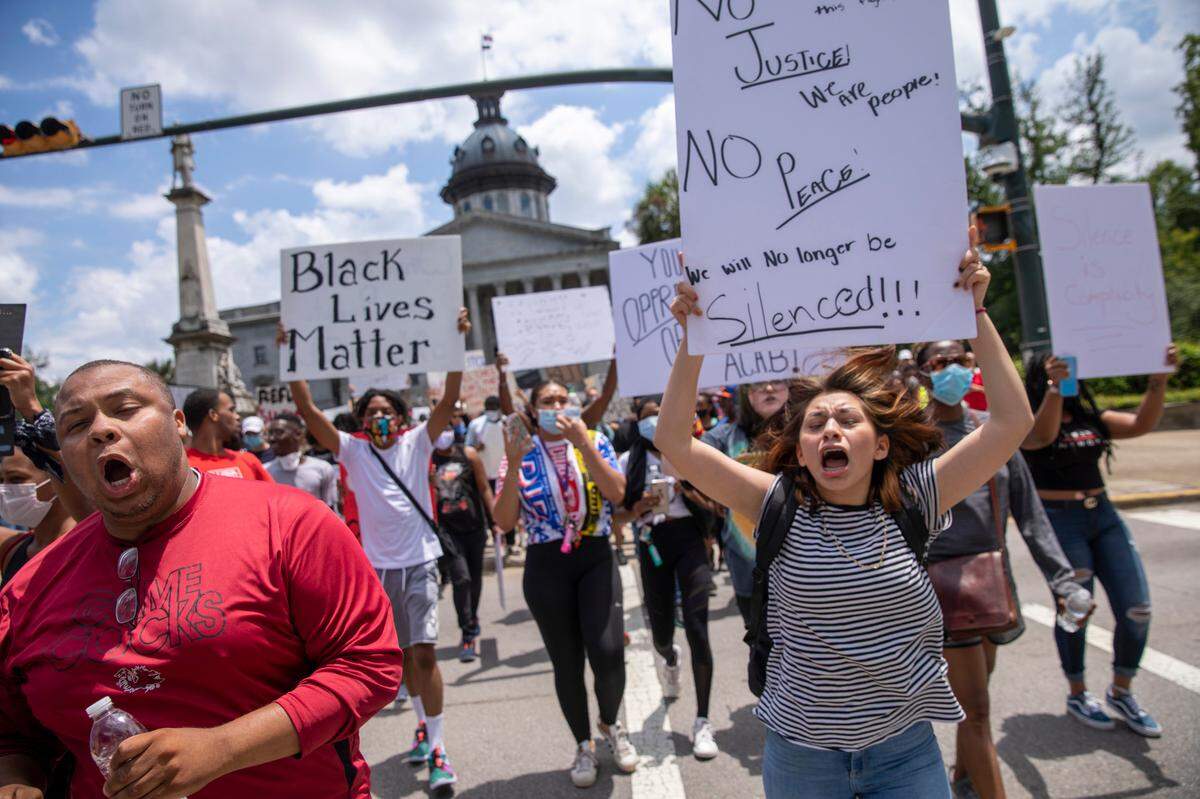
“We can articulate our feelings without busting (stuff) up,” one of the marchers shouted as the group left the State House.
‘It felt like a trap’
Michele Arana marched near the rear of the demonstrators.
“Everyone was emphasizing to keep it peaceful,” she said. “We didn’t want a repetition of Saturday.”
As part of a loose group of people who act as a safety team during the protests, Arana was on the lookout for any actions that gave her pause. But the march proceeded without a hitch.
They marched up Main Street toward City Hall and turned on Richland Street, going toward the Governor’s Mansion. They turned before arriving at the Governor’s Mansion and marched passed Finlay Park, then to Assembly Street.
The police initially worked with the marchers, the protesters said. Police officers on foot patrolled the edges of the march without interference and officers blocked off traffic to protect the marchers.
Marching in the middle of Assembly Street bound for the backside of Columbia Police Department’s headquarters, the protesters turned on Hampton Street.
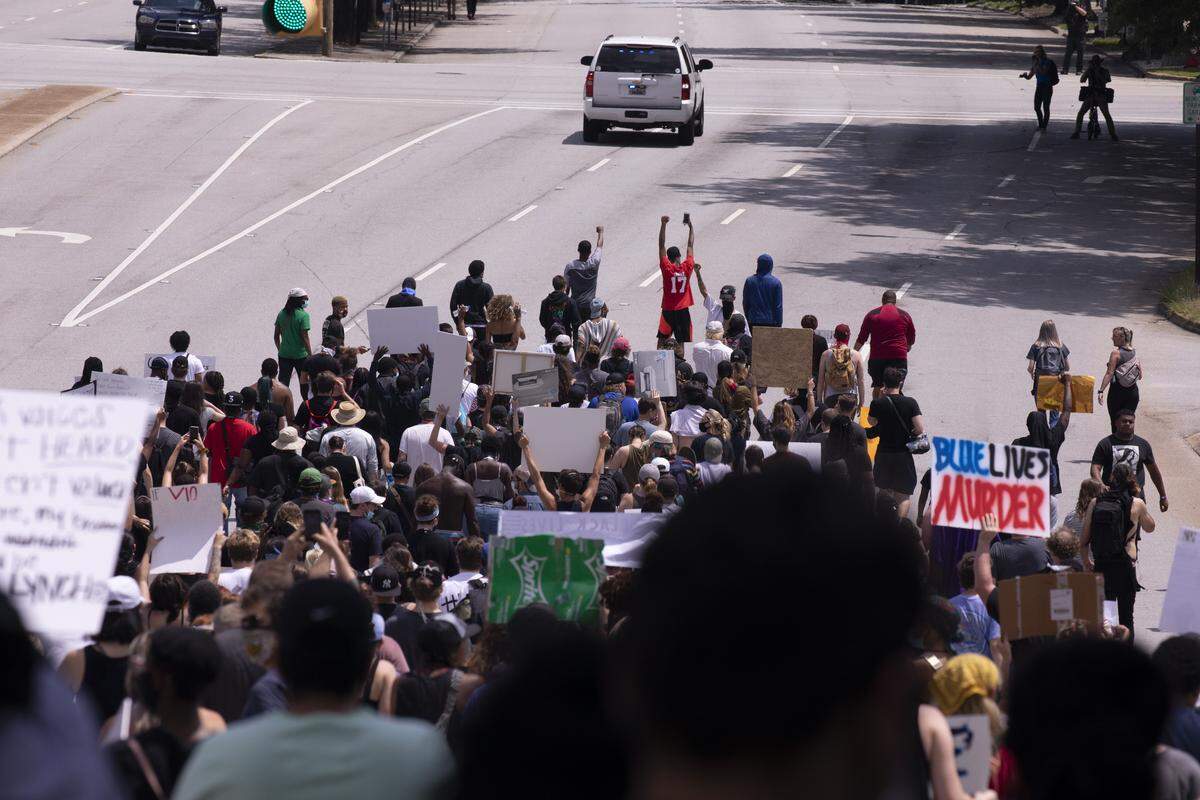
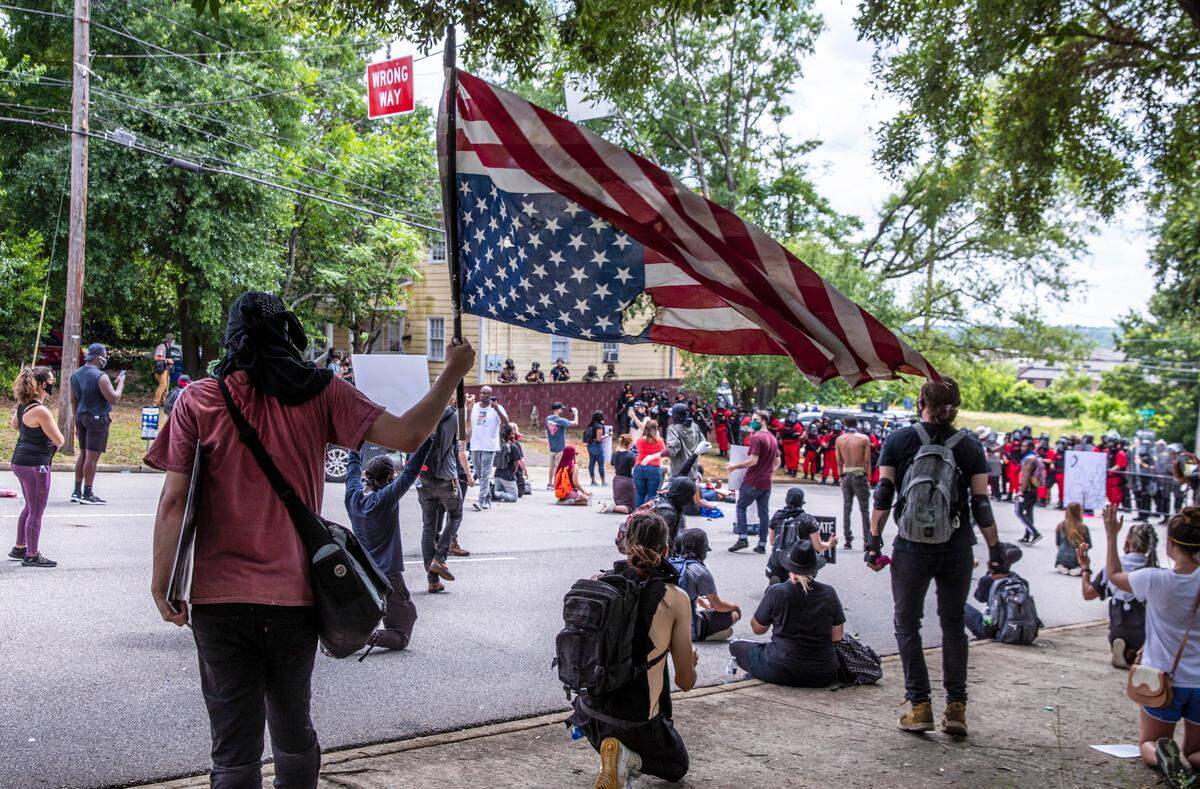
As the marchers neared the intersection of Lincoln Street, police with riot shields stared back at them from behind metal and wooden barricades. Some wore military-style camouflage and held shotguns with red tape wrapped around the barrels, indicating the weapons were less than lethal. Others wore red jumpsuits and brandished batons across their chest. At least one officer held a shotgun with no red tape. Another officer had an AR-15 style rifle.
Richland County sheriff’s deputies made up the middle of the line. A special team from the state Department of Corrections was present as were Columbia Police Department officers and South Carolina Law Enforcement Division agents.
“I was trying to get people to turn around,” Arana said. “I was saying ‘this is not a good situation. We need to get out of here.’”
“It felt like a trap.”
The marchers kept their course and stopped about two feet from the police line.
Tyrell Westbury guided the march. He stood in the gap between police and protesters with a megaphone.
“We’re going to be peaceful,” he said into the megaphone. “We want to get our word heard. We’re not about to break down this barrier.”
Another marcher yelled out “keep it peaceful” as more marchers approached the police line.
As the protesters came together near the line, they started chanting a chorus of the nationwide protest — “Hands up. Don’t shoot.”
Department of Corrections officers in red jumpsuits, who typically respond to crises in prisons, lined up behind and on the flanks of Richland County deputies, forming a longer wall of shields. The department referred questions to the Richland sheriff’s department.
At his news conference the next day, Lott said when protesters neared the blockade, they almost immediately started throwing objects at police officers.
But the five protesters who spoke with The State said nothing was thrown at police when protesters met with the police line. Protesters admitted they raised their voices and some expressed anger when they got to the police line on Hampton Street, but not violently.
Without any order to disperse or other warning to the demonstrators, an officer behind the line of shields started yelling “Push” again and again, protesters said. The officers up front chanted “get back” at the protesters.
The police marched into the protesters with their shields, at least one officer giving a hard thrust into the crowd, toppling one of the police barricades.
Westbury and Alls and others around them, many with their hands still up, held their ground when they were first hit by the shields, they said.
Police began hitting people with batons and thrust into the demonstrators with their shields, according to protesters. No one was clear why the police swung at them. At least one protester was dragged behind the police line and cuffed.
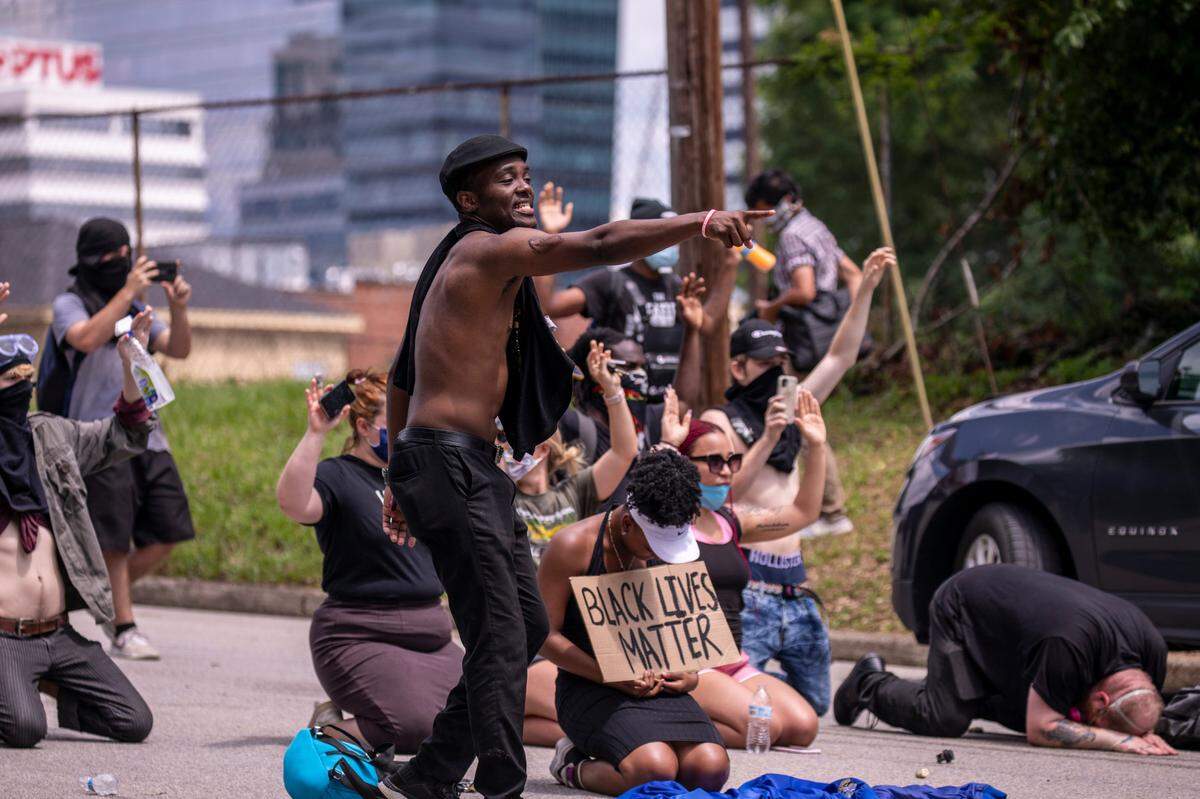
Being hit with the batons made some of the crowd fall back.
Alls was hit twice with a baton and grabbed, he said. He backed away and got free but not before an officer shot off some sort of weapon near him, burning his upper arm. Westbury was grazed with a baton as he retreated with the other protesters.
Police followed the batons by shooting tear gas. Other officers threw tear gas canisters at the retreating protesters. A projectile exploded in the crowd.
Video shows that some protesters threw or kicked tear gas canisters back at the police.
If the police hadn’t thrown the gas, the protesters wouldn’t have had anything to throw back, protesters said.
“When we dispersed they just kept firing,” Arana said.
She ran back toward the police to help some people who had fallen.
In the fray, one Black woman dropped to her knees about ten feet from where police fired their weapons. A volley of guns echoed around the street.
Over the blasts and bangs, she said, “I’m not moving.”
Ruined faith
The police were aggressors and escalated a situation that could have been resolved without conflict, Arana and other protesters said.
She was shocked and hurt to witness “the lack of humanity” by police, she said.
When asked by The State about the allegedly thrown objects, a sheriff’s department spokesperson sent a photo of a person with their hands up, holding a water bottle.
But others surrounding the person are holding up their hands. Throughout the march, protesters raised their hands when chanting, “Hands up. Don’t shoot.”
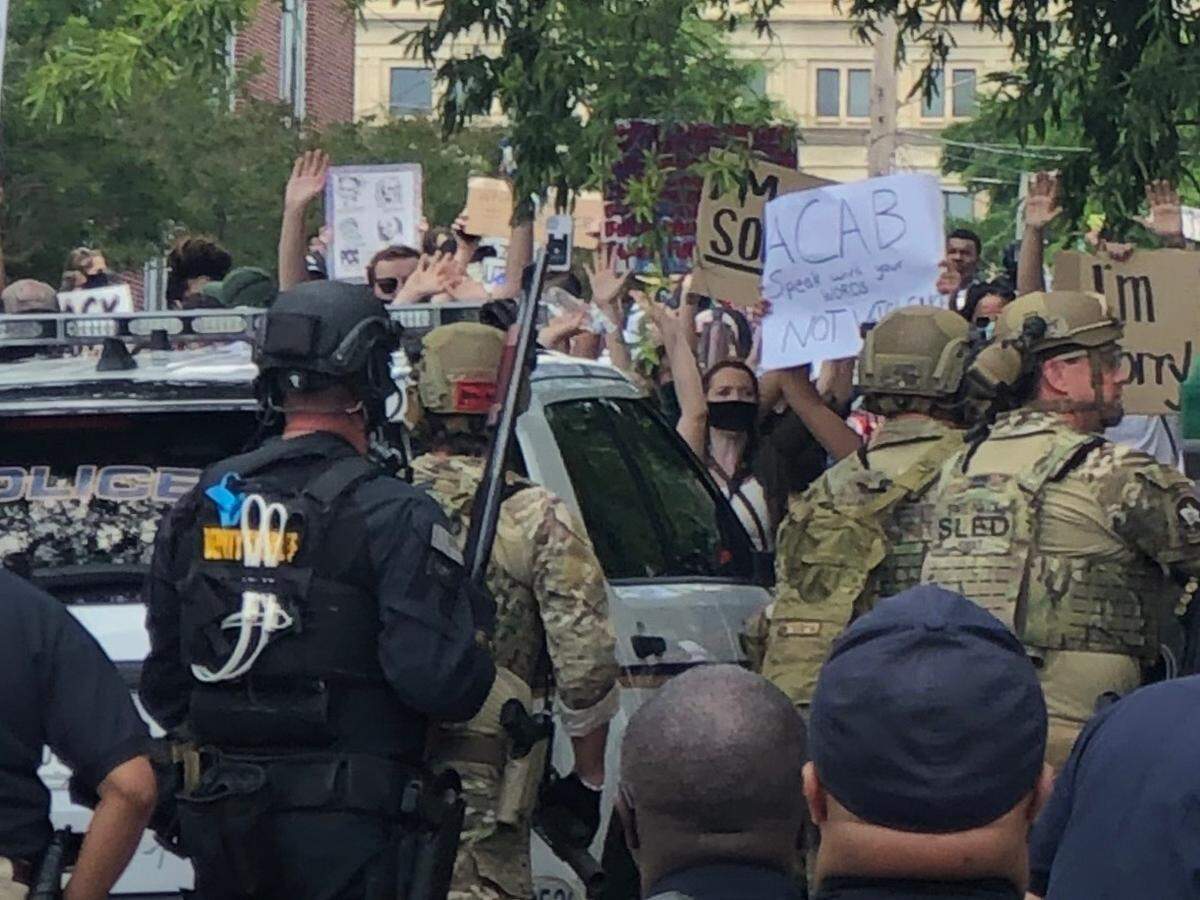
The spokesperson also sent a video in which WIS TV reporter Emily Wakeman, who was at the protest, says an object or some liquid was thrown, although it’s unclear whether it was thrown before or after the physical confrontation.
Aaron Smalls recorded the clash with police. He’s not affiliated with the protests and doesn’t believe protesting is an effective means for change, he said. As a photographer, he was just there to document what happened. Still, he believes Lott was disingenuous and showed a lack of empathy during his news conference the next day.
“You’re discrediting peaceful people and turning them into criminals,” Smalls said.
Already, a lawsuit has been filed against the police agencies from the confrontation. The lawsuit says a protester became a “victim of the same type of police brutality he was marching against.”
The plan was for marchers to stop at the police station and go back to the State House peacefully, Westbury said.
But they never got the chance to finish the protest in a peaceful way, protesters said.
The protesters who spoke with The State said the police’s actions showed the exact side of policing they were marching against.
“We’re supposed to trust you all with protecting and serving and then you do this,” Westbury said. “We’re hurt.”
Police officers could have bridged the gap in that moment with protesters and a community of young Black people, Senquan Alls and other protesters said. Instead, the officers filled the divide with riot shields, swings of their batons, tear gas and blasts from their weapons.
Alls said the police betrayed him, like they’ve done with so many other Black people. He doesn’t know when that sense of betrayal will end.
“We didn’t deserve that type of treatment,” he said.
This story was originally published June 17, 2020 at 2:58 PM with the headline "‘Like a trap.’ Did police march on and use tear gas at a peaceful Columbia protest?."