
These birds will eat - and steal - just about anything. And 'laugh' while they do it
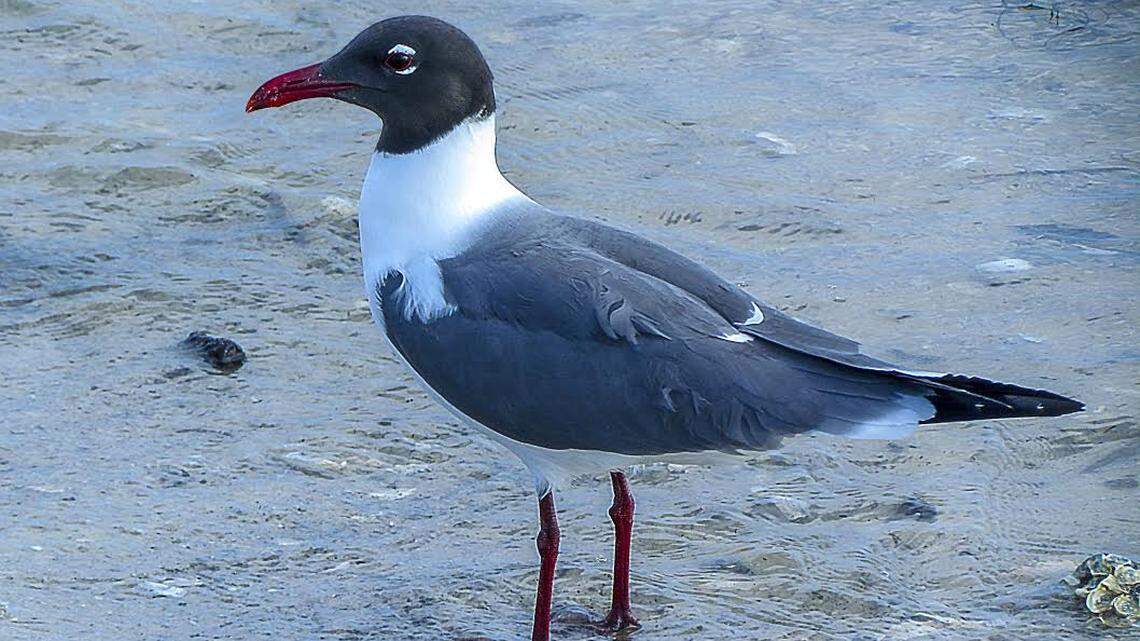
A day at the beach wouldn’t seem right without the raucous, crazy background noises of Laughing Gulls.
These common and easily recognized seabirds are medium-sized, as gulls go, with gray on the top and white underneath. During the breeding season, the head is black and the beak is reddish. Narrow white crescents encircle the eyes. Also distinctive are the birds’ strident calls, which have been said to resemble unrestrained, maniacal laughter.
In the Northeast, Laughing Gulls are summer residents, but in the Lowcountry they’re here year-round. The birds congregate at beaches, piers, and salt marshes, and like many other gulls, they’re omnivorous and opportunistic. They spend much of their time foraging on land or in the water for snails, crustaceans, fish, or other small prey. Discarded scraps thrown from fishing boats are also a favored food.
In late spring, large, noisy flocks of Laughing Gulls also gather to feast on the eggs of horseshoe crabs. They may steal fish from terns and pelicans, as well as prey on the eggs and young of other birds. Laughing Gulls sometimes stray inland to forage over plowed fields, even following tractors in search of earthworms and insects. Flocks also hang out near parking lots, trash cans, and landfills, scavenging for garbage.
They nest in colonies near the water, where the number of breeding birds can be staggering — as many as 25,000 mated pairs. Both parents build the nest and incubate and feed the young.
In the late nineteenth century, Laughing Gulls were hunted for their eggs, as well as for their feathers, which fetched high prices as adornments for women’s hats. Fortunately, populations began to recover after the passage of the Migratory Bird Treaty Act of 1918, which prohibited such practices.
Today, the species is still susceptible to localized disturbance and habitat loss due to beachfront construction and other human activities.
Overall, though, Laughing Gulls are widespread and abundant, with a breeding range that includes the Atlantic and Gulf coasts and south to parts of Mexico and the Caribbean.
This story was originally published May 7, 2018 at 6:25 AM with the headline "These birds will eat - and steal - just about anything. And 'laugh' while they do it."