An NC cop got probation after slamming a woman to ground. Now the courts get a do-over.
Editor’s note: Former Hickory police Sgt. Robert George received a new sentence on Thursday, Feb. 17, 2022. Find the update here.
A former Charlotte-area police officer convicted of a wanton act of on-duty violence will be sentenced for the second time Thursday after an appeals court overturned an earlier judge’s ruling to grant probation.
Robert George, a one-time sergeant with the Hickory Police Department, is scheduled to appear before U.S. District Judge Ken Bell in Charlotte, the highly unusual closing act of a controversial nine-year prosecution, which one legal scholar says reveals the deference officers often receive from the courts.
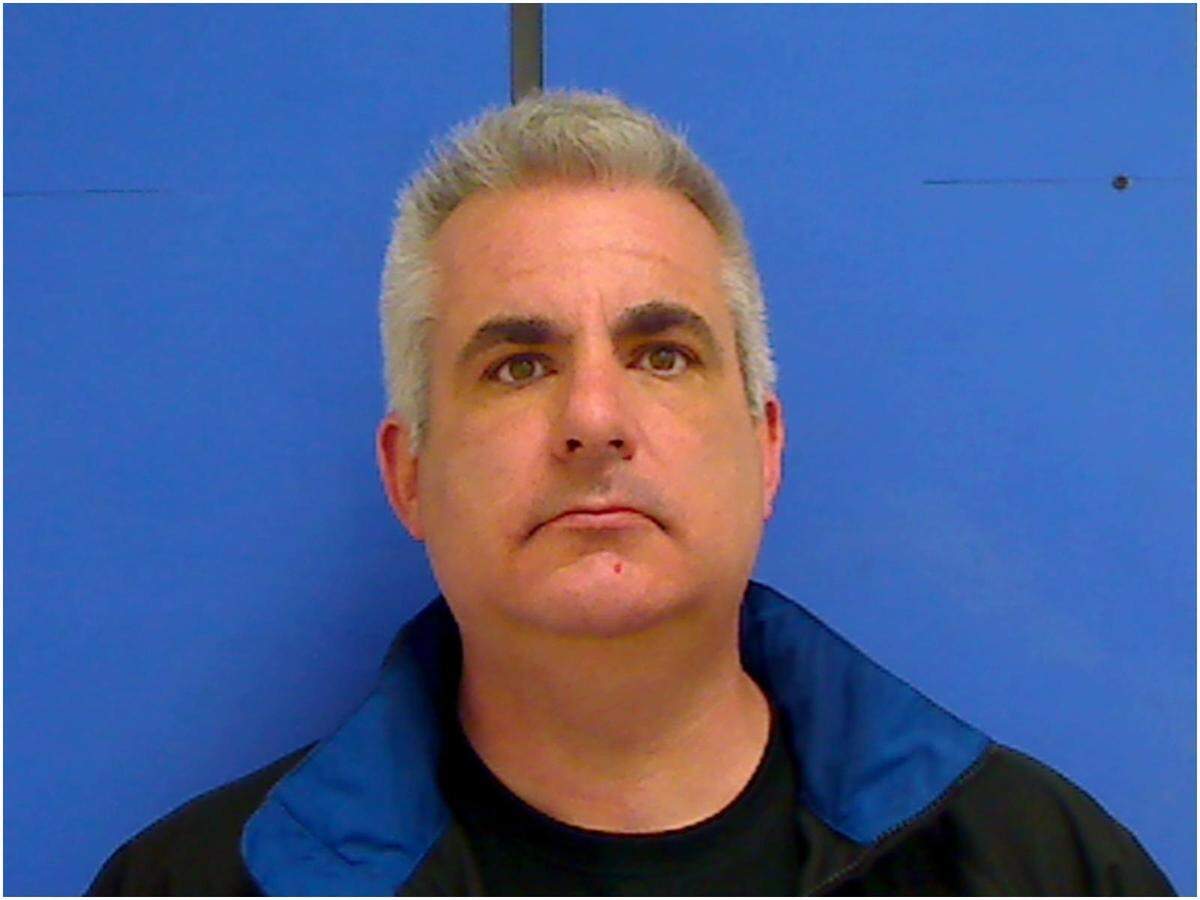
George, a 16-year police veteran before his firing, was convicted in federal court in 2019 of depriving Chelsea Doolittle of her constitutional rights by using unreasonable force — a legalistic phrasing that masks the violence of what took place.
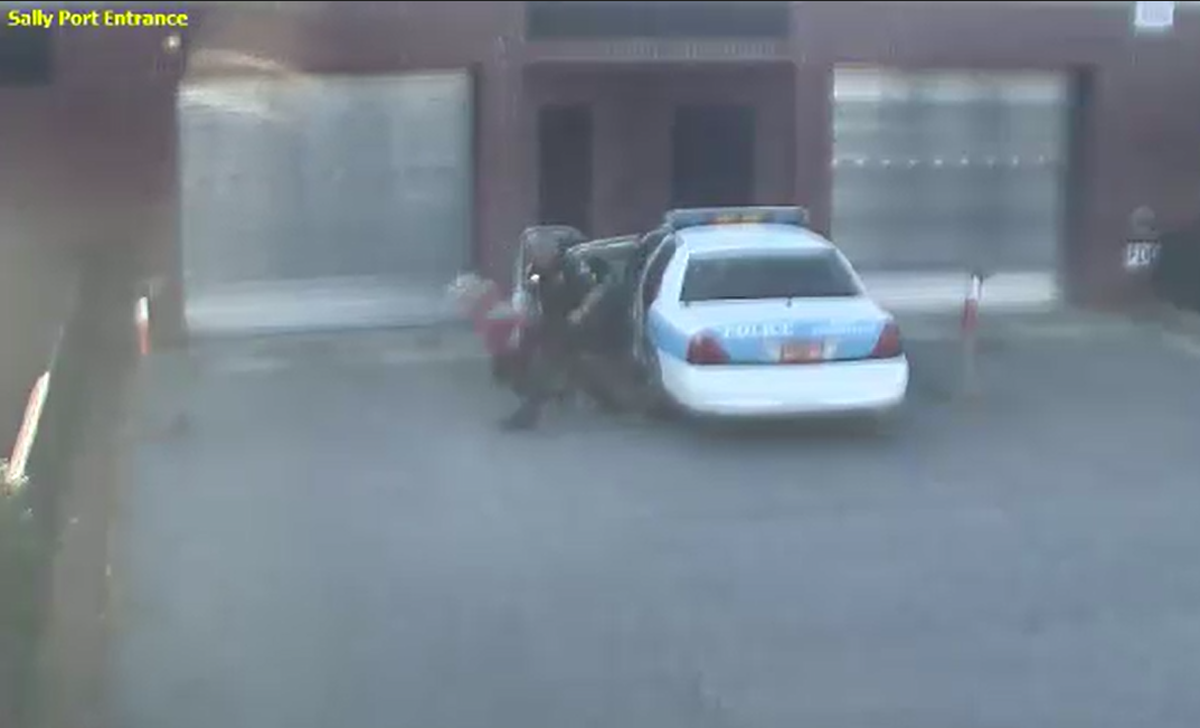
A 2013 video clip used at George’s trial shows the burly officer jerking the handcuffed Doolittle from the back of his police car, then slamming her face first onto the pavement outside the Hickory police building. According to documents in the case, Doolittle suffered a broken nose, dental injuries that required multiple surgeries, as well as a concussion. She still suffers from memory loss, panic attacks and anxiety.
At trial, George and his expert witness argued that the sergeant simply had “lost his grip” while struggling to remove the resistant and inebriated Doolittle from his car, and that “she was unable to keep her balance.”
After his conviction, George faced a sentencing range of 70 to 87 months in prison. Prosecutors with the U.S. Attorney’s Office in Charlotte pushed for a punishment on the low end of the scale.
But in a surprise move that flabbergasted the government, U.S. Senior District Judge Graham Mullen ignored the recommended prison sentence and instead gave George four years of probation.
As justification for his decision, Mullen parroted the defense and said it was “obvious” to him that George had lost his grip on Doolittle. She fell to the ground, according to the judge, either from the force the police officer used to pull her from the car or “perhaps because of her inebriated condition.”
Either way, Mullen called the incident “almost accidental” — “... as close to an accidental injury ... as you can get and still wind up violating the statute.”
Mullen, in so many words, also said George had suffered enough. Because of his arrest, according to the judge, George had lost his job and pension, lost his right to vote and carry his gun, and had to pay almost $20,500 in restitution. George’s good behavior before the trial proved to the judge that there was “little need to do anything to deter him or anyone else employed as a police officer from committing crimes.”
After prosecutors appealed, a three-judge panel from the Fourth Circuit Court of Appeals unanimously threw out Mullen’s sentencing decision in late November, ruling that he had improperly contradicted the jury’s verdict as well as the weight of the evidence proving the seriousness of George’s crime.
The panel, including Judge Henry Floyd of South Carolina, ordered that George be resentenced by a different judge. The hearing before Bell will take place at 1:50 p.m. Thursday in the uptown federal courthouse.
Duke law professor Jim Coleman, a Charlotte native and longtime criminal defense attorney, said Mullen’s handling of the case shows the advantages police officers have in court that are not often available to other defendants.
When police officers are involved, “the instinct is to forgive,” said Coleman, who watched the video of George’s assault at the Observer’s request.
“I see it all the time. Judges don’t seem to be as outraged at the misconduct as the facts would appear to warrant That woman could have died. She was like a dummy that he just flung to the ground. The idea that a judge could say that it was ‘almost accidental’ ... it defies sight, it defies logic, and it defies reasonableness.”
George’s defense team from the federal public defender’s office in Charlotte did not respond to an email Wednesday seeking comment.
‘Abuse of public trust’
Their client’s case dates back to Nov. 11, 2013, when a Hickory police lieutenant came upon an illegally parked car blocking downtown traffic.
According to case documents, the lieutenant saw two women who smelled of alcohol enter the car. One of them was Doolittle. When the officer radioed for a breathalyzer test, George responded.
After George arrived, Doolittle climbed behind the wheel and refused police orders to leave. George and the other officer eventually removed her. She was charged with resisting arrest. The case was later dropped.
During the drive to the police station, Doolittle “became verbally abusive to George,” according to the documents. When they arrived at the station, George asked Doolittle to step out. She refused, setting up the violence that followed. All of it was captured by a police surveillance camera. George was arrested on federal charges 4 1/2 years after the incident.
In sparing George prison, Mullen said the government’s sentencing recommendation “greatly overstates the seriousness of the offense.”
In his 16-page opinion, Floyd found otherwise. In blunt terms, Floyd said Mullen misinterpreted the evidence of George’s crime and misapplied the law.
“The district court’s comment that it is ‘obvious’ from the surveillance video that George ‘lost his grip,’ is clearly erroneous,” Floyd wrote.
“On our viewing, the video shows George pull Doolittle out of the patrol car and slam her on the pavement ... Doolittle didn’t slip, and nor did George.”
Moreover, according to the appeals court opinion, Mullen gave excessive and overly favorable weight to George’s role as a former police officer as well as the impact of his arrest on his law enforcement career.
George’s badge, according to Floyd, made his crime more serious not less.
“... Criminal conduct by a police officer constitutes an abuse of public position,” the judge wrote. “Rather than acknowledge an abuse of public trust, the district court relied heavily on its positive perception of George as a former law enforcement officer ... failing to significantly weigh the seriousness of the crime.”
This story was originally published February 16, 2022 at 5:51 PM with the headline "An NC cop got probation after slamming a woman to ground. Now the courts get a do-over.."