
Annual Clean Energy Champions includes call for NC businesses to push for renewables
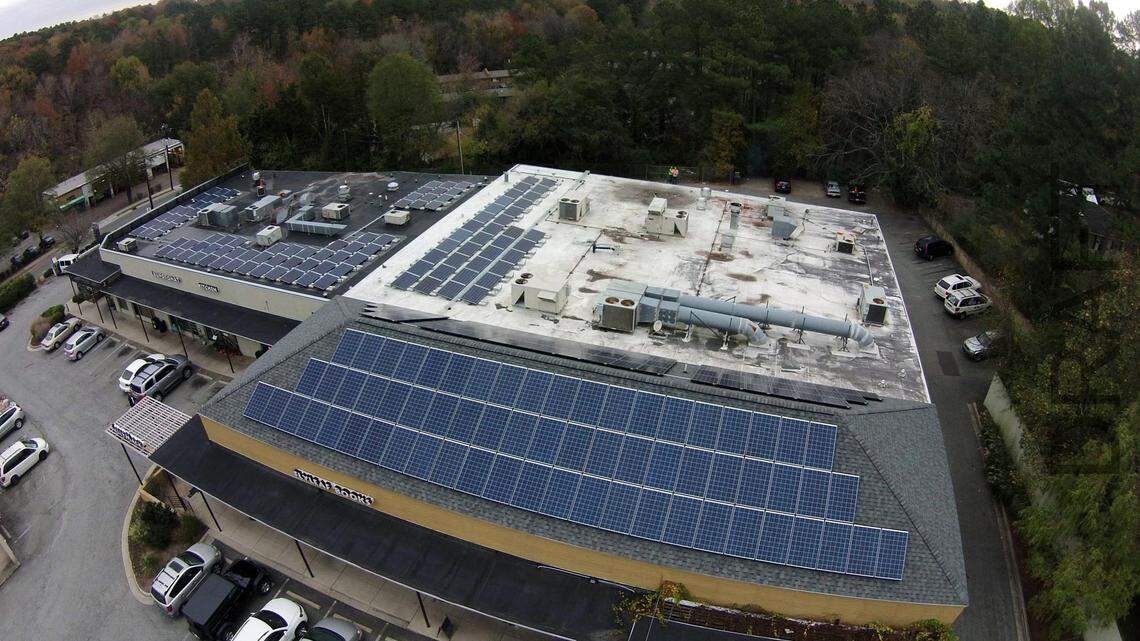
Access to energy from renewable sources like solar is an important part of North Carolina’s economic development, business leaders and legislators said at a clean energy event.
This year’s Clean Energy Champions ceremony, hosted by Chambers for Innovation & Clean Energy and Conservatives for Clean Energy, focused heavily on the passage of House Bill 951, a comprehensive energy package requiring Duke Energy to shift its generation toward renewables in the coming years.
There are 66 companies operating in North Carolina that have goals of using 100% renewable energy by some point in the future. Nestlé, which along with Biogen received a Clean Energy Champion award for its lobbying efforts on HB951, is targeting 100% clean energy by 2050.
“Part of what made the state of North Carolina so attractive for us to build our Eden facility there is the fact that there was such commitment to the renewable energy sector and to partnering with businesses like Nestlé on their path to 100% clean energy,” said Meg Villareal, Nestlé’s manager of policy and public affairs.
Nestlé is converting a former MillerCoors brewery in Eden into a pet food manufacturing facility, and Villareal said she is excited by the possibilities of electric trucks and forklifts.
Also this week, Toyota announced plans to build a multibillion-dollar hybrid and electric vehicle battery plant at the Greensboro-Randolph Megasite. Toyota anticipates starting production there in 2025, according to The News & Observer, and is expected to make 12 million battery packs there annually.
Toyota said access to renewable energy was a factor in its decision to build the plant in North Carolina. The automobile company also said it is committed to powering the facility with energy from renewable sources.
With HB951 becoming law, much of the focus has shifted to the N.C. Utilities Commission, which will guide how Duke Energy meets the mandated carbon reductions.
Right now, for instance, the commission has given Duke an April 1 deadline to write an initial proposal for how it plans to cut carbon emissions 70% from 2005 levels by 2030 and reach carbon neutrality by 2050. The company will hold three stakeholder meetings as it crafts the policy.
“This is a very important opportunity for large energy consumers and ratepayers to engage before the commission either formally or via customers comment letters,” said Peter Ledford, the N.C. Sustainable Energy Association’s general counsel and director of policy.
N.C. Rep. John Szoka, a Fayetteville Republican who is running for the U.S. House of Representatives, received a leadership award for his work on HB 951. Szoka worked on HB 589, the 2017 comprehensive energy bill that laid some of the groundwork for this year’s legislation, and led the closed-door conversations that shaped early versions of this year’s HB951.
Szoka urged business organizations to have one-on-one conversations with legislators, describing how such a conversation shifted his own beliefs about solar panels. When he was elected to the House, Szoka recalled, he believed the solar industry was propped up by subsidies and tax credits.
It was a conversation with a lobbyist and the ensuing information that led Szoka to understand renewable energy is competitive with coal and natural gas.
Szoka said lawmakers “don’t understand what your companies really need in terms of renewable energy and what your corporate goals are, so you have to educate them.”
This story was produced with financial support from 1Earth Fund, in partnership with Journalism Funding Partners, as part of an independent journalism fellowship program. The N&O maintains full editorial control of the work.
This story was originally published December 12, 2021 at 7:00 AM with the headline "Annual Clean Energy Champions includes call for NC businesses to push for renewables."