
‘Don’t make me remember’: NC man, doctor describe trauma from wrongful incarceration
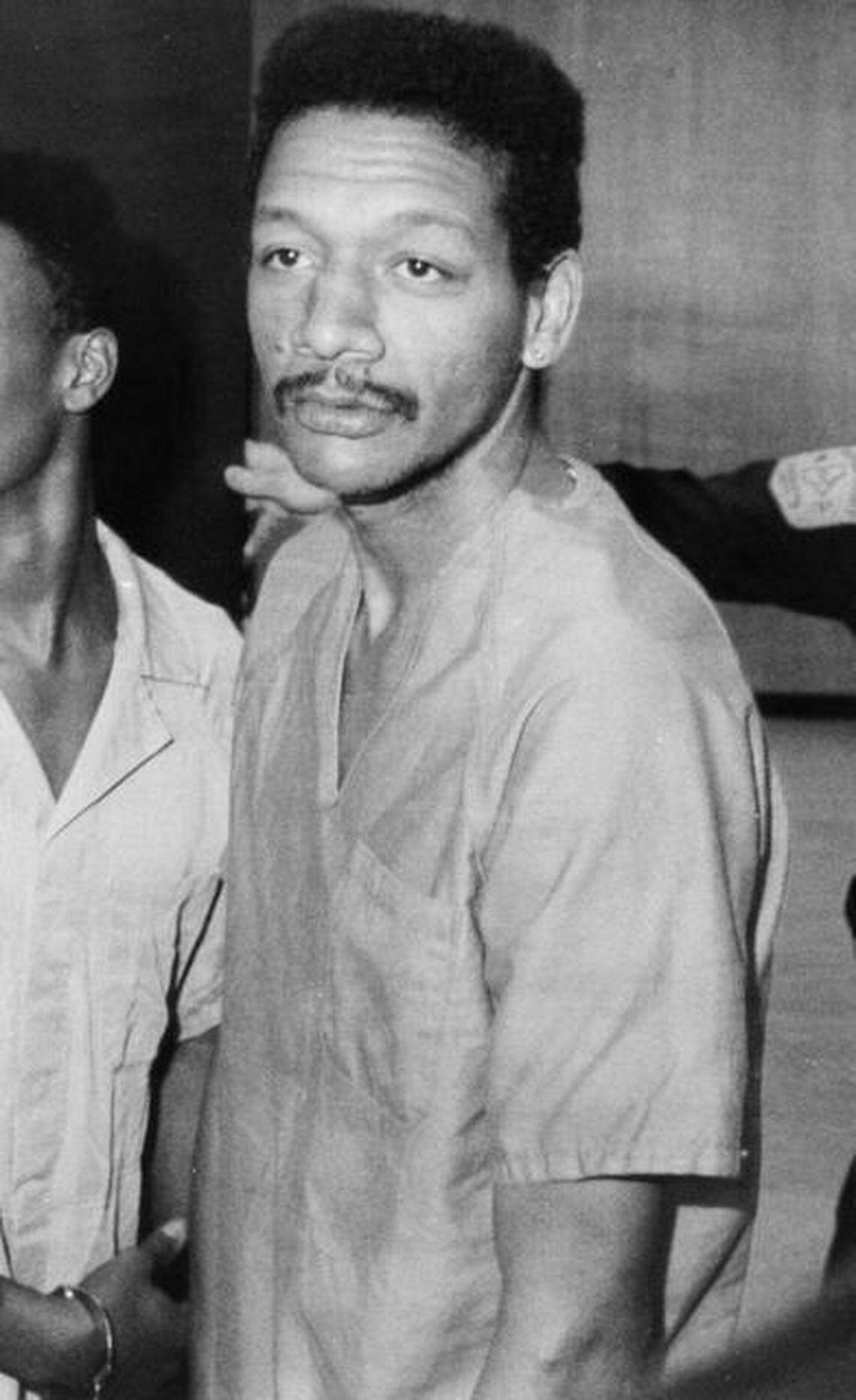
Darryl Howard walked slowly to the stand with his head bent forward over his broad shoulders.
He spent a night in the hospital this month with a skin infection in his leg. Not yet 60, he walked with the hunch of an older man.
After he settled into the witness chair in the federal courtroom, his attorney asked him to introduce himself.
“My name is Darryl Anthony Howard,” he said in his gravelly smoker’s voice.
Mr. Howard, his attorney asked, did you have anything to do with the murder and rape of Doris and Nishonda Washington?
“No sir,” Howard said.
Howard later explained he wasn’t a good father before he went to prison for nearly two decades, but he’s trying to be one now.
He has a grown daughter and son he is trying to reconnect with and a 16-month-old son he sees every day, he said.
And then, there is Darryl Junior, who overdosed on drugs while Howard was behind bars.
“I was in prison for something I didn’t do, and he died,” Howard said, and he started to sob.
“Sorry, I have a difficult time talking about him,” he said.
This is the complicated life of Darryl Howard whose 1995 double-murder conviction was vacated in 2016 after he spent 23 years behind bars for a double murder and arson, which he has denied doing from the beginning.
Gov. Roy Cooper pardoned Howard in April.
Made up, withheld evidence?
Howard was convicted of arson and two counts of second-degree murder in the deaths of Doris Washington, 29, and her 13-year-old daughter, Nishonda, who were found naked, dead and strangled on a bed in an apartment set ablaze in November 1991. He was sentenced to 80 years in prison.
Howard contends a drug gang called the New York Boys raped and killed the mother and daughter to send a message to people who took their drugs.
Over the last three weeks, Howard and his team of attorneys have been trying to convince a jury that Durham police detective Darrell Dowdy made up and withheld evidence resulting in Howard’s wrongful conviction. The federal case is being heard in U.S. District Court for the Middle District of North Carolina.
Dowdy’s investigation, Howard contends, led to Howard’s decades-long imprisonment tortured by the injustice and witnessing and experiencing unspeakable violent and sexual crimes.
Dowdy’s attorneys are fighting a case in which a defense expert agrees Dowdy didn’t follow procedure in documenting parts of his investigation. Dowdy’s attorneys have fought to present evidence about Howard selling drugs around the 1990s, being high during the 1995 trial and being found with drugs in 2020.
Howard’s attorneys contend the defense is attempting to introducing evidence that suggests he is a bad person who doesn’t deserve to be awarded a lot of money. They have argued through questioning that no matter how someone has lived, everyone deserves justice.
Jurors will weigh his testimony in deciding how much compensation Howard should receive if they find Dowdy fabricated and withheld evidence. Other federal wrongful conviction cases have resulted in jury awards in the tens of millions of dollars, including a recent case in which two brothers cleared of a 1983 murder and rape won $1 million for every year of wrongful incarceration.
About Darryl Howard
Howard was the second-youngest of about 10 children. He dropped out of school in ninth grade. His mother made him attend cooking classes, but he made money selling marijuana for about four years, he testified. He started selling cocaine and heroin around 1986.
Howard’s supplier was a man from Panama, Howard said, and he sold at the now leveled Fayetteville Street public housing complex in Durham. Howard became addicted to cocaine and heroin himself, he said.
After Howard’s supplier was arrested, Howard said he downgraded his selling operation to fund his personal habit, spending lots of time in Few Gardens, a crime-ridden public housing complex that gangs and drug dealers had carved up.
In his testimony, Howard recounted a life filled with brutality: domestic violence when he was young, losing his father at 12, being stabbed in the neck while sleeping in a juvenile detention facility, getting shot about 10 times in five incidents in so many years.
Night of the killing
On the night Washington and her daughter were killed, just after midnight on Nov. 27, 1991, Howard and his girlfriend were getting high at Sharon Bass’s apartment in Few Gardens, he said. Bass sold drugs out of her apartment, Howard said.
Howard said he knew Doris Washington, who lived near Bass.
“I would call it associates,” said Howard, who said he hung out with other drug addicts. “We had the same problem.”
Around midnight, he and his girlfriend went to pick up drugs from a man for Bass, he said. The man lived near Washington’s apartment. As they walked back, they saw smoke coming out Washington’s window, Howard testified.
Howard went straight to Bass’s apartment when he heard sirens because he didn’t want to be arrested for trespassing again, he testified. He had been banned from all public housing properties and arrested for trespassing about 70 times, according to court documents.
Back at Bass’s he got high and went to sleep, he said.
The next morning, Howard was pulled over as he left Few Gardens for his other girlfriend’s home to change. He was arrested for trespassing by Officer Robbie Davis.
Davis arrested Howard a lot, he said.
“He didn’t like me at all,” he said.
After Howard was arrested, he was taken to the magistrate. Davis testified that Howard brought up the Washingtons’ deaths and said he knew Washington had been mad at her daughter for dating an older man.
Howard also said he didn’t know why Doris killed her daughter and then herself, Davis testified.
Howard denies making those statements.
Howard was charged with murder a year later, after multiple people in Dowdy’s investigation placed him inside and outside the Washingtons’ apartment around the time of the killings.
Howard’s legal team, however, has noted key witnesses who changed their stories and/or gave more specific incriminating information after a $10,000 reward was offered in the case. Others, in more recent statements, said Dowdy planted the information in their statements.
‘Don’t make me remember’
Prison was loud and the food was terrible, Howard testified. He was sexually harassed in a places where there was no privacy, he said, and it was impossible to sleep.
He was moved more than five times, including to one facility he described as “gang camp,” where he observed violence daily.
As Howard’s attorney Nick Brustin sought more details, Howard’s words started to melt again.
“Don’t make me remember that, please,” he sobbed, raising his fists to his temples. “I don’t want to go through that.”
After Howard was convicted, he started looking for help to prove his innocence, he testified. He started with local lawyers, and then he and his wife, from whom he is now estranged, started sending letters to major universities.
Howard was eventually connected with the New York-based Innocence Project, which successfully sought to have the Washingtons’ sexual assault kits retested with more sensitive, advanced methods. The new DNA results along with other evidence revealed in a 2016 hearing led to Howard’s conviction being vacated.
Dr. Moira Artigues, a forensic psychiatrist hired to evaluate Howard, said his life on the outside is challenging. While Artigues was testifying, Howard left the room at her recommendation to spare him the pain of living through it again, she said.
The world evolved over the 23 years he spent incarcerated, including the prevalence of smart phones and computers, she said.
Howard has trouble sitting still, sleeping and trusting people. He has nightmares and flashbacks about prison, she said.
He has guilt about his son and other things and is angry about his lost youth.
“He said he doesn’t enjoy anything,” she said.
After his release, he attended 11 therapy sessions with another doctor but stopped because it was too painful, she said.
He has symptoms associated with post-traumatic stress syndrome, she testified. While being shot predispose him to PTSD, Artigues determined his incarceration was the main stressor, she testified.
“When he was young he could escape the violence,” she said.
His preoccupation with the injustice done to him was reinforced every day for the more than 23 years he was incarcerated, she said.
“That is really a massive dose of trauma compared to violence,” she said.
Testimony is expected to extend through Nov. 30.
This story was originally published November 24, 2021 at 10:56 AM with the headline "‘Don’t make me remember’: NC man, doctor describe trauma from wrongful incarceration."
