NC kids are buying and selling guns online. What can be done?
At about a quarter past midnight, 15-year-old Ian Wells received the last message in an Instagram conversation that would lead to his death.
“So u want it now?” the April 4 message from another teen asked.
Wells had reached out to an Instagram profile now linked to Joshua Cates to buy a magazine for his 9 mm handgun, according to court documents. The profile had previously advertised firearms for sale.
Cates, 16, agreed to sell the magazine but was also making other plans, the documents state.
About 30 minutes after the last message, police found Wells, bleeding from two gunshot wounds, in a Dodge minivan that had crashed into a sign and utility pole, before landing along South Alston Avenue.
Cates and a 15-year-old were charged with murder in July.
The two teens, along with another 15- and 16-year-old, also were charged in a total of three other shootings in the two days before the killing.
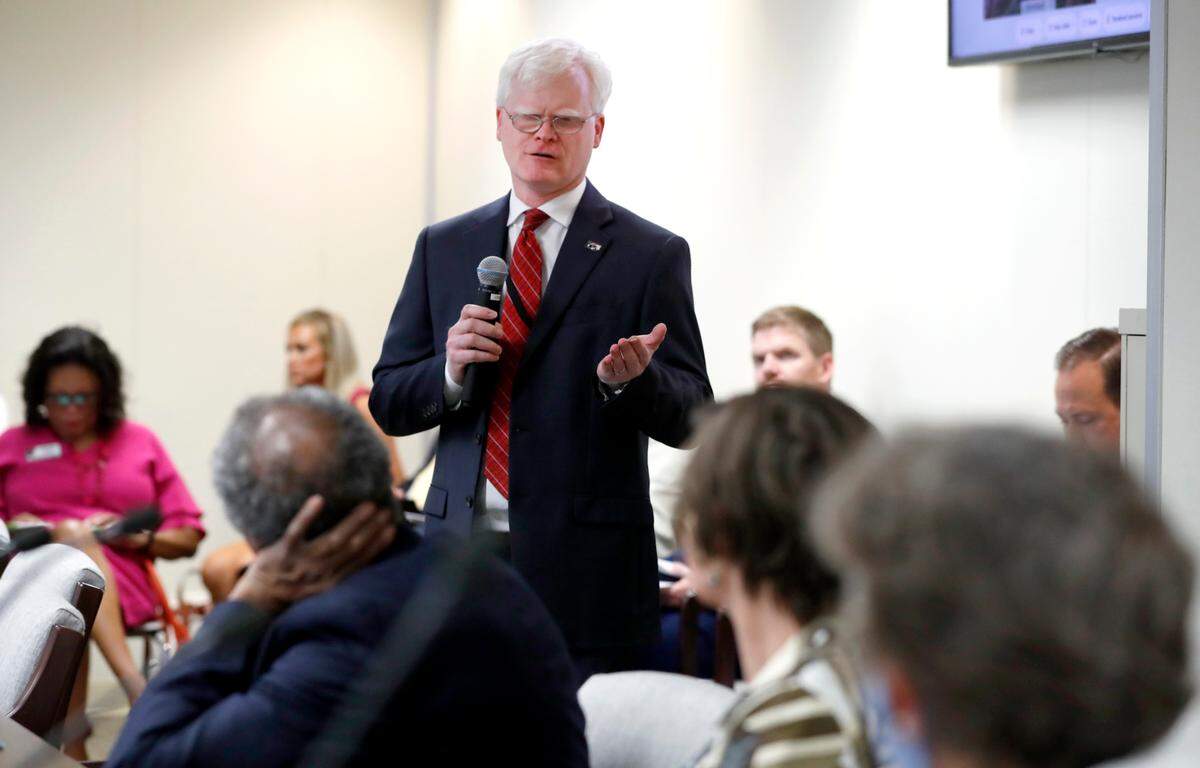
“It’s heartbreaking,” said Durham Mayor Steve Schewel. “We know that this is not isolated. We know that there are lots of our young people with guns now.”
It’s a growing challenge across the state, with the COVID-19 pandemic complicating services for young people and giving them more access to guns, said William Lassiter, North Carolina’s deputy secretary of Juvenile Justice.
“We saw a lot of stolen weapons, and we saw a lot of kids that were selling weapons,” in the past two years, Lassiter said.
▪ A student brought two guns to Enloe High School in Raleigh this month, police said, the day after a fatal shooting at a school in Winston-Salem.
▪ A few days before those events, a 15-year-old was charged with attempted murder after a student was shot at a Wilmington high school.
▪ And four teens, including three 16-year-olds were charged in an Aug. 2. drive-by shooting at a Wendy’s restaurant in downtown Carrboro.
“We are seeing it in all groups,” said Capt. Eric DeSimone of the Raleigh Police Department. “We are seeing it everywhere within the city.”
‘You guys are babies’
Like the Durham mayor, Wells’ sister is heartbroken.
“Not only does my heart break because you guys took my brother, but my heart breaks because you guys are babies,” Imani Taborn said in an interview. “Where is the structure? Where are the resources? ... How were these kids raised?”
Taborn knows the answers aren’t so simple.
“I am sure these people are asking the same thing about Ian,” she said.
Taborn spoke in her grandmother’s Durham apartment, a portrait of Wells in a light gray suit hanging on the wall behind her. His big smile still lit up the cozy sitting room.
He was big hearted, Taborn said. He had brought clothes to a kid at school who was being bullied for sticking out.
Wells, who had turned 15 only a month before he was killed, was also spiraling out of control, his sister said.
He had been charged with stealing a car and had told his sister he’d been in the backseat during a fatal drive-by shooting.
His family needed help to help him.
“When does the system start to see us crying out to put them in an out-of-home placement to give him structure and discipline?” Taborn said. “Give him another shot in life, not for him to be thrown in and out of jail or to end up dead.”
Data on older teens limited
It’s unclear whether the total number of teens 17 and under being charged with gun crimes has increased recently.
In December 2019, state law shifted 16- and 17-year-olds from adult court to the more rehabilitative Juvenile Justice system. Before that, those cases were recorded under the Administrative Office of Courts, which was unable to provide data on crimes by age.
Juvenile Justice was able to provide three years of data for children 15 and under but only one full year for 16- and 17-year-olds.
Still, it shows more kids 15 and younger being caught with guns.
There was a 19% increase in children this age being charged with nonviolent firearm offenses over the three fiscal years, which includes 16 months of the pandemic. Top offenses among the 745 complaints last year were possession of a hand gun by a minor, larceny of a firearm by a minor and possession of a stolen firearm.
Violent firearm offenses for this age group rose by 4% to 934 in the 2019-20 fiscal year but fell to 758 in the 2020-21 fiscal year, according to Juvenile Justice, a part of the N.C. Department of Public Safety.
Guns = fast money
The nonviolent firearm complaints surged as schools stopped in-person classes last year, Lassiter said
Parks, churches and other places kids could go to stay out of trouble closed. Family, mental health and intervention services went virtual.
And gun sales exploded.
Lines spilled out of gun shops across the Triangle, overwhelming sheriff’s offices with pistol permit requests.
Lassiter thinks novice gun buyers didn’t store their weapons properly and teens found them left out in homes and in cars. From there, some saw fast money selling them on Instagram and other outlets, he said.
“Kids were turning to other ways to fill their time and also to make money because a lot of their families lost jobs,” he said. “A lot of those kids in those poorer communities were trying to find ways to make an easy dollar, and selling weapons is often an easy way to do that.”
The situation turned fist fights into shoot outs, Lassiter said
“Handguns, especially in the hands of a 13-, 14-, 15-year-old are extremely dangerous,” he said.
DeSimone agrees the pandemic has played a part in what he called a national trend.
“They are getting their hands on weapons, they are finding weapons, unfortunately, getting involved with something they are not familiar with that could not only pose a threat to them but others in the community,” he said.
Abandonment issues
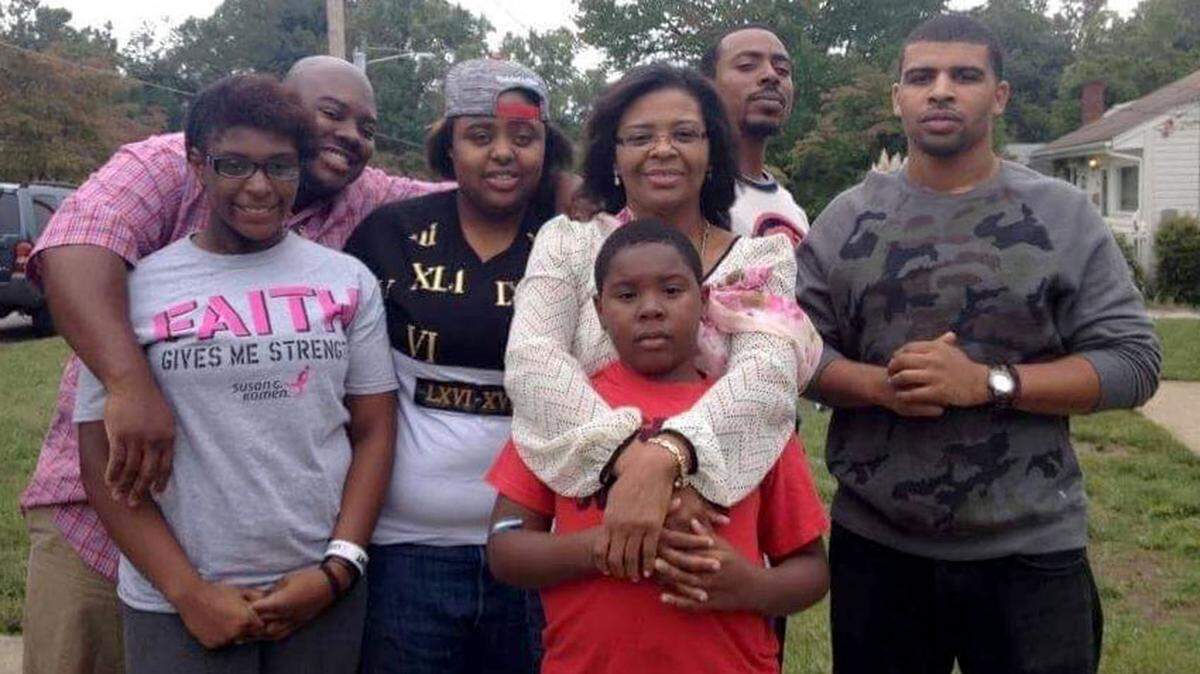
Wells, a freshman at Person High, had chubby cheeks and nicknames like Baby and Chipmunk. He played the drums and liked nice suits, cowboy boots and dress shoes.
“His outfit, whether jeans and sneakers, casual or dressed up, was not complete without his cologne,” his obituary said. “His brother, Jared would say, ‘Ma this dude stay in the mirror, he thinks he is a pretty boy.’”
But Wells, the youngest of six children, struggled with abandonment issues. His father did not participate in his life, and he had depression, anger and fear from witnessing community violence, his sister said. He had also been diagnosed with attention-deficit/hyperactivity disorder and a learning disability.
When he was 6, Wells was caught in the middle of a shoot out, his sister said.
“Someone was shooting at our brother, and he was with him, right there in the midst of it all,” she said.
He cried off and on for days, worried about his brother.
Wells’ mother worked hard to improve the lives of her two youngest children, Ian and a sibling with a mental illness, Taborn said.
She moved the family away from Durham, but returned to the Triangle area when the family moved to Roxboro in 2019. At that point, Wells was struggling at school and not taking his medication, his sister said.
In 2019, Wells shot a girl in the arm with a BB gun, Taborn said. He was assessed by a counselor and prescribed weekly out-patient therapy and medicine management, which fell by the wayside, she said.
Drive-by shooting
On Dec. 5, 2020, Taborn threw a party for her mother’s 50th birthday. Wells came late.
“He said his ears was ringing, his head was hurting,” she said. “He was very disoriented.”
Afterward, the teen who normally wouldn’t stay home or make curfew, refused to leave the house, she said.
He told his sister he had been in the back seat of a car during a drive-by shooting that left a man dead in a Roxboro parking lot.
He was scared that someone would come after him, Taborn said.
In January, Wells faced juvenile charges for stealing a car and was put on house arrest.
The family struggled to get him to follow the rules, like going to school when they were at work. Wells’ mother sought an out-of-home placement but was told he didn’t qualify because of his age or because he wasn’t troubled enough.
Wells’ mother declined to comment for this story.
“She threw her hands up; she was like I don’t know what to do with you,” Taborn said. “She is crying out for the system to help her, but they are not.”
‘Not atypical’
Dorothy Hairston Mitchell, supervising attorney at N.C. Central University’s Juvenile Law Clinic, said Wells’ story is “not atypical.”
Many higher-level resources aren’t available until a kids’ record reaches a certain level. In other cases, programs are full, she said.
Some kids slip through the cracks.
“I don’t want to say a lot, but I know it happens,” she said.
In general, state officials turn to community programs first to avoid out-of-home placements, Lassiter said. Research shows the more involved teens get in the system the more likely they are to re-offend, he said.
In 2020 Juvenile Justice made changes to evaluate juveniles on their risks and needs, not just previous complaints and dispositions, Lassiter said. The department is also adding 48 beds in residential programs to reduce wait lists and introducing a curriculum at juvenile detention facilities on the consequences of guns, he added.
The state funds programs through Juvenile Crime Prevention Councils. Over the last two years, councils in Durham, Forsyth and Guilford counties have sought proposals to tackle gun violence, he said. A new tool also will help court counselors better match kids with services and measure how well they work.
There is also a parents’ resource guide.
“We want the right service for the right child at the right time, to try to prevent them from penetrating the system more deeply,‘“ Lassiter said.
“It sounds like we didn’t get there with this child,” he said. “It’s a good opportunity for us as a department and Durham as a community to try to look at what was the service that was missing for this particular child and how could we have done better.”
Another step the state is taking is encouraging kids to report behavior that concerns them through the Say Something Anonymous Reporting system, Lassiter said, particularly after the latest school shootings.
“We saw that there were warning signs in those cases, too” he said.
Local solutions
In Durham the city wants to grow its summer internship program from 400 teens who participated this year to 1,000. The City Council also recently allocated $250,000 to help grassroots groups serving young people expand.
“I don’t think there is magic to it,” Schewel said. “I think it is providing positive things for young people to do, and we know how.”
In Raleigh, police have been working since 2018 to encourage the community not to tolerate gun violence. They share information in schools and hold events such as the Raleigh Youth Summit and barber shop talks, along with other youth sports, camps and programs.
DeSimone and others said two big steps adults can take are locking up their guns and reporting all gun thefts.
A social contract broken by gunfire
The Centers for Disease Control and Prevention says youth violence is a serious public health problem, killing 13 young people and harming another 1,100 every day.
Children exposed to violence are more likely to hurt someone or be hurt, use drugs or alcohol and drop out of school, the CDC reports.
“It’s a breach of an unspoken social contract that we are supposed to help each other, and when it is broken, it changes the way we see other people,” and ourselves, said Lisa Suarez co-director of the Urban Youth Trauma Center and director of the Pediatric Stress and Anxiety Disorders Clinic at the University of Illinois in Chicago.
It also leads to kids picking up guns, Lassiter said,
“There is mistrust and there is also a heightened sense ‘If I am going to survive this, I have got to take care of myself,’ and that often leads kids to, unfortunately, seeking out weapons so that they can find that security because they don’t think law enforcement is going to provide,” Lassiter said.
“They don’t think their families are going to provide it because of an experience where they didn’t in the past,” he said.
001.png "Screenshot-153537(1)001.png")
‘Get the gun’
Just before 1 a.m April 4, Durham police responded to a traffic crash on South Alston Avenue and found Wells in the Dodge Caravan bleeding.
Days before, he and Cates had talked on Instagram, with Cates sending photos of guns and prices, court documents state.
While Cates was messaging Wells, he was also messaging others for photos of their guns and a gun to use in a robbery scheme, court document state. One juvenile sent a photo of a purple Uzi-style firearm. Cates sent the photo to Wells, indicating he was selling it.
Cates also posted on his Instagram a black handgun with a caption: “ON DA MARKET DON’T HIT UP MY PHONE IF U BS.”
“Multiple individuals conspired to rob Wells of his firearm,” according to a warrant sought by Durham Investigator David Cramer.
On the night of the killing, Wells reached out to Cates for a magazine for his gun, court document state. They agreed on a price and to meet at the BP station on Alston Avenue near the the Durham Freeway, the warrant states.
At the gas station, Wells got out of the car and multiple males ran toward the minivan.
A witness heard gunshots and heard one of them yell ‘Get the gun!’ court documents state.
There were three gunshots at the gas station, his sister said. One went into Wells’ arm, one into his chest and the third into the back of the van.
Wells ran back to the car and drove off, crashing as he made his way down Alston Avenue.
He died at the hospital two hours later.
This story was originally published September 12, 2021 at 7:30 AM with the headline "NC kids are buying and selling guns online. What can be done?."