
Redacted audit indicates problems with UNC police but details hidden from NC leaders
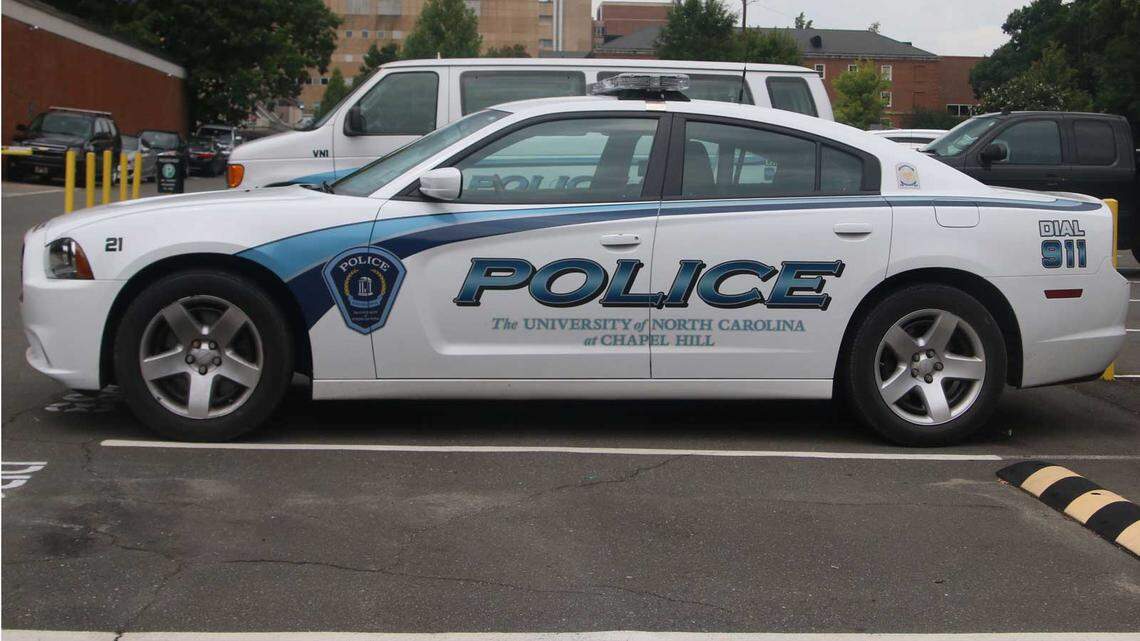
Last December, UNC-Chapel Hill’s internal auditors identified problems serious enough within the campus police department that a vice chancellor said he would handle them in a “forthright manner.”
Since then, the department’s chief went on leave and subsequently resigned, but the university has kept a lid on the audit details. It sent a copy of the report to a state council that is so heavily redacted that it’s impossible to know what occurred and how the university responded.
Chuck Duckett recalled he and other UNC-CH trustees receiving two internal audits involving former campus police chief David L. Perry, he said Tuesday. But Duckett, who recently left the board, declined to share details, saying the reports were personnel related.
Dean Weber, UNC-CH’s chief audit officer, said his office completed only two audits focused on the police department during Perry’s tenure, but declined to discuss them.
The News & Observer obtained two audit reports focused on the campus police department through a public records request to the state Council of Internal Auditing, which is required to collect internal audit reports.
A six-page report lists five unidentified allegations, each followed by blank spaces. A conclusion is also listed, also followed by blank space.
One of the few things visible in the report is a response by George Battle, UNC-CH’s vice chancellor for institutional integrity and risk management. He referred to substantiated allegations.
“My organization will oversee further review of the substantiated allegations outlined in this report,” he said, “and will determine ultimate disposition of the allegations in a forthright manner.”
Two open government advocates said they were stunned that UNC-CH officials would heavily redact an audit report to a council that is supposed to help state agencies improve internal auditing practices, and includes the attorney general, state auditor, state controller and state budget director.
“It’s beyond the pale,” said Brooks Fuller, who leads the North Carolina Open Government Coalition at Elon University.
Jane Pinsky, director of the N.C. Coalition for Lobbying and Government Reform, said it is troubling that they didn’t share the report with elected officials whose agencies serve as checks on government misuse. She and Fuller said the audit’s details should be made public.
“Basically, transparency is the best policy, and unfortunately this amount of redaction might lead people to think that there are serious misdeeds within that department,” she said.
Battle could not be reached by phone or email about the heavily redacted audit.
Kate Maroney, a UNC-CH spokeswoman, emailed a statement Tuesday afternoon that said the internal audit council’s manual states “audits should be redacted as required by law prior to being submitted to others for review.”
“The University follows the North Carolina Public Records Act, the State Human Resources Act and the North Carolina Internal Auditing Act,” she wrote, “and as such the University may not make public information that is not subject to public disclosure under those laws, though that information may be shared in full and unredacted with the State Auditor’s Office or other relevant state agencies when necessary.”
UNC holds onto records
The N&O first requested internal audits from the university on June 25, after learning that Perry was on leave for undisclosed reasons.
UNC-CH spokeswoman Joanne Peters Denny confirmed Perry was on leave, and declined to say why or when his absence started.
On June 30, Perry resigned, after less than two years on the job. UNC didn’t announce Perry’s exit until July 6. When Battle did, his press statement did not explain why the chief, hired from Florida State University, was leaving.
Battle noted that Perry had been on leave since mid-May and thanked the former police chief for his service.
Efforts by N&O reporters to reach Perry by email and phone have been unsuccessful. WRAL last week reported that the former chief told its news staff that he went on leave following knee surgery and decided to step down as he recovered.
Perry also had the title of assistant vice chancellor. He was paid a base salary of $225,000 a year, according to a UNC System pay database regularly updated by the N&O.
The second audit report that The News & Observer obtained from the auditing council is dated March 3 and includes more details. It focuses on a claim that a department member violated policies and regulations during a larceny investigation.
Without naming names, it says university internal auditors found no violations, but identified a “procedural misstep” when a department member failed to add his communication to a case file.
Both audits show that university top administrators and trustees received unredacted copies. So did Lynne Sanders, the UNC System’s vice president for compliance and audit services.
The N&O also requested copies of the police department audits last week from the UNC System, which also has not released them. The state’s public records law requires agencies to produce records as “promptly as possible.”
“If an agency has a record and they can disclose it, they should just disclose it, no questions asked,” Fuller said.
When state Budget Director Charlie Perusse gave the N&O the reports submitted to the auditing council, he confirmed that his office did not redact any content.
State Auditor Beth Wood said she was not surprised UNC-CH provided a document with almost “nothing” to see. She said she doubted anyone on the council is looking at the internal audits.
The state’s internal audit law “just says we collect them,” said Wood, a Democrat who is a nonvoting member of the council. “It doesn’t say anything about having to review them.”
Audits spotlight problems
Internal audits are a management tool meant for agencies to identify problems and fix them without necessarily informing the public, Wood said. She suspected the heavily redacted audit speaks to personnel matters that public agencies don’t have to disclose.
Internal audits are public records according to state law, and are not considered personnel records, Fuller said. He said he sees no reason for UNC-CH officials to shield findings concerning a department that is responsible for the safety and security of students, faculty, staff and visitors to the flagship university’s campus.
Even if UNC-CH officials view the findings as personnel related, state law gives them the right to release the information under what is known as the integrity exemption.
Proposed legislation under consideration in the General Assembly would require more disclosure when a state employee leaves a job. The state Senate amended and passed House Bill 64, which would require an explanation of public employees’ status changes, including when they leave their jobs.
Republican state Senators Norman Sanderson, Bill Rabon and Joyce Krawiec are sponsors. The House hasn’t passed the bill.
This story was originally published July 13, 2021 at 1:03 PM with the headline "Redacted audit indicates problems with UNC police but details hidden from NC leaders."