NC family won $10 million judgment after fatal drunk-driving crash. Will they collect?
This story was updated May 31, 2021, to correct references to Daryl Brooks and Kelwin Biggs.
It was a late-winter evening when Daryl Brooks, high on morphine, opiates and alcohol, came barreling down a two-lane section of Fayetteville Road lined with trees and homes.
Brooks was driving a new-to-him 1995 Chevrolet Camaro, despite his license having been permanently revoked years earlier, according to court documents.
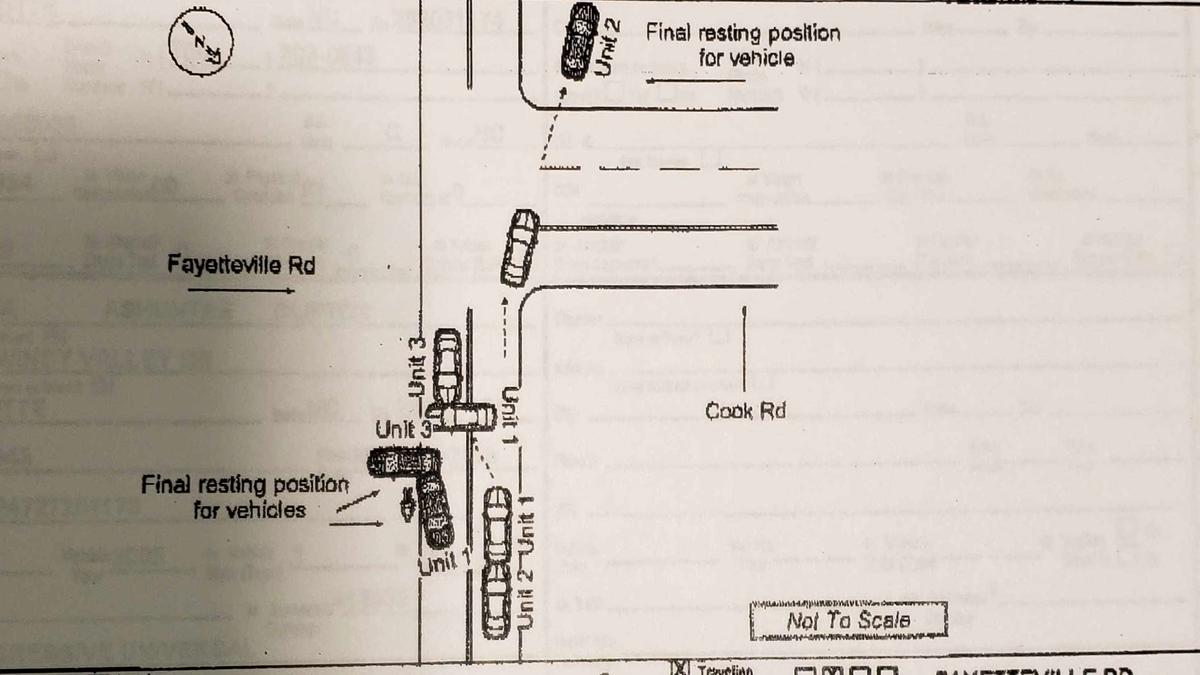
Around 6:35 p.m. March 11, 2015, Brooks rear-ended a Toyota driven by Kelwin Biggs, a 53-year-old father who was on the way to the T-Mobile store to pay his cell phone bill.
The impact pushed Biggs into the other lane of traffic, where he was hit by an oncoming car. He died at the scene.
Brooks, who never applied his brakes, continued on Fayetteville Road, through the intersection of Cook Road. He struck a stop sign before stopping in someone’s yard.
In March 2017, two years later, a jury convicted him of second-degree murder and related crimes in the fatal accident.
Last month, a Durham County judge awarded Biggs’ family a more than $10 million civil judgment against Brooks, who is scheduled to remain in North Carolina prison through 2043. The order followed an April trial in which Senior Resident Superior Court Judge Orlando Hudson determined Brooks owed Biggs’ estate:
▪ $7.5 million in punitive damages for his “reprehensible, willful and wanton conduct,”
▪ $2.5 million in wrongful death compensation, which includes funeral expenses, the totaled car, and the value of Brooks contribution to his family over time.
▪ $50,000 for attorneys’ fees.
28 people die a day
About 28 people die in drunk-driving crashes every day, according to the National Highway Traffic Safety Association. In 2019, such crashes fell to their lowest percentage of overall fatal crashes in 37 years, but still nearly 10,142 lost their lives in preventable deaths.
Biggs left behind his wife, daughter, two brothers and elderly parents.
The News & Observer left telephone messages for this story for Biggs’ family members and plaintiff and defense attorneys in the case. None responded by Friday.
The civil judgment found Brooks’ negligence caused the family to suffer a financial and other losses, including income, guidance, protection, along with help making meals, taking their daughter to school and taking care of his elderly parents.
“Both brothers suffered the loss of the Kelwin Biggs’ kindness, mentoring, love, and guidance he provided to his immediate family, elderly parents, throughout is family, and in the community where he taught and trained young athletes, helping them academically and physically to prepare to enter college,” Hudson’s order states.
“He was very involved with football, athletics, especially with Hillside [High School] … and other area kids that he would take to work out at the YMCAs,” his wife said during a deposition in the case.
Biggs worked as a counselor at a youth detention center in Butner but injured his knees in a couple of incidents and left the job around 2012, according to court documents.
A knock on the door
Lisa Biggs and her daughter had gone to church the night of the fatal crash and were home by the time officers knocked on her door and asked her if she was the wife of Kelwin Biggs.
“And I knew that they were going to tell me, with the envelope in their hand, that my husband was not alive anymore,” she said during deposition.
When police shared the news, Biggs’ daughter ran into another room.
Initially the lawsuit sought money from Brooks’ father, who had bought the car for Daryl Brooks about two months before the crash. The lawsuit also named the used-car company that sold it to Brooks’ father in a situation in which Daryl Brooks drove it off the car lot.
But the judgment was just against Daryl Brooks.
Collecting the money
Chances are slim the family will be able to collect that amount of money from someone imprisoned on a second-degree murder charge, but the judgment could force Brooks to sell possessions of value, claim any future inheritance or garnish his wages when he gets released, said Browne Lewis, dean of the N.C. Central Law School.
It could also force a smaller settlement or serve as a way to punish someone for a wrongful death.
“It gives the family some sense of closure,” she said.
If the family wants to collect, they still have many challenges ahead of them.
“Even when someone doesn’t go to prison, it’s difficult to enforce a judgment,” she said.
The burden is on the plaintiffs to find property to enforce the judgment, which can be a challenge if people hide assets, she said.
The process can also be expensive for plaintiffs, who will likely have to pay an attorney to help them.
But sometimes, Browne said, cases like this aren’t about the money.
“It is just about the hurt and the anger and trying to get retribution in some way,” she said.
This story was originally published May 31, 2021 at 8:00 AM with the headline "NC family won $10 million judgment after fatal drunk-driving crash. Will they collect?."