
Gas supply is low in the Triangle and prices are up. Here’s what you need to know.
The Colonial Pipeline shut down over the weekend due to a cyber-attack, halting a 5,500-mile pipeline that sources 70% of the gasoline supply in the Southeast, including North Carolina.
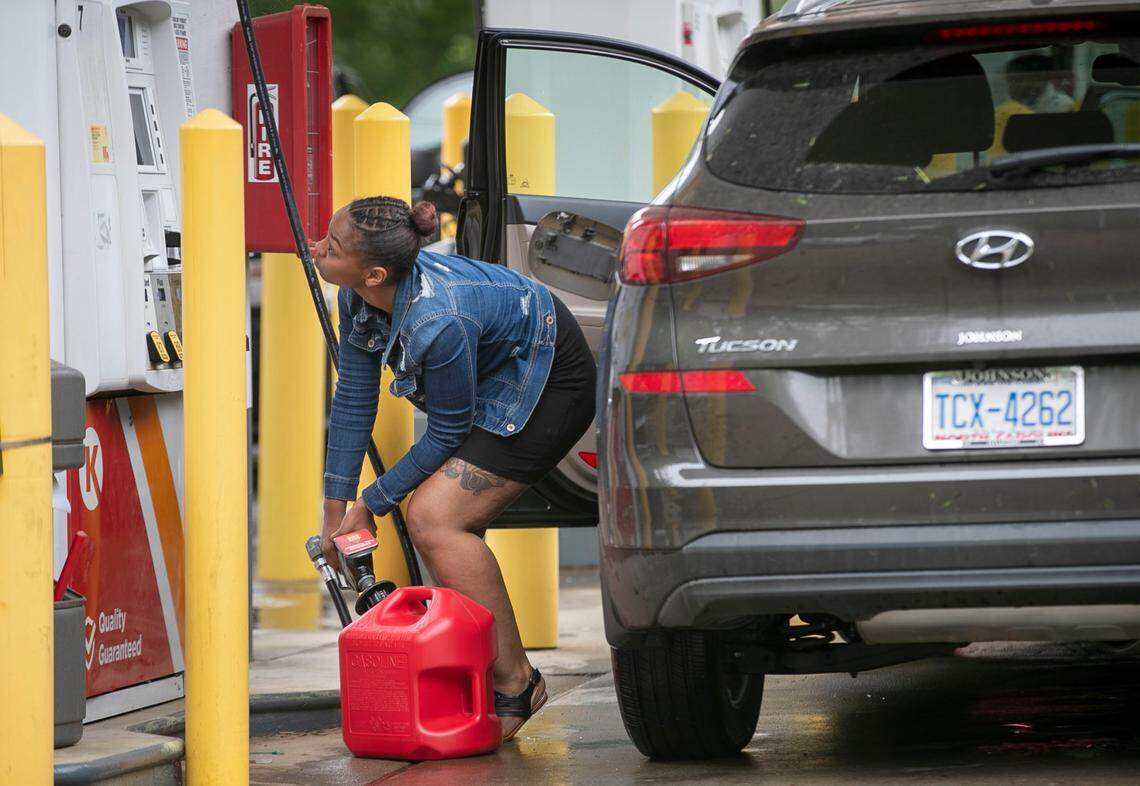
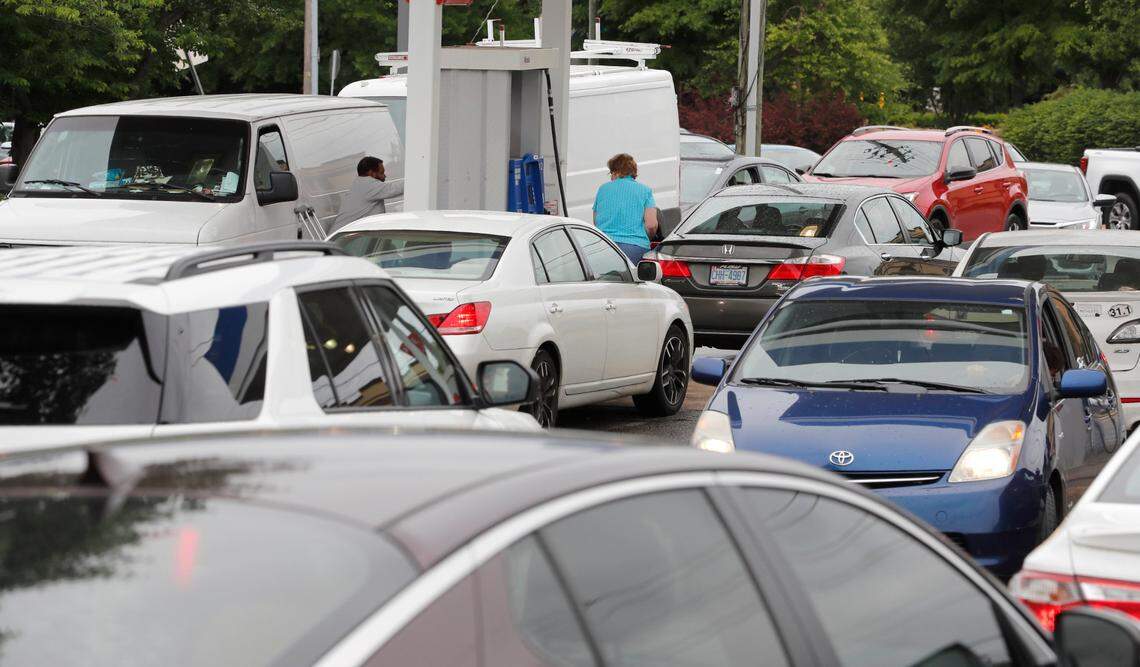
News of the shutdown caused gas prices to surge and a frenzy of panic-buying and stockpiling of gasoline in North Carolina on Tuesday, The N&O reported this week.
But public officials and industry experts say the sudden shortage and price increase has more to do with consumer behavior than the pipeline shutdown.
Many in the Triangle are looking for fuel and trying to navigate this shortage. Answers to questions below:
How much of a shortage is there?
Gas is in short supply in the Triangle.
As of Wednesday morning, 72% of gas stations in Raleigh and Durham are out of fuel, Patrick De Haan, who heads the petroleum analysis company GasBuddy, posted on twitter.
Other metro areas are short of fuel, too.
In Charlotte, 71% of gas stations are out of fuel, and in the area surrounding Greenville, New Bern and Washington, that figure is 69%.
As of 2:48 p.m., 65% of gas stations statewide are out of gasoline, according to a GasBuddy analysis.
That’s the highest fuel outage in the Southeast by over 20 percentage points. In Virginia, 44% of gas stations are out of fuel, and in Georgia and South Carolina, 43% of gas stations are out of fuel.
Where can I get gas?
There are ways to find fuel even during the shortage.
GasBuddy tracks fuel levels at gas stations, and that information can be accessed at tracker.gasbuddy.com.
People can enter their ZIP code or city to see fuel levels in their area. There is also a GasBuddy app for phones, but De Haan recommended on twitter to use the website due to the surge of people accessing the app at once.
The American Automobile Association, in an email to The N&O from AAA Carolinas public affairs director Tiffany Wright, said that those looking for gas should call gas stations to see if they have supply, instead of driving from one to the next.
Should I stock up on gas?
People should not stockpile gasoline, experts say, and should only fill their tanks if they need to.
De Haan posted on Twitter that panic-buying makes the gas shortage situation worse.
“Rushing out and filling your tank will make the problem much much more acute and likely double or triple the length of any supply event, if it comes to that,” De Haan said.
Why is there a gas shortage?
Due to the Colonial Pipeline shutdown, Wright said, shortages were expected this week, but panic-buying in the Southeast, specifically in North Carolina, South Carolina and Georgia, is leading to supply issues happening earlier than expected.
She also said that a shortage of fuel tank trucks to meet demand is causing supply issues, but it is not the primary issue.
“It’s playing into the mix, but the larger issue is the pipeline and not having the fuel readily available at terminals,” Wright said.
Gov. Roy Cooper said at a press conference on Wednesday that the lack of supply right now is almost solely due to panic-buying.
“I want to encourage people not to do that. Don’t fill up your car unless you have to. Don’t go top off your car and fill up all of your cars because that is what is really driving the shortages right now,” Cooper said.
When will supply go back to normal?
Wright said that gas stations are being refueled as quickly as they can.
Cooper said at the press conference that North Carolina has received a waiver from the Environmental Protection Agency to ship more fuel into the state.
The governor also declared a state of emergency on Monday. The emergency order temporarily suspends vehicle fuel regulations in an effort to ensure enough supply of gasoline.
Cooper said he was told by Colonial that they intend to have the pipeline operational again by this weekend.
Is the fuel shortage increasing gas prices?
The average price per gallon for regular unleaded gasoline in North Carolina on Wednesday is $2.85, according to AAA.
That’s an increase of six cents since Tuesday and an increase of 16 cents from a week ago.
In the Triangle, average prices per gallon are $2.86 in Wake County, $2.90 in Durham County, $2.88 in Orange County and $2.85 in Johnston County.
Some of the price increase is due to the Colonial Pipeline shutdown, according to a AAA press release.
But the increase is also part of a larger trend.
As more people have been vaccinated against SARS-CoV-2, the virus that causes COVID-19, gasoline demand has increased, causing prices to increase, according to a GasBuddy press release.
The national average of gas prices per gallon topped $3 on Wednesday, according to AAA, the highest since 2014.
GasBuddy estimates that prices will stabilize over the summer and not increase to record levels. They expect prices to stay around the upper $2 to low $3 range.
This story was originally published May 12, 2021 at 2:25 PM with the headline "Gas supply is low in the Triangle and prices are up. Here’s what you need to know.."