
How the Clearview facial recognition app spread through Raleigh police force unnoticed
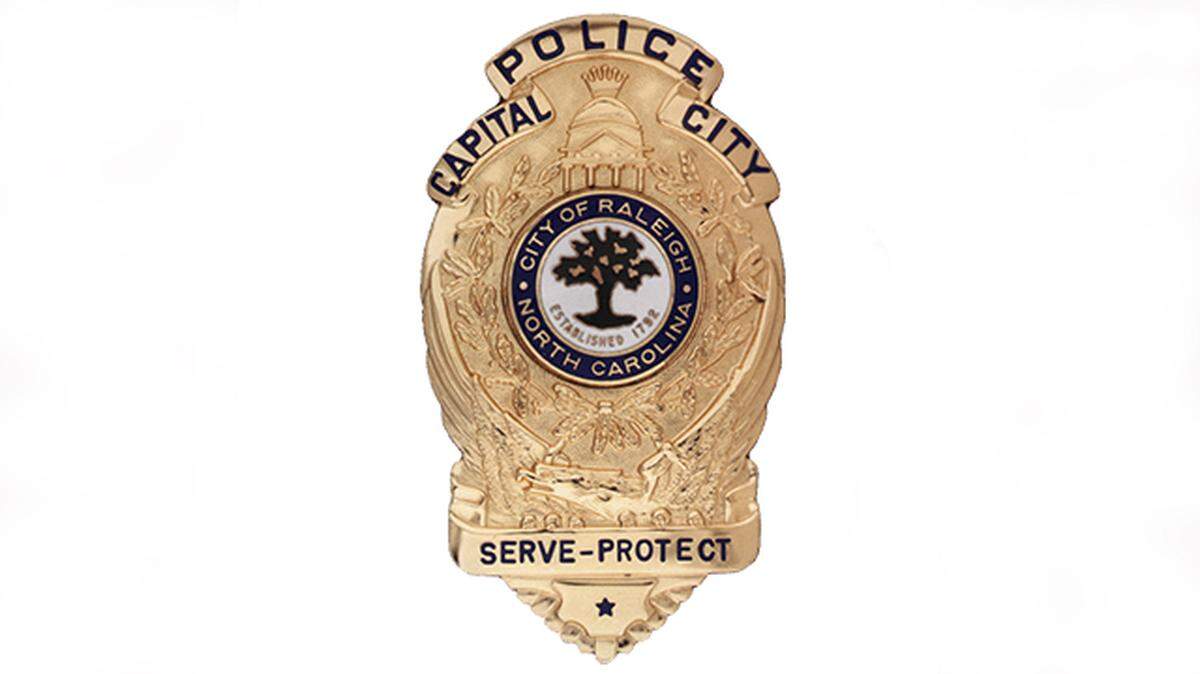
In May 2019, a former Rudy Giuliani aide turned tech entrepreneur named Richard Schwartz reached out to a detective at the Raleigh Police Department’s Intelligence Center with an offer.
Schwartz had cofounded a company called Clearview AI, and he was hungry for new users in the law enforcement community. In his message to Detective Robert Pike, Schwartz said he was reaching out at the suggestion of mutual friend. He could set Pike up with demo account for free, and he extended the offer to any of Pike’s colleagues — all he needed was a name and an email.
“Awesome. Thank you,” Pike replied. “Looking forward to it.”
The sign-up link came in an email at 11:08 a.m. Two minutes later, Pike had created an account, granting him access to the most comprehensive facial recognition database ever built. The service required no warrants or departmental approval, no sign-offs from the police chief or the elected City Council.
From there, access to Clearview spread across the department.
In the months that followed, emails provided by the Raleigh Police Department show, at least 20 people at the department had access to Clearview, a service that trumpeted its “unlimited” power to identify just about anyone in seconds with a single photo. That number far exceeds the three employees authorized to use the service before the department abruptly banned it in February 2020.
The documents, obtained through a public records request, provide a glimpse into how use of the controversial startup expanded through the ranks of law enforcement across the country with little oversight and no regulation, months before the general public even learned of the company’s existence.
At least 64 law enforcement agencies across North Carolina used Clearview through February 2020, according to a report from BuzzFeed News published April 6. Based on a trove of leaked documents from the company, BuzzFeed’s reporting showed that the Raleigh Police Department was one of the top users of the service in the state, conducting between 1,000 and 5,000 searches.
But it’s hard to know for sure how widespread the use of Clearview actually was.
Not all employees with access may have used the technology, and the department has refused to provide details on any cases Clearview helped solve. Demos offered by the company directly to officers and referrals from fellow users made tracking the number of users impossible.
And more than a year after reporters began asking questions about potential violations of the department’s own facial recognition policy, the agency has not yet conducted an audit of its use of Clearview, which cost the department just $2,500.
Clearview says it upgraded its software over the last year to allow better accounting of users’ facial recognition searches and to prevent unauthorized access to user accounts.
But civil rights advocates like Ann Webb, senior policy counsel for the ACLU of North Carolina, say Clearview — and technology like it — remains plagued by transparency problems that require action from civic leaders.
“It shouldn’t just be an accident that we find out this technology is being used because it was inexpensive enough to fly under the radar,” Webb said. “We should be able to trust that our city council and city managers bring the use of any kind of surveillance technology before the public before it’s used.”
‘Clearview is terrifying’
Police departments in communities across North Carolina in recent years have increasingly turned to new technology, often created by private companies, to help solve crime.
The Charlotte-Mecklenburg Police Department deployed devices that mimic cell phone towers to harvest data on digital devices. Law enforcement in Cary, Apex, Holly Springs and Fuquay-Varina, among others, have partnered with Amazon to access vast networks of doorbell cameras consumers install at their homes. In Raleigh and elsewhere, police have used so-called “geofence” warrants to demand data from Google on devices that enter specific areas at specific times, WRAL News reported.
But privacy advocates say technology like Clearview presents a different kind of surveillance threat.
“I think facial recognition technology, in the long run, has much more potential to change our lives as we know it, and to completely eradicate practical obscurity,” said Jolynn Dellinger, a senior lecturing fellow at the Duke University School of Law and former special counsel for privacy policy and litigation at the N.C. Department of Justice.
If anyone can be identified anywhere — at a political protest, church or Alcoholics Anonymous meeting — Webb said authorities gain the “unprecedented power to spy on us wherever we go.”
That power was once limited, for the most part, by technology. Not any more.
Companies in the facial recognition market for years have relied on databases of mug shots or drivers’ license photos to train their matching algorithms. Those images can be low-quality, and their consistency is a problem: straight shots of faces aren’t great if you’re trying to identify a suspect caught in a surveillance video from a strange angle.
So the larger and more diverse the database of photos, in general, the better your matching algorithm is likely to end up.
And Clearview’s database is huge.
In an October 2019 marketing email sent to law enforcement contacts in nearly every state, the company boasted it had collected 3 billion facial images not just from arrest databases, but also from social media, company web sites and news articles. And every day, the company said, it adds “40-50 million new images for you to search.”
In short, if you’re a user of social networking sites like Facebook and Google, any publicly visible images were captured by Clearview without your consent.
Details of the company’s activities, revealed to the public for the first time in early 2020 by The New York Times and BuzzFeed News, were enough to prompt cease-and-desist letters from most of the major social media sites. In several states, users themselves took action in civil court.
In California, for example, a group of residents filed suit against Clearview in March, alleging violations of state consumer protection and privacy laws.
Sejal Zota, a Durham-based attorney representing plaintiffs in the case, said her clients are often critical of law enforcement and fear the technology will be used in retaliation. To them, Zota said, the use of facial recognition is a civil rights issue.
“Part of it is just the sheer scale of it,” said Zota, the cofounder and legal director of Just Futures Law, a national group supporting immigrants’ rights and racial justice. “Surveillance on this scale is not about solving crime. Clearview is terrifying, and it chills people’s behaviors.”
The company is fighting the lawsuit, claiming its scraping of images is protected by the First Amendment.
Representatives from Clearview AI did not respond to multiple interview requests for this story. But in a prepared statement, CEO Hoan Ton-That said his company “operates within the bounds of the law and assists law enforcement agencies in solving heinous crimes.” That includes crimes against children, he said, as well as the identification of pro-Trump rioters that stormed the U.S. Capitol on Jan. 6.
Dellinger, who said she has concerns both about the use of Clearview and facial recognition more broadly, said part of the problem is that the law has no real boundaries for the use of this technology — for Clearview or any other company.
“It’s not a highly regulated space, so we can’t turn to existing laws to protect us,” she said. “We need to be able, in this moment, to really rely on police departments, other entities that are using these technologies, to do so in an incredibly thoughtful, organized, systematic manner, with rules and regulations that they can verify are being followed.”
At least until February 2020, emails show that’s not what happened in Raleigh.
‘Great success’
Within an hour of creating his Clearview account in May 2019, Pike shared his login credentials with two fellow Raleigh officers.
Two more officers received Pike’s username and password a week later, one of them in an email forwarded by Raleigh Intelligence Center supervisor Sgt. Chuck Penny.
“Start playing around with photos of our unidentified subjects and see how well this website works,” Penny wrote to an officer on May 22, 2019. “It might be good for some of our missing persons as well.”
In the financial crimes unit, Detective Sgt. Robert Powell received his own invitation to the service from Clearview’s Schwartz. Powell wrote to several fellow officers a few weeks later that the app had ID’d one suspect and was likely to help another case.
That same day, the company’s cofounder asked Pike how things were going.
“We are having great success with it and am presenting this to the command staff,” Pike wrote to Schwartz on June 13, 2019.
Absent from the discussion, at least according to the emails provided by the Raleigh Police Department, was any mention of how the use of Clearview squared with department policy on facial recognition. Approved in 2015, those rules put strict limits both on the photos a facial recognition database could contain and what images investigators could use to search the system.
The database itself could consist only of arrest photos. And comparison using social media photos was specifically forbidden unless “directly related to an active investigation.”
“What we know about what happened in Raleigh is that the use of Clearview appeared to violate the policy,” Webb said. “That alone was really concerning, that Clearview was slipping through the cracks of existing regulations.”
The Raleigh Police Department declined to make anyone available for an interview for this story. But in a response to a list of written questions, spokesperson Dia Harris said the department’s due diligence for the product included both a demonstration and the knowledge that “other police agencies in major cities were already using the software.”
About three months after the start of Pike’s demo, the department was convinced enough of the app’s value to purchase three licenses for investigators in its intelligence unit in August. That included Penny, the supervisor; Pike and another analyst named Tomeka Evans.
The department contends these were the only users ever officially authorized to access the service.
Yet members of the intelligence unit continued in late 2019 to bring more of their colleagues into the fold.
“Please do not spread it around too much,” Penny wrote on Aug. 22, 2019, to a sergeant in the detective division in an email that included a username and password.
But months after the Raleigh Police Department inked the deal with Clearview, solicitations to individual officers from the company kept coming in.
“I encourage you to test the tech on computer/laptop... and the mobile app,” Clearview’s Jessica Medeiros Garrison wrote to Detective Bethany Machado on Dec. 26, 2019.
Garrison ended her message with another appeal for users: “Finally — if there are any other officers/agents that would like an account, just send me names and emails.”
The department’s experiment with the technology, though, would soon come to an end. In less than a month, Clearview’s secret would be out.
Clearview revealed to the public
It didn’t take long for officers in the Raleigh Police Department to notice the New York Times story that published on Jan. 18, 2020, by reporter Kashmir Hill. The headline: “The Secretive Company That Might End Privacy as We Know It.”
“They made news, New York Times, prostitutes know about it now,” the department’s Wallace Vaughn wrote that Sunday to five of his colleagues. “They are tweeting it everywhere.”
Several of the officers included on Vaughn’s message had received credentials for the app, emails show. But only one of them — Detective Robert Pike — was officially authorized to use it.
“We are our own worst enemy,” Pike wrote back. “Why cops were talking to (reporters) about it is beyond me. Stupid.”
In the days that followed, the department fielded multiple requests from local reporters for details on whether Raleigh police officers used Clearview, which a spokesperson confirmed. Top police brass, meanwhile, worked to arrange a meeting about Clearview to make sure “we are intentional and accurate in our public records responses.”
Access to the facial recognition app continued to spread.
Clearview’s Garrison on Jan. 23, 2020, invited two more officers in the department to set up accounts, and a flurry of other welcome and email verification messages went to other officers signing up for accounts.
Existing users within the department, meanwhile, received reminders to invite their fellow officers and even to take selfies to test the app’s power “in real time.”
“Try your friends and family. Or a celebrity like Joe Montana or George Clooney,” one Clearview email to Officer Brandon Johnson on Jan. 25, 2020, read. “Your Clearview account has unlimited searches. So feel free to run wild with your searches.”
Such advice ran counter to the company’s own “code of conduct” document, which stressed that an account holder “may not use the Clearview app for personal purposes.”
In the broader Triangle law enforcement community, concerns were growing.
“We ended up briefly discussing Clearview in a meeting earlier today and our chief said he thought it was the same company (but wanted to check to be sure) that NYPD had researched and found ties to unethical practices,” wrote Apex police crime analyst Jennifer Conley to Penny on Jan. 29, 2020. “Apparently Twitter sent Clearview a cease and desist letter.”
Emails show that access to Clearview did appear to constrict somewhat over the next few days.
Penny rebuffed a detective with the family violence intervention unit when she asked how to use the app.
“We have limited licenses,” Penny wrote back on Jan. 30, 2020. “If you need something run a [Raleigh Intelligence Center] detective can run it for you.”
But for his part, Pike provided five of his colleagues with additional documentation on the app, noting “you are the only subjects in the department who I have given access to.” None of them were authorized account holders under the department’s three paid licenses.
It wasn’t until Feb 6, 2020 — six months after the department’s purchase agreement took effect — that Penny asked the company how to examine searches his officers conducted with Clearview. According to Harris, Clearview never provided an adequate answer.
The next day, word came down from Lt. Eric Goodwin to the three authorized users of the service: Clearview was now prohibited. But it took a memo from Chief Cassandra Deck-Brown two weeks later to extend that ban department-wide.
“Upon further review of this matter, it has been determined that others were offered the use of this tool via an email regarding an invitation, user referral or free trial from the company,” Deck-Brown wrote on Feb. 20, 2020. “Effective immediately, all personnel (sworn or civilian) are hereby directed to cease the use of any unauthorized facial recognition systems to include, but not limited to, Clearview AI.”
What’s next for Clearview
Clearview says a lot has changed since early 2020.
“As a fast-growing startup, we’ve strengthened compliance, onboarding, and safety features, including requiring a case number and crime type before any search, and we have enhanced our auditing and reporting features for administrators of facial recognition programs to ensure responsible use of this technology,” Ton-That, Clearview’s CEO, said in a statement issued through a spokesperson.
The company also noted that in May, it implemented two-factor authentication to prevent unauthorized access to accounts.
“We’re committed to the proper use of our technology in order to protect vulnerable populations and make communities safe,” Ton-That said in a statement, adding that the company is proud to have had the opportunity to help Raleigh police conduct investigations “efficiently and reliably.”
But how useful the app actually proved to detectives is murky.
Harris said the number of cases that the app helped solve is unknown. And a lot remains unclear about the only case Raleigh investigators actually mentioned in records provided by the department: the arrest of 64-year-old James Anthony Mero.
Raleigh police caught up with Mero at a Henderson, N.C., Denny’s in June 2019 — well before they signed up officially with Clearview. Since that arrest, Mero’s been indicted on more than 30 counts related to fraud and child pornography that investigators say they found in his possession.
The Raleigh Police Department has remained tight-lipped about the arrest, as has the Wake County district attorney’s office. Mero’s public defender, Tad Dardess, has declined to comment on behalf of his client.
But behind the scenes in mid-2019, Raleigh investigators were sharing at least some details about the case — both with colleagues and with Clearview AI, which sought success stories to share with other clients.
A marketing document Clearview shared with clients said Mero was identified after a victim shared a photo of the man with investigators. Authorities haven’t confirmed that account.
Mero is still awaiting trial in Wake County court.
Privacy advocates say this lack of transparency is one of the main issues with Clearview, which has not been evaluated by any rigorous, independent organizations like the National Institute of Standards and Technology. NIST, in particular, has a specific methodology for gauging the accuracy of facial recognition algorithms, which in general have a harder time identifying women and people of color.
“We don’t know when officers are using Clearview. We don’t know if this is, in any way, an accurate tool,” Zota said. “We don’t have any evidence this is effective at stopping crime.”
In Raleigh, the ban on Clearview remains in effect, and Harris said state personnel law prevents her from saying whether any officers were ever disciplined for violating the department’s facial recognition policy.
Shelia Alamin-Khashoggi, the chair of Raleigh’s Police Advisory Board, said she’s not surprised that policy is still under review more than a year later.
“A lot of these policies are out of date, and they’re using different things without going back to see if it will work for citizens — if it will work for them,” Alamin-Khashoggi said.
Provided it has a way to enforce its ban, the ACLU’s Webb said she commends the Raleigh Police Department for cutting ties with Clearview. But she also acknowledges it won’t be the last controversial tech company to reach out to law enforcement with an enticing sales pitch.
“We know these technologies are going to continue to surface and get cheaper over time,” Webb said. “Simply responding to, frankly, negative media attention in the moment isn’t enough to address the general trend with facial recognition technology.”
Dellinger said she supports moves by some cities across the country to enforce a general moratorium on facial recognition until the right rules are in place.
But the nature of those rules, she said, are up to communities — and how they square what are often “battling values.”
“There’s always going to be a crime that we can hold up — and there might even be several crimes that we can hold up — and say, ‘We couldn’t have solved this crime without this particular technology,’” Dellinger said. “But I think every day we make choices, that we balance how we value the privacy of individuals and the privacy of communities, and we think about the technologies that we’re using and we decide: well, what’s the trade-off going to be?”
This story was originally published April 16, 2021 at 5:50 AM with the headline "How the Clearview facial recognition app spread through Raleigh police force unnoticed."