NC immigrants with temporary status get a ‘Christmas miracle,’ but future uncertain
Just weeks ago, Glenda Polanco received news she described as nothing short of a Christmas miracle.
That’s because Polanco and over 13,000 other Salvadoran, Haitian and Honduran immigrants in North Carolina with Temporary Protected Status found out they could keep living and working legally in the United States well into 2021.
For TPS recipients, the extension means not having to worry right now about being sent to their home countries, in some cases after being here for decades.
“My Christmas miracle came true,” said Polanco, 28, of El Salvador. “This is home to me. This is all I know.”
Federal immigration officials announced Dec. 7 that they were extending the TPS humanitarian program for nine months. The program, which grants recipients legal immigration status due to disasters striking their countries, had been set to expire Jan. 4.
Today, roughly 400,000 immigrants in the United States have TPS after fleeing natural disasters in Latin America, Africa and Asia.
The program protects people who might otherwise face widespread violence, starvation and other life-threatening situations.
Central American countries that many current TPS holders left are still recovering from the devastating hurricanes Eta and Iota last month. The end of TPS would mean that thousands of people would return to Honduras and Nicaragua during a time of hardship where millions have been left without food, water and shelter, The Miami Herald reported.
El Salvador was struck by two devastating earthquakes in 2001 that caused hundreds of thousands to seek refuge in the United States.
Now after migrating 19 years ago, Polanco works as a departmental assistant at Meredith College where she will soon receive her Master in Business Administration degree.
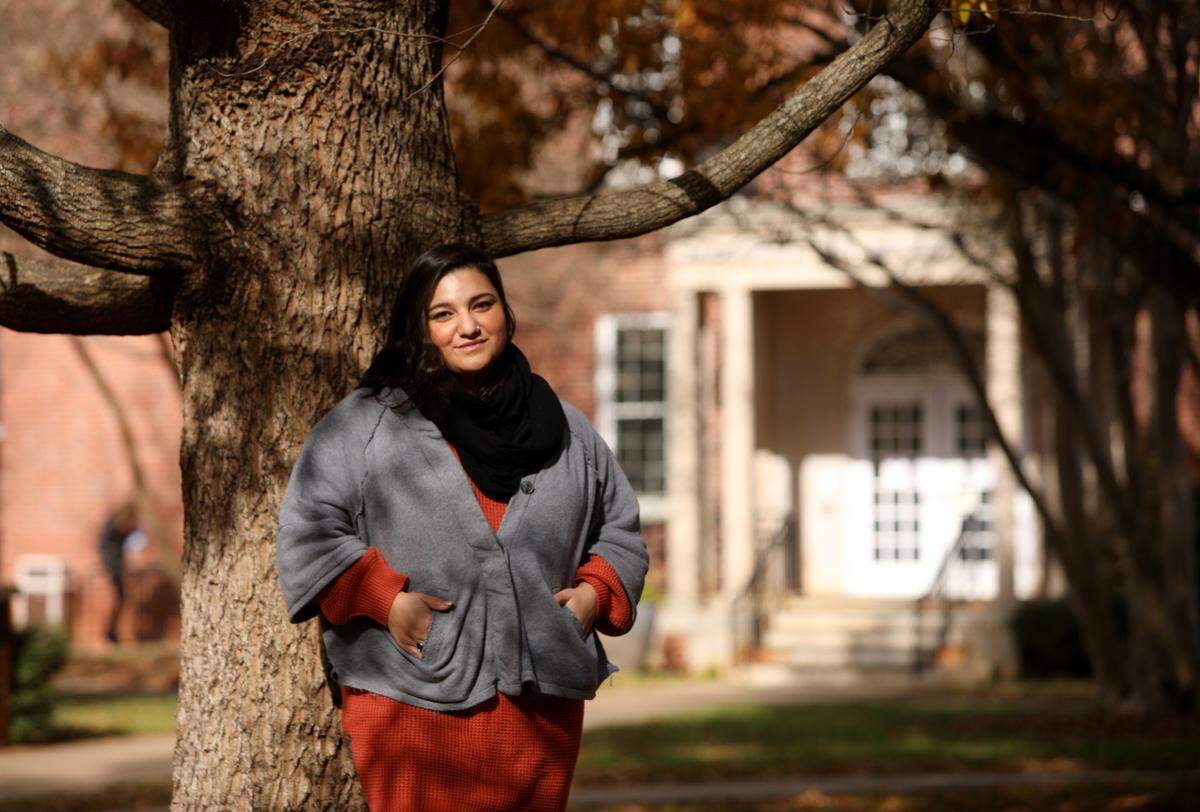
Polanco coaches first-year students as part of advising work she hopes to continue. She also dreams of working in geriatric care once she completes her studies.
But, “it’s kind of hard to think of future plans when you don’t know your status — what’s it going to be like,” she said.
Uncertainty ahead
The fate of hundreds of thousands of U.S.-born children of TPS recipients have also been in limbo for years.
President Donald Trump’s administration announced plans in 2018 to end the program, but extended it in 2019 for Salvadorans after the Salvadoran government agreed to help curb unauthorized immigration from its country into the United States.
In September of this year, courts ruled in favor of the administration’s terminating the program for all recipients. A court found that the plaintiffs of the lawsuit against the administration showed effectively that President Donald Trump “expressed racial animus against ‘non-white, non-European’ immigrants,” but they had cited no evidence that this animosity was directed toward the TPS program and its recipients.
But a court delay led to the plaintiff’s injunction temporarily blocking the termination, leading to the extension, The Miami Herald reported.
“I think it’s definitely a breath of fresh air to know [TPS] has been extended, but this isn’t a permanent solution and it doesn’t take away the stress once October comes again,” said Polanco.
A pathway to citizenship is the hoped-for solution for those protected by TPS and the Deferred Action for Childhood Arrivals program, also known as DACA, who also have been allowed to stay, for now.
“It’s a life of physical, emotional and occupational instability,” said Gregorio Cruz Lazo, a former TPS recipient of over 20 years.
Cruz Lazo is the director of the Raleigh-Durham TPS Committee, an advocacy and support group for recipients.
“[The Trump Administration] has been four terrible years of uncertainty,” he said in Spanish to The News & Observer. “Many of the children of TPS recipients were affected mentally and emotionally. They would hear the news and see their parents in a constant struggle.”
Cruz Lazo and members of the National TPS Alliance met with Sen. Thom Tillis to ask for his help. Tillis expressed sympathy, but the meetings were not fruitful, Cruz Lazo said. Members were unable to meet with Sen. Richard Burr.
President-elect Joe Biden has promised to review the efforts to end TPS and to seek a solution for beneficiaries.
“We will be demanding that [Biden] delivers on his promises to protect our families and signs a legislative solution to guarantee a permanent residency for all TPS holders,” said TPS holder Victor Morales in a National TPS Alliance press release.
What eliminating TPS could cost
Salvadorans, Hondurans and Haitians are the majority of TPS holders in North Carolina and the United States.
Ending TPS and deporting people from those countries would reduce North Carolina’s Gross Domestic Product by $570 million, according to a 2017 state study from the Center for American Progress, a non-partisan progressive institute.
“That money would not not only be nonexistent ... who is going to care for their 11,000 U.S. citizen children?” asked Yesenia Polanco, a Durham-based immigration attorney and cousin of Glenda Polanco.
“Under a pandemic that we’re already suffering with major consequences in job loss, I guarantee you that TPS holders are holding their own,” she said in an interview with The N&O. “They’re essential workers doing jobs that are absolutely necessary to keep our economy going in restaurants, in construction and in the service industry.”
Deportations also cost public funds: removing TPS holders from those countries would cost taxpayers roughly $3.1 billion, a study by the Immigrant Legal Resource Center found.
The study said Social Security and Medicare contributions lost from ending their jobs would cause a $6.9 billion reduction to those programs over a decade and a $45.2 billion reduction to the national GDP over the same period.
While Americans could fill the economic void left by the absence of TPS immigrant workers over time, a study by the Pew Research Center this year found most Americans say immigrants — here legally or not — take jobs Americans don’t want.
In 2017, the Center for American Progress said 30% of Salvadoran TPS holders in North Carolina work in construction, 14% in food service and 13% in administrative and waste management work. About 27% of Honduran TPS holders in North Carolina work in construction and 18% in manufacturing.
“We don’t only work for ourselves here, we are supporting our families that stayed behind in our home countries,” Cruz Lazo said, noting how TPS holders’ remittances home support their countries’ struggling economies.
TPS reforms and solutions led by Democrats have received bipartisan support in Congress, specifically legislation adding Venezuelan refugees to the program.
Yesenia Polanco said the chances for a permanent solution to recipients’ uncertainty would be better under a potential Democratic majority in the Senate.
“I don’t want TPS or DACA extended,” she said. “I want it to stay if there’s no other option, but it’s not enough.”
This story was originally published December 22, 2020 at 11:44 AM with the headline "NC immigrants with temporary status get a ‘Christmas miracle,’ but future uncertain."