Weather helps decide elections, studies show. Here’s the forecast in North Carolina
Bill Clinton might have won North Carolina if hadn’t rained on Election Day in 1992, according to a 2007 study.
Clinton still took the White House, defeating incumbent Republican President George H.W. Bush before his second term in office. But researchers said the same rainy weather in 2000 may have cost Al Gore the vote in Florida — and the presidency.
“We know from several studies in the scientific and political science literature that rain, extreme temperatures, or hurricanes can impact voter turnout,” climate expert Dr. J. Marshall Shepherd wrote in an article for Forbes last month. “Some studies suggests that ‘bad weather’ on Election Day benefits Republicans because it dissuades new or less intense voters though other studies are less conclusive.”
So what does the local forecast look like for the 2020 election?
North Carolina’s weather forecast
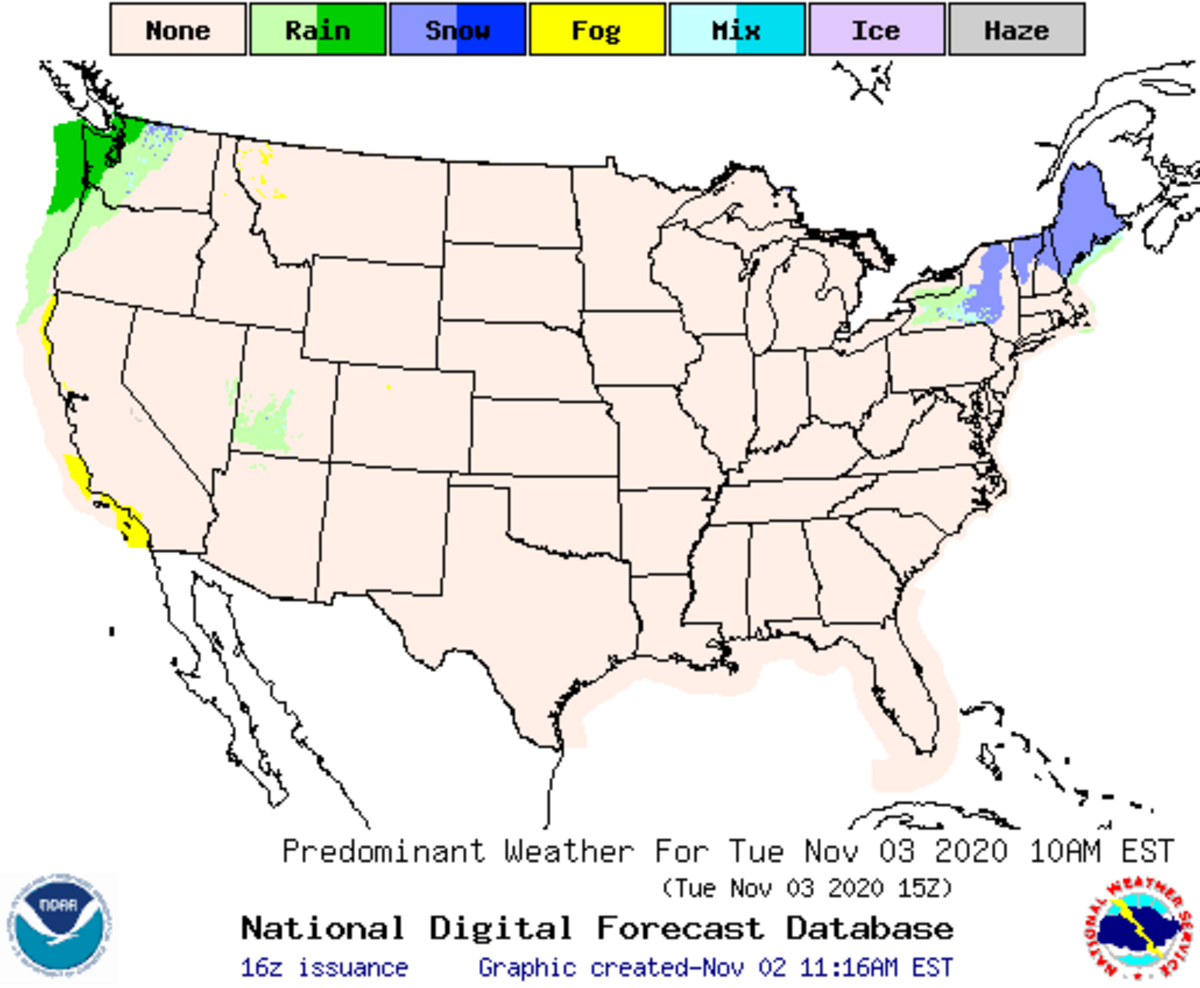
The forecast in North Carolina — like much of the country — is relatively clear for Nov. 3, according to the National Weather Service.
There is some rain expected in the Pacific Northwest and a mixture of snow and rain in some parts of New England, but the Southeast is largely sunny with temperatures in the 50s and 60s, The Weather Channel reported. While Sunday and Monday brought a cold chill to Western North Carolina and the Piedmont region with temperatures as low as 30 degrees in some places, forecasters said those temperatures should start to rebound by Tuesday morning.
“Highs Tuesday will increase around 10 degrees from Monday, with low to mid 60s expected across the region,” the National Weather Service for Raleigh/Durham said in a 9 a.m. update Monday.
Forecasters for Western North Carolina and the Charlotte area said it’s “looking like a quiet midweek period,” and the weather service at the Outer Banks forecast “skies will be clear throughout the period with light winds.”
How weather impacts elections
Studies have shown weather affects both whether people vote and who they vote for, meaning there might be credence to the old saying, “Republicans should pray for rain.”
Using meteorological data from more than 22,000 weather stations across the U.S. on Election Day in years past, researchers in the 2007 study “The Republicans should pray for rain” found rain reduced voter turnout by about 1% per inch while snow decreased turnout by about half a percent.
They pointed to two instances in American history when the weather could have changed the outcome of the Electoral College.
According to the study, Richard Nixon might have snagged an additional 106 Electoral College votes in the 1960 election to secure him the presidency if rain and snowy weather had deterred supporters of the Democratic nominee, John F. Kennedy.
In 2000, researchers said “dry conditions” might have “swung the incredibly close 2000 election in Gore’s favor.”
“Bad weather may be the last straw for peripheral voters, and according to the conventional wisdom, these voters may be disproportionately inclined to support the Democratic presidential candidate,” researchers said. “If this is the case, then precipitation will increase the percentage of votes cast for the Republican presidential candidate.”
Another study published in 2018 in the journal American Politics Research found voters might also be more likely to change their vote on a rainy day, McClatchy News previously reported.
The study determined “at least 1 percent of voting age adults in the U.S. who would have voted for a Democrat had the weather been good, voted instead for a Republican on rainy election days,” likely because voters are more risk-averse in inclement weather.
That means they’re more likely to vote for the less risky candidate, which — in years past — would be the incumbent or the Republican candidate, The Washington Post reported. This year that might be Democratic nominee Joe Biden. The country’s overwhelmingly sunny forecast, however, “may put voters in a mind-set to select a riskier candidate, perhaps Trump,” according to The Post.
It’s also possible the forecast will have little impact on Election Day given the prevalence of absentee ballots and mail-in voting during the coronavirus pandemic.
“Our work shows that people are sensitive to changes in the physical costs of voting,” Brad Gomez, a political scientist at Florida State University, told The Post. “Early voting, voting by mail — all of that makes it less likely that rain is going to have an effect on Election Day.”
This story was originally published November 2, 2020 at 3:02 PM with the headline "Weather helps decide elections, studies show. Here’s the forecast in North Carolina."