Protests have led to numerous reforms in NC. What happened already, and what’s next?
Killings by police in North Carolina often have led to protests and a revival of the debate around law enforcement and race — but few, if any, concrete reforms.
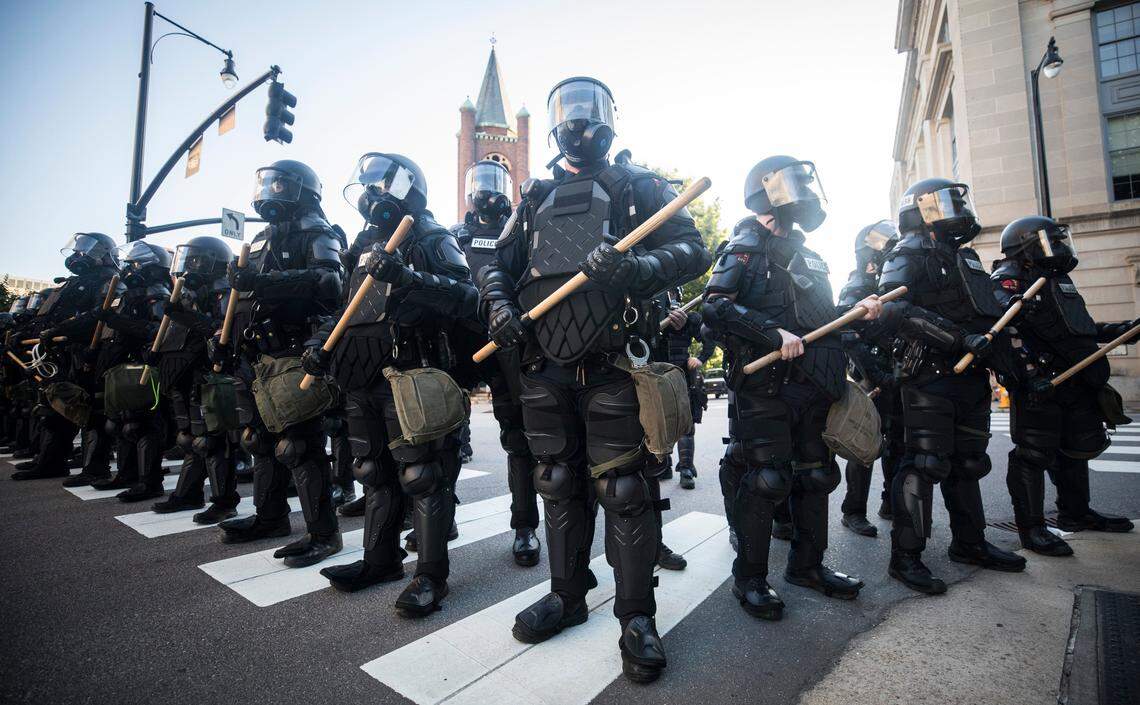
After an officer’s killing of George Floyd in Minneapolis sparked weeks of people marching in Raleigh, Charlotte and other cities, however, the mood seems different — not only among protesters but also among state and local leaders, who have already started making some changes.
“I’m super excited,” Kerwin Pittman, a prominent Raleigh activist, said in a recent interview. “I’m optimistic about it. As long as we get the right people at the table I believe we can really start making a change.”
Some of the state’s biggest police departments have begun putting in place the “8 Can’t Wait” changes backed by many Black Lives Matter activists. Those include new rules like no more police chokeholds, and a higher threshold for police to be able to use deadly force instead of non-lethal responses. Some departments have also instituted other changes, like promising to stop using tear gas against protesters.
Some protesters say police reforms are not enough and have called for cities to shift funding away from police. Durham’s City Council last week, while increasing the city’s police budget, also voted to earmark $1 million for yet-to-be-determined alternatives to policing, and to audit 911 calls to see what police functions — such as responding to mental-health crises and minor traffic incidents — could be assigned to other agencies, The News & Observer reported.
Charlotte, Raleigh police changes
Charlotte and Raleigh have agreed to adopt the 8 Can’t Wait police reforms following the protests.
“This is just a first step,” Raleigh Mayor Mary-Ann Baldwin said earlier this month, after noting Raleigh already had some of the eight policies in place but would now implement the rest. “We know we have a lot of work to do.”
The Charlotte City Council adopted the changes unanimously. That was an abrupt change from just last year, when a local activist had pushed for just one of those eight reforms — requiring police officers to intervene if they see a fellow officer abusing someone — but officials declined, the Wall Street Journal reported in a recent article on changes in Charlotte and other large U.S. cities.
“We’ve always had the political power to do this, but we haven’t had the political will,” Braxton Winston, a Black Lives Matter activist who rose to prominence during the 2016 protests over the death of Keith Lamont Scott and now holds a seat on the Charlotte City Council, told the Wall Street Journal. “We’re at a moment when those in government are finding the political will.”
NC criminal justice policies
At the state level, there are other changes that leaders in both political parties have either already put into place, or are working on.
▪ Democratic Gov. Roy Cooper created a task force charged with addressing racism within law enforcement and the courts.
▪ The Republican-led legislature suddenly passed two criminal justice reforms that had stalled for months.
▪ After protesters tore two statues off one Confederate monument at the state Capitol, Cooper ordered all the Confederate memorials at the Capitol taken down. A 2015 state law normally protects such memorials from being removed, but Cooper went around it, citing the law’s exception for public safety.
▪ A plan to spend to spend $4 million on monuments to African Americans in Raleigh, including one at the state Capitol, has passed the N.C. Senate.
▪ UNC-Chapel Hill lifted its self-imposed ban on renaming campus buildings, some of which honor white supremacists. N.C. State, meanwhile, removed the name on Daniels Hall that had honored Josephus Daniels, a former News & Observer publisher who helped organize the deadly 1898 overthrow of a multiracial government in Wilmington.
▪ Democratic N.C. Supreme Court Chief Justice Cheri Beasley, in a blunt and emotional speech, publicly acknowledged systemic racism in the criminal justice system and called on fellow judges to “do better.”
“In our courts, African Americans are more harshly treated, more severely punished and more likely to be presumed guilty,” Beasley said.
Some activists, however, remain wary of state leaders reverting back to just supportive words, and not actions.
.JPG "RAL_053020_RALEIGH_PROTEST_TEL_85 (1).JPG")
Hopes, questions for task force
Taari Coleman of the group NC BORN, which staged multiple protests outside the governor’s mansion in downtown Raleigh, was critical of Cooper in the early days of the marching. And after the governor announced his task force, Coleman said she and others will be watching closely to see what it’s actually able to accomplish.
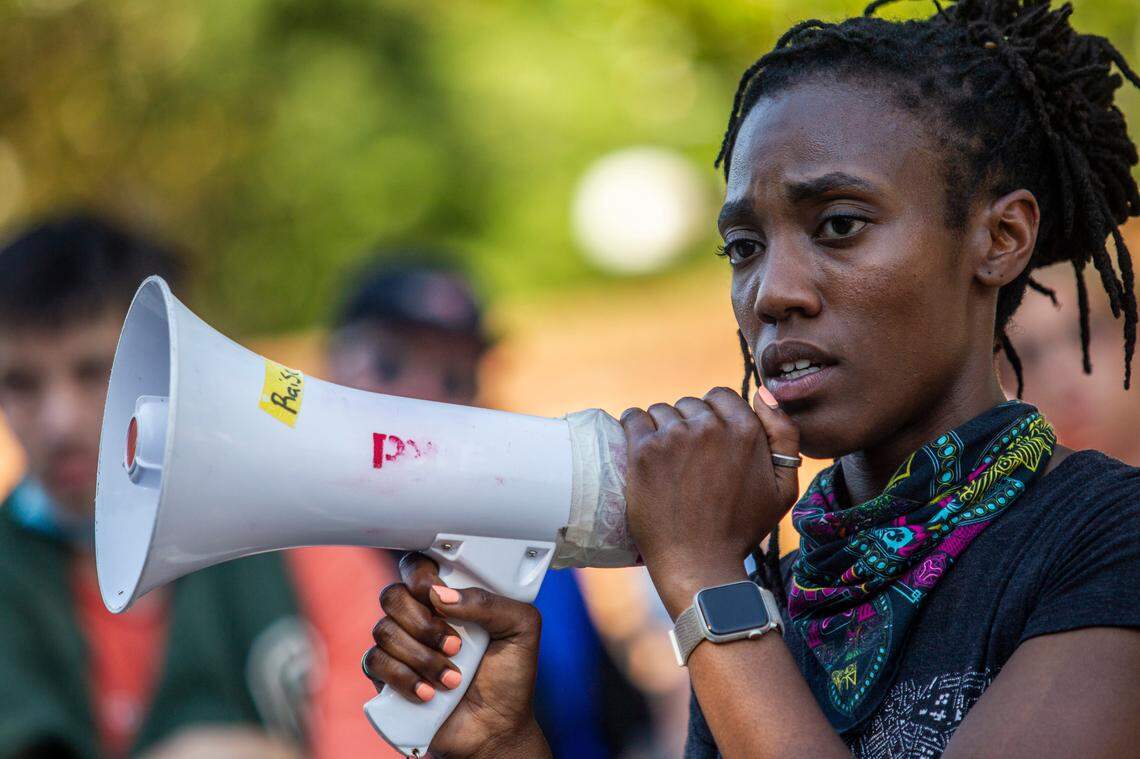
“We’re excited about this task force but we’re also not placated by it,” she said. “Because we understand that words are powerful, but action and movement is what really, really matters.”
Pittman said that to him, one of the biggest things that task force is looking at is something he called the “good cop” rule. It would require police officers to intervene if they saw a fellow officer abusing someone.
If Cooper’s task force can result in some real consequences for officers who don’t step in to stop abuses, Pittman said, it would be “another beautiful thing” to come out of the protests.
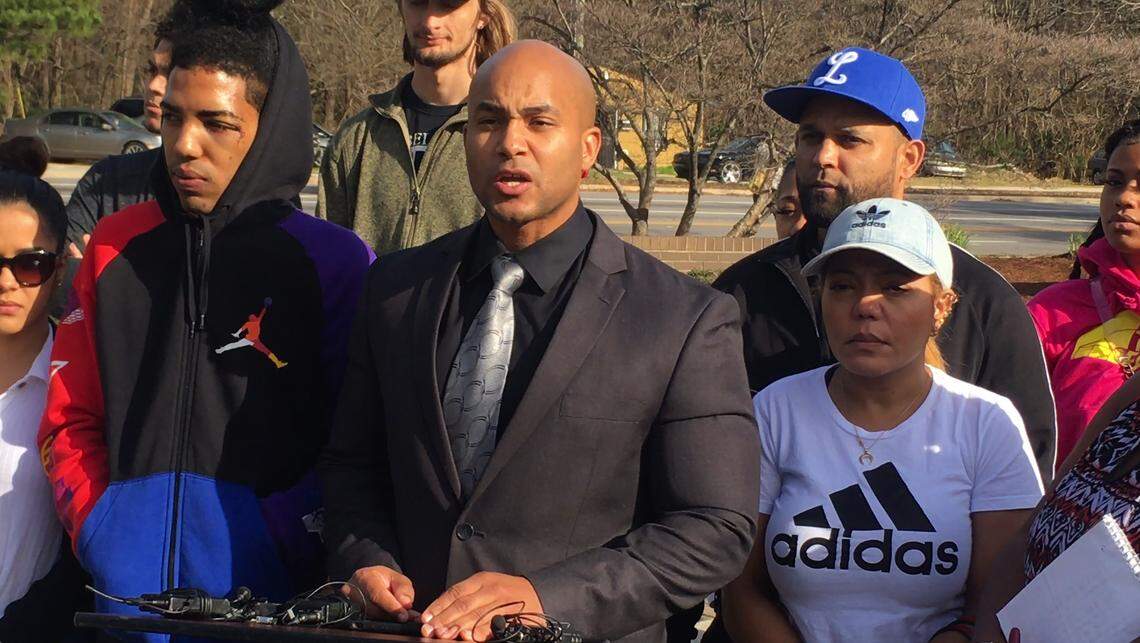
But two Republican lawmakers said the task force is simply an “exercise in political cowardice” that lets Cooper avoid making big changes — or controversial suggestions — until after the elections this fall.
“Conveniently, the task force’s report isn’t due until after the November election, allowing him to buy time during his bid for a second term,” said a joint statement from Republican senators Warren Daniel of Morganton and Danny Britt, a Lumberton criminal defense attorney who has become his party’s most vocal supporter of criminal justice reform.
Similar to Cooper’s task force announcement, the criminal justice reforms recently passed by the Republican-led legislature have also drawn some praise, and some questions about how much they’ll actually accomplish.
Second Chance Act, First Step Act
Both bills passed unanimously and are now on Cooper’s desk for him to either veto or allow to become law.
One of the bills is the Second Chance Act, or Senate Bill 562. It would create what one criminal justice reform group says are the most comprehensive changes in the U.S. for people to get expunctions for their criminal records.
“This is the most transformative bill, when it comes to criminal justice reform, that we have passed in North Carolina in decades,” said Floyd McKissick Jr., a former Democratic lawmaker from Durham. “It will radically transform opportunities for those who have had criminal convictions.”
The other bill is the First Step Act, which would let judges ignore controversial mandatory minimum laws when sentencing people to prison for drug crimes, under certain circumstances.
It’s based on a federal law of the same name that’s backed by Republican President Donald Trump, although lawmakers here took out some key provisions before passing it. For example, the federal law allows for the early release of some nonviolent drug offenders with long sentences — which Trump supported after lobbying from Kim Kardashian. But that’s not in the North Carolina bill.
“These bills have been stripped down in the legislative process,” said Brandon Garrett, a law professor at Duke University and an expert in criminal law and reform initiatives.
However, he said they are a good starting point for the legislature to get more serious about sentencing reforms across the board.
“In general, criminal justice reform is not the wedge issue it was in the ‘90s,” he said.
In the 1990s when North Carolina passed mandatory minimum laws, Cooper was a state senator and personally sponsored some of them. Britt said he’s eager to see whether Cooper will sign the First Step Act into law now, given that history.
“Those complaining today about over-incarceration can draw a straight line back to Roy Cooper for the past two decades of failed policies,” Britt said in a press release when the First Step Act passed.
As of Tuesday, nearly a week after both bills passed the legislature, Cooper hadn’t signed either one yet. Cooper spokesman Ford Porter said the governor does support sentencing reforms, but wasn’t going to announce his stance on that bill yet.
“Governor Cooper is committed to protecting public safety and removing inequities in our justice system,” he said. “The Governor strongly supports sentencing reform and will review this legislation before announcing action.”
Damon Chetson, a Raleigh criminal defense attorney, said he doesn’t think the First Step Act will do much in reality.
It’s written so narrowly that the only people it would theoretically help avoid long prison sentences, Chetson said, likely would have had their charges dropped or reduced anyway. And that would happen long before they ever went before a judge for sentencing, which is when the First Step Act would kick in.
“This bill is the illusion of reform, for which Republicans want credit, but it is not real reform,” he said.
Future legislation?
Chetson said if lawmakers wanted to pass a real reform, they could get rid of the law that allows police to charge people for drug trafficking simply for having a certain amount of drugs, even if there’s no proof they actually were dealing.
He also suggested getting rid of mandatory minimums for drug crimes altogether, and just let judges decide.
“Our legislature should have the confidence in the judges elected by the citizens of each county to sentence the people who come before them,” Chetson said. “That’s a humane system.”
Chetson had some other ideas for reform, too, like a speedy trial guarantee in state court that could be based on what federal courts have.
Garrett, the Duke Law professor, also had other ideas for changes, including for bail reform — which some counties like Durham are already trying — and how to be less “Draconian” in suspending people’s driver’s licenses.
That’s also a topic Britt, the GOP senator from Lumberton, has said should be talked about at the legislature. He said people should have an option to get their licenses back even if they get in over their head with court debt or minor traffic infractions that caused them to lose their license.
People will keep driving no matter what, he said, since in most of the state that’s the only way to get to work.
“We’re not talking about people who had driving while impaired,” Britt said. “We’re talking about people who had speeding tickets, seat belt tickets, or multiple driving without a license tickets.”
For more North Carolina government and politics news, listen to the Domecast politics podcast from The News & Observer and the NC Insider. You can find it on Megaphone, Apple Podcasts, iHeartRadio, Stitcher or wherever you get your podcasts.
This story was originally published June 23, 2020 at 1:54 PM with the headline "Protests have led to numerous reforms in NC. What happened already, and what’s next?."