In one North Carolina hospital, coronavirus outbreak feels like it’s just beginning
As businesses reopen and North Carolinians try to resume their normal lives, the coronavirus outbreak can feel like something that happened this spring, before stay-at-home orders were lifted, and that the worst is over.
But to people who work in the state’s hospitals, the outbreak feels like it’s just getting started. At hospitals in the UNC Health network, the number of COVID-19 patients has risen steadily over the last two weeks, and this weekend UNC Medical Center in Chapel Hill filled all 22 beds currently set aside for COVID-19 patients in its medical intensive care unit, before slipping back down to 20 this week.
The increase was not a surprise to Loc Culp, the ICU’s manager. It had been three weeks since Memorial Day, and people have been out and about more, including in marches and rallies following the death of George Floyd in Minneapolis.
“We were looking for this,” Culp said. “With the protests and businesses opening up, we just expect more people to be in the hospital.”
The number of people hospitalized with COVID-19 fluctuates from day to day, but from mid-April to mid-May it remained between 400 and 550 statewide. The reported number exceeded 600 for the first time on Memorial Day and has average 800 in the last week, hitting a new high of 829 on Tuesday.
The official death toll from COVID-19 in North Carolina was 1,154, according to the state Department of Health and Human Services.
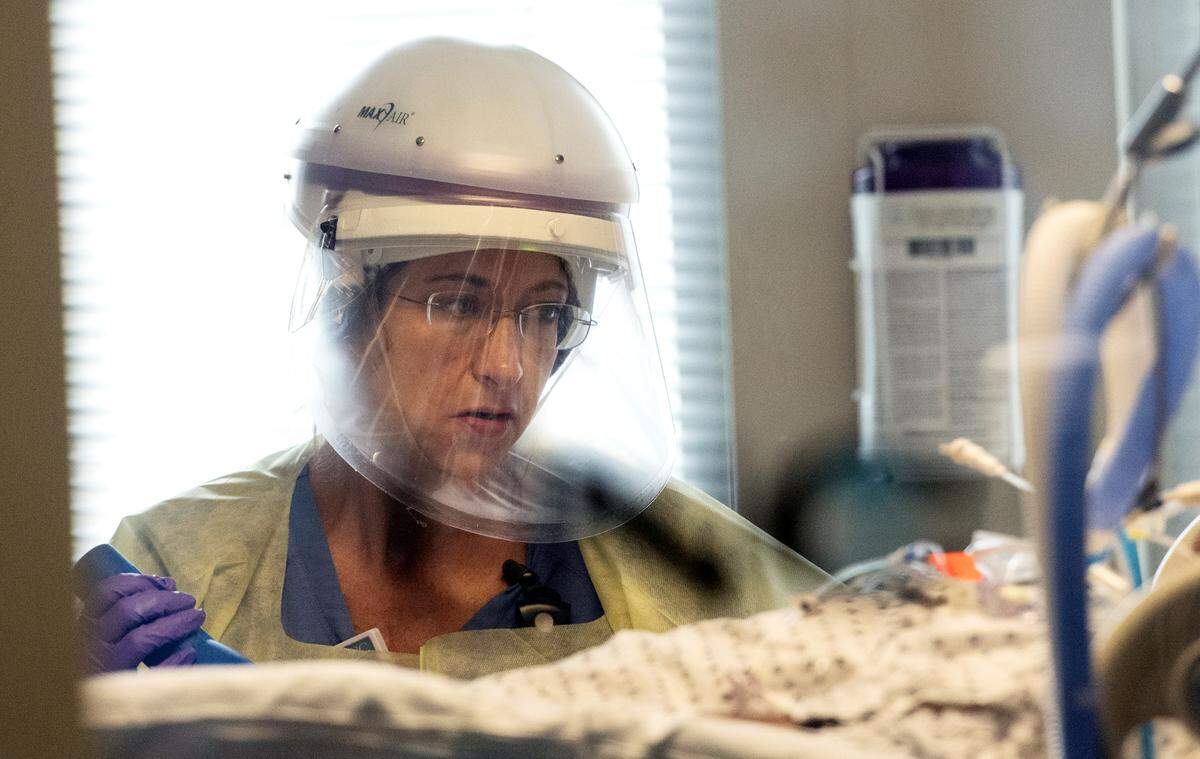
Those who work in hospitals say they see the suffering the virus causes in ways those numbers don’t convey and the public doesn’t appreciate. Jeff Phillips, nurse manager for the emergency department at UNC Medical Center, thinks many people simply want to put coronavirus behind them.
“I think the general public is getting tired of hearing about COVID, and they’ve let their guard down,” Phillips said. “And that’s why we’re starting to see a surge. You can go anywhere now and people don’t wear masks, there are large social gatherings. ... I think people have lost sight of the seriousness of this issue.”
When coronavirus emerged in the United States this winter, hospitals in North Carolina prepared for a sharp increase in patients sickened with the respiratory illness. They feared a surge in patients could fill emergency rooms and intensive care units as it had in places such as Italy and New York.
Public health and hospital officials say the statewide stay-at-home order and other steps to keep people physically apart worked to “flatten the curve,” to prevent a sharp spike in COVID-19 cases. But the virus hasn’t gone away, and North Carolina is in the midst of a slower but steady surge of COVID-19 cases, said Dr. Shannon Carson, chief of pulmonary diseases and critical care medicine at UNC.
“We’ve got as many patients here right now as we’ve had, and there’s been a recent significant increase,” Carson said in an interview in the ICU. “So I believe that hospitals across the state are already feeling the pressure, and it’s going to be more gradual than anticipated, but it’s going to be there nonetheless.”
Coronavirus has defied predictions and forecasts from the beginning. In March, a widely cited model from the University of Washington showed the need for hospital beds and equipment to treat COVID-19 patients in North Carolina would peak in mid-April, then fall off just as quickly.
Now some of UNC’s internal predictions say it will be late September when COVID cases will peak at the hospital, said Dr. Abhi Mehrotra, who helps oversee emergency departments at UNC hospitals in Chapel Hill and Hillsborough. But those forecasts don’t account for the increased spread that can come from summertime activities and the potential start of school in August, Mehrotra said.
“We’ve gone from thinking it was a sprint to adapting to a marathon,” he said. “But then we’re told part-way through, well, that marathon is actually a triathlon.”
Carson says the return of flu season in the fall on top of coronavirus will compound the demand for health care.
“Winter is going to be very busy in hospitals, and in intensive care units in particular,” he said.
Hospitals adapt to a new disease
The coronavirus pandemic has forced hospitals to make all sorts of adjustments. Changes that might have taken months or years were done in days, then tweaked repeatedly as doctors learned more about the disease and how to treat and contain it.
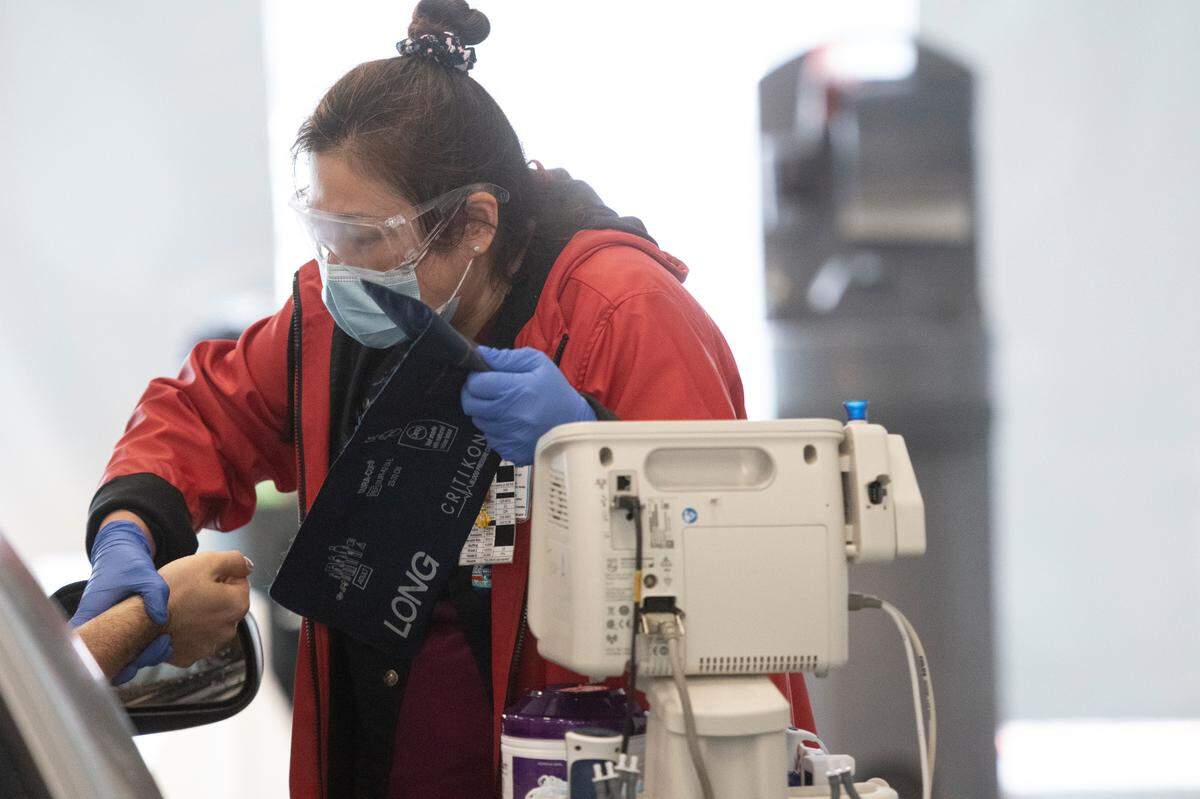
The emergency department at UNC erected a triage tent outside the main entrance in March to meet and screen incoming patients. Those needing a coronavirus test were sent to a separate respiratory diagnostic center. More seriously ill patients thought to have COVID-19 were sent to a special section of the emergency department, through a former emergency exit converted into an entrance to keep potentially infectious patients away from others.
Since then, the small tent has been replaced by one large enough for two lanes of cars to drive through, where patients are evaluated without getting out. In some cases, patients who are not acutely ill and aren’t thought to have coronavirus are given an iPad to communicate with a doctor who will try to solve their problem without coming in to the emergency department at all.
The COVID-19 ICU began with a single designated room in a 30-bed ICU that normally treats patients with general medical conditions, such as flu, renal disease, liver failure and drug overdoses. As the need grew, more rooms, then an entire section of the ICU, were set aside for COVID-19 patients.
Signs, stanchions and tape on the floor mark the boundaries between the “high-risk” COVID zone and the rest of the ICU. Doctors, nurses and other staff who enter the zone must wear gloves, gowns, face shields and N95 respirator masks and remove them when they come out.
Working with full protective gear and being constantly on guard for infection is physically and mentally exhausting, said Culp, the ICU manager. People who work in the ICU worry about taking the virus home to their families and friends, so they remain socially isolated outside the hospital, even as it seems like everybody else is trying to get back to normal.
“I don’t know if we can ever get back to normal per se, until there’s a vaccine and there’s more treatments,” she said. “With everything that happened this past weekend, this is not where we want to be. We want to open our beds up for our other ICU patients, and we can’t.”
Finding a new normal
The doctors and nurses at UNC Medical Center talk about a new normal where many of the changes made to deal with coronavirus become routine. For starters, telemedicine — “seeing” patients by computer as UNC is doing outside its emergency department — will become more widely used, they say.
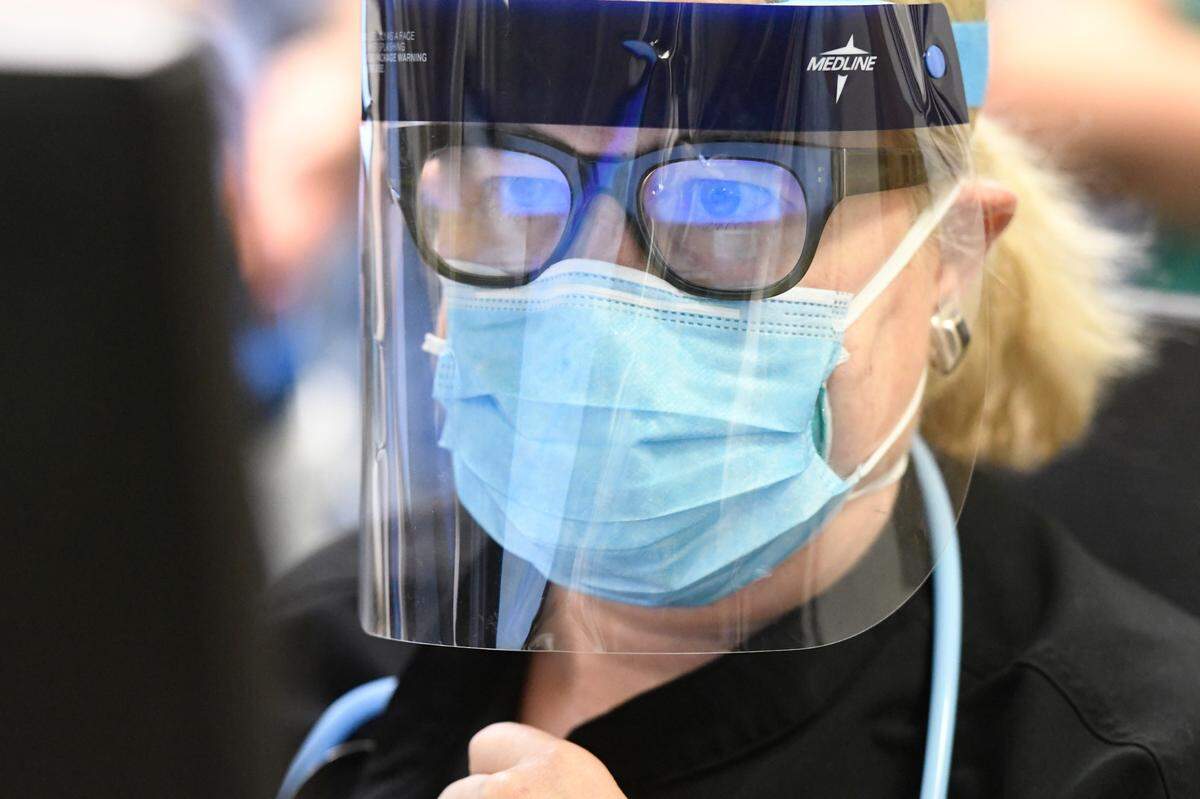
Dr. Chery Lynn Jackson, medical director for UNC’s pediatric emergency department, says the masks and other precautions against infections will likely remain as well. Jackson likens it to the way the AIDS epidemic prompted health care workers to begin wearing gloves whenever they drew blood.
“What I tell my staff is, we’re probably moving towards a new normal. I would be very surprised if we went back to the way things were,” Jackson said. “COVID has just highlighted some of what we probably should have always been doing or doing a little bit more rigorously.”
Phillips, the emergency department nurse manager, said he thinks many health care workers thought they were somehow immune from diseases such as coronavirus that emerge elsewhere in the world. That’s changed.
“I think it’s just increased and heightened our awareness that we are vulnerable,” Phillips said. “Chapel Hill is a nice place, but we’re just as vulnerable as Charlotte, New York, Seattle, San Francisco. I think we’re not going to take anything this lightly ever again.”
What’s less clear is whether people outside of hospitals will consider themselves vulnerable to coronavirus and change the way they interact with each other. It should, at least for now, said Katie Davenport, medical director for the emergency department at UNC Hillsborough.
“I think I understand the fatigue, from the public standpoint. I think we all do. It’s exhausting,” Davenport said. “But I hope that the public realizes that we will probably be wearing masks in grocery stores at least for the foreseeable future. Or we should be. Part of this should be the new normal to protect other people, especially the vulnerable ones.”
This story was originally published June 17, 2020 at 7:45 AM with the headline "In one North Carolina hospital, coronavirus outbreak feels like it’s just beginning."