‘Part of ourselves is lost.’ NC’s Lumbee Tribe deals with pandemic, canceled tribal events
For the past 12 years, Kevin Chavis, a member of the Lumbee Tribe from Robeson County, has looked forward to the spring — a time for annual powwows where tribal members gather for colorful displays of Native American tradition.
But this year, COVID-19 has taken away the tradition that brings people of all backgrounds together in rural southern North Carolina.
Lumbee events that had gone uninterrupted for decades have been canceled — adding another blow to a community facing race-based health disparities and greater economic need during the pandemic. Some events will be postponed until the fall.
“A powwow or any kind of social gathering for us as natives makes sure that we keep our identity and that we’re close to who we are as much as we can.” said Chavis, 26.
“So, when something is canceled, it does kind of do something in the inside of us. Without our songs and dances, without our language, you know, who are we?”
The Lumbee Regional Development Assocation also announced that they had to cancel their Lumbee Homecoming event, a 51-year tradition that brings around 50,000 tribal members around the nation to the state. It was a decision that was “agonized in extensive debate,” by the association, according to their website.
Also canceled were tribal Memorial Day services, along with spring rituals where elders at a campfire burn sage and offer up prayers for tribal health and well-being.
“We need those prayers more than ever,” said Harvey Godwin, the Lumbee tribal chairman, in an interview with The N&O.
Pandemic after a hurricane
Robeson County and the Lumbee were doing construction work for Hurricane Matthew and Floyd recovery work when the pandemic struck. The Lumbee Tribal Council had been awarded a $2 million zero-interest loan for construction work from the N.C. Office of Recovery and Resiliency, according to the local newspaper, the Robesonian.
The pandemic, Godwin said, “is different than the two hurricanes we’ve been through.”
“Because when you’re trying to serve people and feed people after a hurricane you can actually hug people and embrace people and have that kind of fellowship, and that’s who the Lumbee are.”
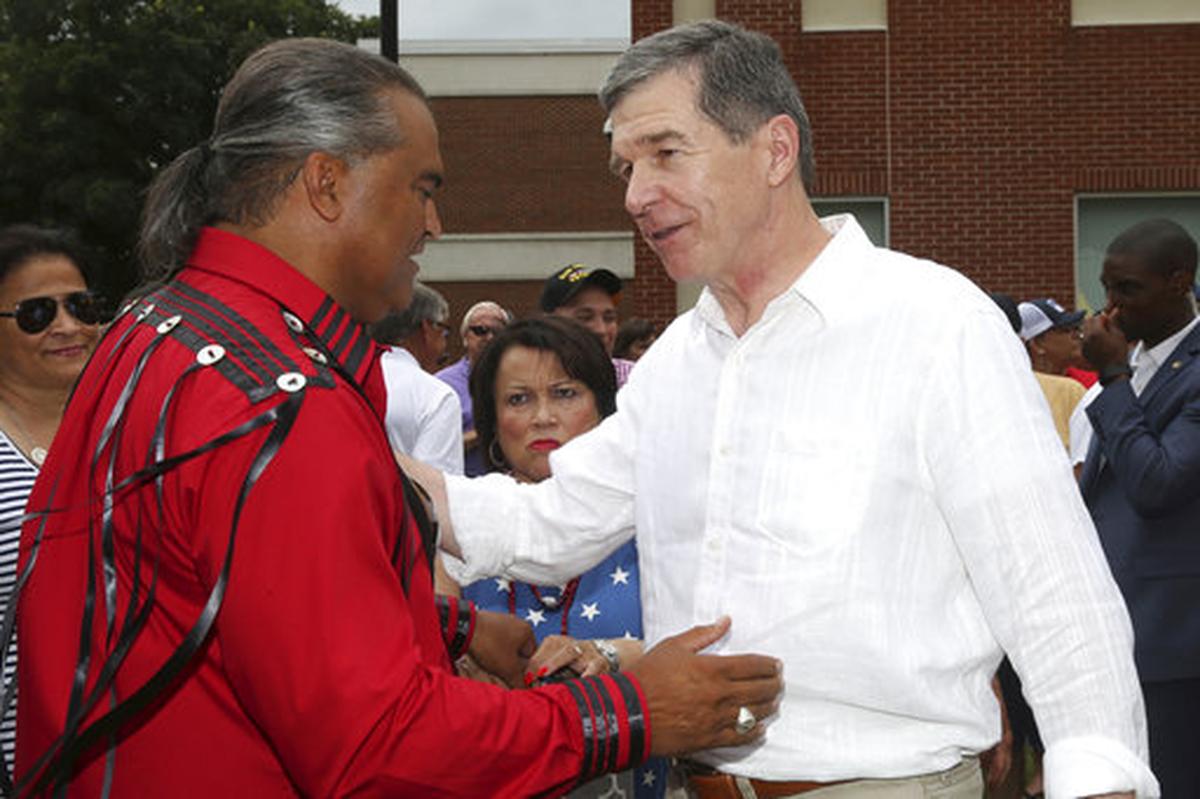
The tribal government has been working during the pandemic to serve its members in need of food and other essential supplies including those living in tribe-provided housing, whom have had utility shut-offs and mortgage payments suspended on purchased homes.
The Robeson County Church and Community Center has also been providing supplies to hundreds of residents in need. This includes many tribal members, according to Brianna Goodwin, the organization’s director for operations.
“The entire county is economically challenged,” said Goodwin. “A lot of members of the tribe work for places that have shut down.”
American Indian health
The majority of the Lumbee in North Carolina reside in Robeson County and also live in Scotland, Hoke and Cumberland counties.
The Lumbee are a federally recognized tribe but are not fully federally recognized due to not signing peace treaties or ceding land to the government in distant history, which is how many tribes gained recognition, The Charlotte Observer reported. That means they don’t have the access to the Indian Health Service or a tribal healthcare system.
The Robeson County Health Department confirmed to The News & Observer that there were 40 American Indian COVID-19 cases in the county as of April 30 — over half of American Indian cases across the state on that date.
As of May 6, the state Health and Human Services Department reported there were American Indian 83 cases.
The cultural loss adds to the health concern, said Cherry Beasley, a Lumbee and a UNC-Pembroke professor of minority health. “It makes us feel like part of ourselves is lost.”
The Lumbee face health disparities that affect American Indians at large. They have higher rates of hypertension and mortality than other races and ethnicities due to diabetes or heart disease.
And while there are no reported American Indian deaths in North Carolina at this time, that places them at higher risk of dying from COVID-19.
A majority of them live in rural areas with less access to health care and fall below the state average in employment and education level, Beasley said. Not being fully federally recognized makes health data specific to the Lumbee harder to collect, she added.
On the plus side, Beasley said, “We have a sizable portion of American Indians, particularly through Robeson and Scotland counties, that are healthcare providers...physicians, nurse practitioners, physician’s assistants and nurses,” said Beasley. Knowledge of their own communities allows those healthcare providers to better help the them.
“I’ve been very pleasantly surprised with how our people have responded,” Beasley said. “Our tribal chair has come out very clearly supporting social distancing and I’m aware that other tribal chairs in the state have done the same.”
Godwin, the Lumbee tribal chair, said that they have especially embraced social distancing to prevent the virus reaching the elders of the tribe, who are at greater risk.
“Our number one belief is our belief in God, in the value of an education, connection to the land, of protecting our culture and our very existence as a native people,” he said. “And I tell you, those core values we’re holding on to strongly now, that’s for sure.”
This story was originally published May 8, 2020 at 6:00 AM with the headline "‘Part of ourselves is lost.’ NC’s Lumbee Tribe deals with pandemic, canceled tribal events."