
Two inmates killed in NC jails while detention officers weren’t watching, state finds
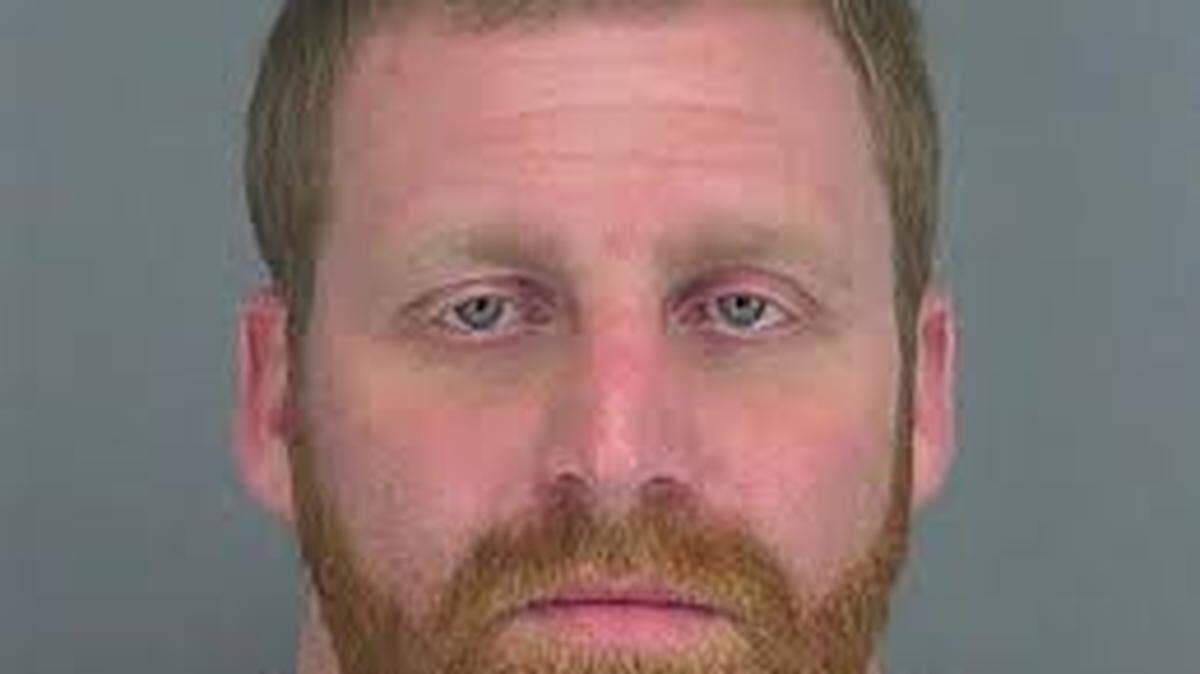
A badly cracked window prevented Cleveland County detention officers from looking into the cell holding Jeffery Todd Dunn as he awaited arraignment on April 1, 2019. They walked by on their rounds, instead of opening the door to check on him and another inmate.
When they opened it that morning, they found Dunn, 37, unconscious and not breathing. He had been beaten and asphyxiated, an autopsy later determined. The other inmate now faces a murder charge.
At the Craven County jail five months later, detention officers had a clear view into Grover Cleveland Jackson III’s cell. But a state investigation found they didn’t perform many checks. Jackson, 57, was assaulted and died there on Sept. 2, deputies said. His cell mate has been charged with murder.
“It’s clearly bad,” Jeffrey Schwartz, a California-based expert on correctional facilities, said of the supervision in both cases. “You can’t prevent everything. But when you’re not doing what you are supposed to do, and you’re being sloppy and not concerned, there are consequences.”
Dunn and Jackson are among a record 46 inmates who died in North Carolina’s jails in 2019 or in a hospital after becoming ill or injured behind bars, state records obtained by The News & Observer show. In at least 19 of those deaths — including one each in Wake, Johnston and Mecklenburg county jails — state health department inspectors tasked with making sure jails are safe found supervision failures. That’s a 41% failure rate for inmate deaths.
That rate is worse than what The News & Observer discovered in 2017 after investigating five years of jail deaths — one out of three, or 33%, involved supervision failures.
Now, inmates and jail staff face a new threat with the coronavirus, which can spread rapidly in jails. The threat has already led to jails in the Triangle and Mecklenburg County finding ways to reduce populations to limit the risk. Last week, the Wake sheriff’s office said that 11 staff, including five detention officers, needed to isolate themselves after showing flu-like symptoms or having spouses who are health care workers and may have come into contact with the virus.
Dunn’s and Jackson’s deaths were the only two inmate homicides in North Carolina’s jails last year, after the jails had gone nearly a decade without an inmate killing another. Last month, Orange County deputies reported another possible homicide: Maurice Antoine King, 35, of Durham, who died after a fight in his cell in the Hillsborough jail. No one has been charged. He was a federal inmate, and a sheriff’s spokeswoman said the FBI is investigating.
Twenty of the 46 deaths in 2019, or nearly half, have been identified as suicides. Three were reported as overdoses.
Other state investigations and autopsies into inmate deaths last year found:
▪ Melissa Rice, 49, an inmate in Jackson County’s jail, on Jan. 16, 2019, hanged herself on a phone cord in a small magistrate’s hearing room that detention officers could monitor by video camera. The footage showed Rice twice wrapping the cord around her neck, the state investigative report said, the second time slipping out of view before her “feet/legs reappear on view and seem to be contracting or similar to a cramp.” No one caught it on the monitor, and three times an officer walked by the door but did not check on her. She laid motionless for 40 minutes before an officer opened the door and realized what had happened.
▪ Benjamin Mallard, 40, had collapsed and subsequently died on Feb. 9, 2019, from the effects of opioid withdrawal in a Vance County jail dorm that had a broken intercom. An inmate had to pound on the door for help. Mallard had spent the past three days unable to keep food down. He was seen propping himself up on a wall to stay upright. Supervision logs showed gaps between checks as long as 89 minutes. At minimum, inmates are supposed to be checked twice an hour.
▪ Dustin Kinlaw, 26, was on camera at the Brunswick County jail on Jan. 20, 2019, as he tied a knot on the end of a bed sheet, tossed it over the top of his cell door and closed the door as he prepared to hang himself. His cell and the hallway leading to it had video cameras that were supposed to be monitored by detention officers in the control room, but they weren’t. Four minutes later, a detention officer on rounds passed the cell, but he didn’t look inside, the video showed. Kinlaw was later found hanging by the sheet. He died two days later at a hospital.
▪ Cumberland County’s jail was tied with Gaston County’s for the most inmate deaths in 2019 at three. But while state investigators found no supervision issues at Gaston, they documented a lack of required checks on all three of Cumberland’s inmates, who each died of natural causes.
Wake and Johnston county jails were each cited for failing to document checks in holding cells where inmates wait to be processed. David Walton died May 5 after falling ill at the Wake jail, while Christopher Jones died April 30 of an overdose. Both jails told the state they were putting in systems to log inmate checks in holding cells.
Detention officers in a Mecklenburg County jail also failed to make the required number of checks on Michael Trent, 44, who died of a fentanyl overdose on April 2, 2019. He had been in the jail since August 2018, raising questions about how he could have obtained the drug while behind bars. Jail officials told the state in September they would conduct random reviews of surveillance video to make sure detention officers are checking on inmates. On Friday, a spokeswoman sent a statement saying jail officials disputed the state’s findings, saying the state investigator had mistook a detention officer who wasn’t on duty for another.
Inmates charged with murder
State Rep. Robert Reives, the House deputy minority leader, said he was shocked to hear how many inmates had died last year, and that investigators found the two who were killed had largely gone unwatched.
“I had no idea we had two inmates murdered in 2019, and basically under the same circumstances,” he said. “And it’s frightening.”
He said he could not understand why inmates at the Cleveland jail would be placed into a cell no one could see into.
“It would seem to me to be a pretty dangerous situation,” said Reives, a Chatham County Democrat and former assistant district attorney who now works as a criminal defense lawyer. “At a minimum you would not want to be using that cell, and as soon as possible get that window repaired.”
State law requires jails to check on inmates to make sure they are safe and secure. All inmates should be checked at least twice an hour, but those who are suspected of being on drugs or alcohol, show a willingness to harm themselves or have a history of mental illness, or act aggressively or erratically are supposed to be checked four times an hour.
Schwartz said another issue is whether jail staff checked into the inmates’ histories to determine whether they should have been housed together in those cells.
Chris Wood, the state health department’s chief jail inspector, interviewed Cleveland County jail staff after the death.
Wood’s report said the window was damaged. “Officers were unable to look inside the cell through the window to observe the inmate,” he wrote, adding there were “rounds made in which the officers did not see the inmate inside the cell.”
In a response to state investigators, Cleveland County Sheriff Alan Norman’s office said the “shattered” window was replaced three days after Dunn’s death, and the jail was putting in place a new system to track detention officers’ inmate checks.
“Supervisors have reviewed policy regarding supervision of rounds and stressed the importance of conducting proper rounds to detention staff,” the response said.
Kenneth Eric Darby, 39, of Bessemer City, was charged with first-degree murder in Dunn’s death, The Shelby Star reported at the time. Darby had been arrested on drug charges.
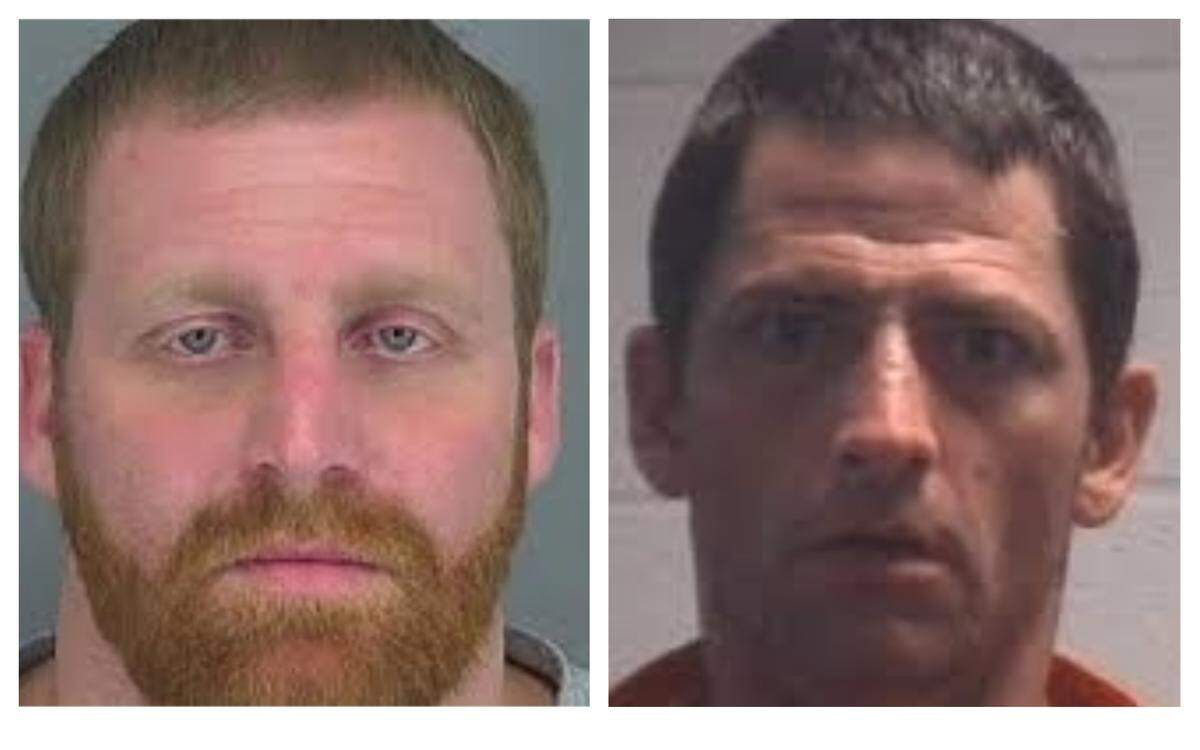
The state investigation found that in the hours leading up to Jackson’s death at the Craven County jail, detention officers had electronically logged only 13 checks at one checkpoint near his cell and 35 at another, when there should have been at least 42 at both. There were no checks logged at either checkpoint in the hour-long shift before he was found in distress at 9:40 p.m.
Craven County Sheriff Chip Hughes was required to respond to the state’s findings with a plan of correction by Feb. 8, but no response was included in the state health department records provided to the N&O.
Gary Scott Garfield, 61, of New Bern, was charged with murder, the New Bern Sun Journal reported. SBI spokeswoman Anjanette Grube confirmed Jackson had been killed.
New rules needed?
Attorneys with Disability Rights North Carolina said they were saddened and frustrated by the 2019 deaths. The nonpartisan nonprofit has been scrutinizing jail deaths for several years and pushing for reforms.
Staff attorneys Susan Pollitt and Luke Woollard said the percentage of jail deaths resulting from suicide in the state last year is above the national average for 2016 deaths, which is the most recent year available. Suicides accounted for 43 percent of the jail deaths in North Carolina last year, compared to 31 percent of jail deaths nationwide in 2016.
They said the deaths again show existing state rules aren’t enough to protect inmates from harm. Last fall, they produced a report about the rising number of jail suicides.
Disability Rights has been pushing the state to adopt new supervision and safety rules that would require jails to step up mental health screening and supervision of inmates, which Woollard called a “good first step” toward reforms. But the N.C. Sheriffs’ Association and 66 of the state’s sheriffs have held up adoption of those rules and want lawmakers to review them this session.
BEHIND THE STORY
MOREWhy we did this story
Since 2017, when The News & Observer published the five-part series Jailed to Death, reporters have been keeping an eye on deaths in North Carolina jails.
The jails have the responsibility to keep inmates safe and secure. In many cases those who are held in the jails have not been found guilty of the crimes charged. Some of those who have died were held on lesser offenses that, if convicted, may not have led to a prison sentence. And some of those deaths have prompted lawsuits that led to six-figure settlements.
For this story, staff writer Dan Kane received through a public records request jail death reports and investigations into many of those deaths from the state Department of Health and Human Services. Its Construction Section has the responsibility of making sure jails follow supervision requirements. For some of those deaths, he requested autopsies from the state Office of the Chief Medical Examiner.
Kane then reached out to sheriffs and jail officials in counties where the state found a serious lack of supervision connected to an inmate death. He also contacted local jails that had been cited after an inmate died. Sheriffs and jail officials in Cleveland, Craven, Cumberland and Vance counties did not respond to interview requests by phone or email. Jackson County officials declined to comment. Edgecombe officials could not be reached for an interview.
Kane also sought interviews with Steven Lewis, who runs the Construction Section, and his chief jail investigator, Chris Wood. Lewis declined to be interviewed. Wood could not be reached by email or phone.
Eddie Caldwell, the association’s executive vice president, said some of the proposed rules need clarification.
“None of our objections to the rules were intended or designed to in any way compromise inmate safety,” he said.
He said the inmate deaths need a more in-depth study before lawmakers take up additional reforms. But the association has not asked for one in the three years the N&O has been reporting on the lack of supervision tied to many jail deaths.
North Carolina has been trending upward in inmate deaths over the past decade. The 46 deaths are two more than 2018, which was the previous record. Those 44 deaths exceeded the 40 in county jails in 2015. (These death totals do not include jail inmates who had been sent to the state Central Prison hospital in Raleigh for care and died there.)
As of mid-March, four of the seven deaths in North Carolina jails reported to state health department investigators have been suicides.
Part of the problem lies in two societal trends that have driven more at-risk people into jails. Two decades ago, mental hospital closures in North Carolina and other states put more mentally ill people on the streets with too few community services. Many of them wound up behind bars.
In the past decade, the opioid-abuse crisis drove another large wave into the jails, only this time it was people with drug addictions, who were often faced with going cold turkey behind bars.
These two at-risk groups need continued supervision, but dozens of deaths show jails across North Carolina provide it inconsistently. In response, state lawmakers have passed two minor reforms. One requires jails to report all in-custody deaths, closing a loophole that allowed them not to report a death if an inmate had made it to the hospital before dying. The other called for a study to determine if inmates are receiving needed prescription medications.
Combating the coronavirus requires stepped up screening of inmates and staff before entering the jail, and making sure facilities have separate space to quickly isolate inmates with the virus or suspected of having it.
Once it gets in, said Dr. David Weber, an expert on infectious diseases at UNC-Chapel Hill’s medical school, “then it’s very, very difficult to protect people.”
“You just don’t have the ability to really physically separate them, and then you start to get the staff infected and they pass it on to people,” he said.
Not enough detention officers
Sometimes the supervision problems stem from jails not having enough staff. After Kinlaw’s death, Brunswick County Sheriff John Ingram pledged to ask the county to provide funding for 16 more detention officers to shore up supervision. Capt. Mose Highsmith said the county funded eight last year, enough to create a special unit to check on inmates.
“Basically, instead of conducting the four checks required by law, we required six checks, and we actually intervened in a couple of attempted suicides during that time,” Highsmith said.
In Edgecombe County, where state investigators found two inmate deaths involved supervision failures, jail officials acknowledged that in one of the deaths, detention officers were performing other duties when they should have been checking inmates. On Oct. 26, they had not checked on Jeffery Morris, 45, for more than two hours. When they did, they found he had hanged himself with a bed sheet.
Jackson County officials declined to talk about the state health department report into Rice’s death. The Smoky Mountain News reported in July that District Attorney Ashley Welch declined to seek charges after the SBI looked into the death.
Chris Matheson, the assistant district attorney who handled the case, said in a telephone interview it wasn’t clear how much responsibility detention officers had to monitor the bond room, and noted one had checked on Rice minutes before she hanged herself.
“We felt under the circumstances we could not find that any of the jailers willfully failed to perform a duty of their office,” she said.
The written response Vance County Sheriff Curtis Brame’s staff sent to the state health department said the broken intercom would be fixed and detention officers “will be held accountable” if they are not doing the required checks.
Supervision failures and jail deaths often lead to lawsuits. Last year, Cleveland County paid $303,000 to settle a lawsuit involving inmate Archie McNeilly Jr., who died of renal failure in 2015, said Luke Largess, an attorney representing the inmate’s family. Craven County paid $50,000 in 2016 to settle a claim involving inmate Christopher Wetherington, who died of lithium toxicity the previous year.
Jail death investigations in other states have also shown supervision to be a problem. It was a factor in the suicide of perhaps the nation’s most famous jail inmate — wealthy financier and convicted sex offender Jeffrey Epstein. Two detention officers at a federal jail in New York City are facing criminal charges after an investigation found they tried to cover up that he had gone unchecked for eight hours.
Last month, the U.S. Attorney for the Eastern District of North Carolina said four detention officers at the federal prison complex in Butner face charges of making false statements in connection with three unrelated inmate deaths. Three of the officers claimed on government forms they had been checking on inmates, while the fourth made a false statement to a federal investigator, prosecutors said.
North Carolina law includes a misdemeanor charge for cases in which jail staff fail to supervise inmates “closely enough to maintain safe custody and control” but state health investigators have never used it. Lewis, the supervisor over jail inspection and safety, has said the misdemeanor offense isn’t mentioned in the jail safety regulations they oversee. They also lack the power to levy fines or remove problem jail staff.
Reives said tougher enforcement may be one area state lawmakers could focus on with legislation this session, including providing a clearer path for the state to file charges.
“We’ve got to do something to get some teeth into these regulations,” Reives said.
This story was updated to reflect additional information from the Mecklenburg County Sheriff’s Office.
This story was originally published April 3, 2020 at 10:16 AM with the headline "Two inmates killed in NC jails while detention officers weren’t watching, state finds."