
NC State researchers find high levels of firefighting foam chemical in Cape Fear bass
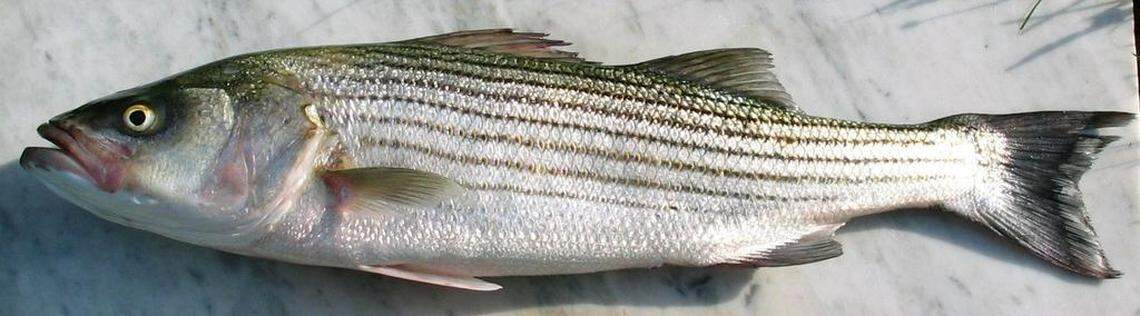
Striped bass caught in the Cape Fear River and tested for “forever chemicals” had levels of a substance known for its use in firefighting foam that were among the highest ever seen in fish, scientists from N.C. State University reported in a study published Friday.
Blood from 58 striped bass caught in the Cape Fear River had more than 40 times the PFAS of blood from striped bass raised at the Pamlico Aquaculture Field Laboratory, the study found. And it showed that fish with higher levels of the chemicals tended to have increased activity in their livers and immune systems.
BEHIND THE STORY
MOREAbout Report for America
This reporting received financial support from Report for America, part of The GroundTruth Project, an independent, nonpartisan, nonprofit news organization. Report for America is a national service movement which aims to place 1,000 reporters in local newsrooms across the country by 2024.
Why? When professional local news reporting isn’t available, communities suffer and democracy declines. Report for America augments local reporting by matching talented, diverse journalists with local newsrooms. RFA reporters are full-time employees of the news organizations they are matched with.
Report for America pays half of the reporter’s salary; donations are accepted to pay the remainder. To support the future of this reporting, subscribe or donate.
The News & Observer maintains full editorial control of all work produced by Report for America reporters.
PFAS — per- and polyfluoroalkyl substances — are a family of chemicals that have raised concerns across the country due to their persistence in the environment and impacts on human health. PFOA and PFOS, two of the most-common kinds of PFAS, have been linked to increased cholesterol, low infant birth weights and suppressed immune function, according to the Environmental Protection Agency. PFOA also increases risk for some cancers.
The New Jersey Department of Environmental Protection has responded to concerns about PFAS exposure from eating fish by setting consumption advisory levels for PFOA, PFOS and PFNA. North Carolina has not set such levels, a state health department spokeswoman said, but is in communication with researchers who are studying the fish.
While there is a longstanding moratorium on striped bass in the Cape Fear River, the new study said it is likely that largemouth bass, catfish and other species also have high PFAS levels. People who eat fish caught in the river could be ingesting those chemicals, said Scott Belcher, the N.C. State toxicologist whose lab performed the study.
“I don’t object to people making the leap that, yes, it’s in the blood, it’s going to be in the tissues,” Belcher said, adding that levels in tissue will be lower than those in blood.
The striped bass study was a collaboration between the N.C. Center for Human Health and the Environment, the U.S. Environmental Protection Agency and the N.C. Wildlife Resources Commission. It was published Friday in Environment International.
| Cape Fear striped bass | Farmed striped bass | |
| Total PFAS | 551 ppb | 13.6 ppb |
| PFOS | 490 ppb | 9.4 ppb |
| GenX | 1.91 ppb (in 48% of fish) | 1.64 ppb (10.3% of fish) |
| Nafion byproduct 2 | 0.3 ppb (in 78% of fish) | Not detected |
New Jersey’s fish advisory
Last year, the N.C. Department of Health and Human Services mailed surveys to every household within 10 miles of Chemours’ Fayetteville Works plant. Of the 1,858 responses, about 310 people said they had stopped fishing altogether since learning about GenX and other PFAS. Roughly the same number of people had given up gardening.
“These results indicate a need to better understand whether GenX or other PFAS are found in local produce or fish, and if so at what levels,” a DHHS press release about the survey stated.
In New Jersey, the state Department of Environmental Protection tested tissue samples from various fish species for three kinds of PFAS: PFOA, PFOS and PFNA. It established consumption advisories that are issued if fish are found to have elevated PFAS levels.
The department issues an advisory, for example, if PFOS is detected in tissue at levels above 17 ppb. At that level, the general public is told to eat the fish no more than once every three months. High-risk individuals such as children, pregnant women and nursing mothers are told to avoid the fish entirely. At 51 ppb, New Jersey residents are told to eat one of the fish annually.
North Carolina has not issued any such advisories or set PFAS levels for the fish found in its rivers and streams.
In a prepared statement, Kelly Haight Connor, a DHHS spokeswoman, wrote, “There are currently no fish consumption advisories for PFAS in the Cape Fear, although this may change as new data emerge. DHHS is aware of ongoing studies at (N.C. State) and remains in communication with the researchers to better inform fish consumption advisories throughout North Carolina.”
DHHS typically sets fish consumption advisories at the request of the N.C. Department of Environmental Quality or a local health department.
If such a request is made, DHHS develops a sampling plan based on the fish consumed in the area and the known contamination. It reviews the sampling data, calculates potential exposures, then determines if an advisory is necessary and what limits should be.
Belcher’s lab plans to launch a study this spring with Duke University’s Superfund Research Center that will look at fishermen along the Cape Fear, what they eat and contamination levels. While they may not be eating striped bass, Belcher said, fish like shad, catfish and sunfish are being caught.
“We’re trying to tackle that question of who’s eating what and how, so we can work with (the N.C. Department of Environmental Quality) and other regulatory agencies to come up with some really rational guidelines,” Belcher said.
Chemicals in striped bass
Belcher said his lab plans to study PFAS concentrations in fish tissue and already has some samples. Generally, he said, concentrations in tissue samples are lower than those found in the serum.
While the striped bass study, which was part of North Carolina’s PFAS Testing Network, did not go as far as showing that PFAS caused the increased liver or immune system activity in the striped bass, there was a strong correlation between the chemicals and the increased activity.
“We’re seeing exactly the same sorts of impacts or the same associations with increasing concentrations as we’re seeing in mammals,” Belcher said.
Striped bass in the Cape Fear River have been under a harvest moratorium since 2008 in an effort to help the population recover. Surveys taken in the years before the moratorium showed that the population was not adding young fish and adults were not spawning.
PFOA and PFOS have historically been used in a wide range of products due to their water-resistant features and ability to withstand extreme conditions — the same traits that make them unlikely to break down once they are released into the environment.
PFOS, for example, was used in Scotchgard, on stain-resistant carpets and in firefighting foam. PFOA, also known as C8, was used to make Teflon cookware and other water- and stain-resistant products such as coats and carpets before DuPont replaced it with GenX.
GenX, the chemical that was discharged from the Fayetteville Works plant since at least 1980, averaged levels of 1.91 ppb in the Cape Fear striped bass. Nafion byproduct 2, another chemical associated with Fayetteville Works, averaged 0.3 ppb.
N.C. State researchers who conducted blood tests in Wilmington previously said Nafion byproduct 2 was one of four PFAS they believed was unique to residents of the area, according to the Wilmington StarNews. It was found in 99% of the samples taken from 345 New Hanover County residents.
Levels of both GenX and Nafion byproduct 2 in striped bass were significantly higher than the levels found in surface water samples nearby, meaning the chemicals are building up in the fish. GenX levels were 136 times higher in the striped bass blood than in the surface water, while Nafion byproduct 2 levels were 17 times higher.
“They are still persistent,” Belcher said.
The Nafion finding is particularly notable, the study said, because the molecule is structurally similar to PFOS, and higher levels of Nafion byproduct 2 were associated with higher levels of liver enzyme activity in the striped bass.
“These findings,” the study stated, “suggest that Nafion byproduct 2 exposures may also alter and adversely impact liver function.”
This reporting is financially supported by Report for America/GroundTruth Project and The North Carolina Local News Lab Fund, a component fund of the North Carolina Community Foundation. The News & Observer maintains full editorial control of the work. To support the future of this reporting, subscribe or donate.
This story was originally published February 7, 2020 at 5:21 PM with the headline "NC State researchers find high levels of firefighting foam chemical in Cape Fear bass."