
After workers die, North Carolina shields many employers from biggest penalties
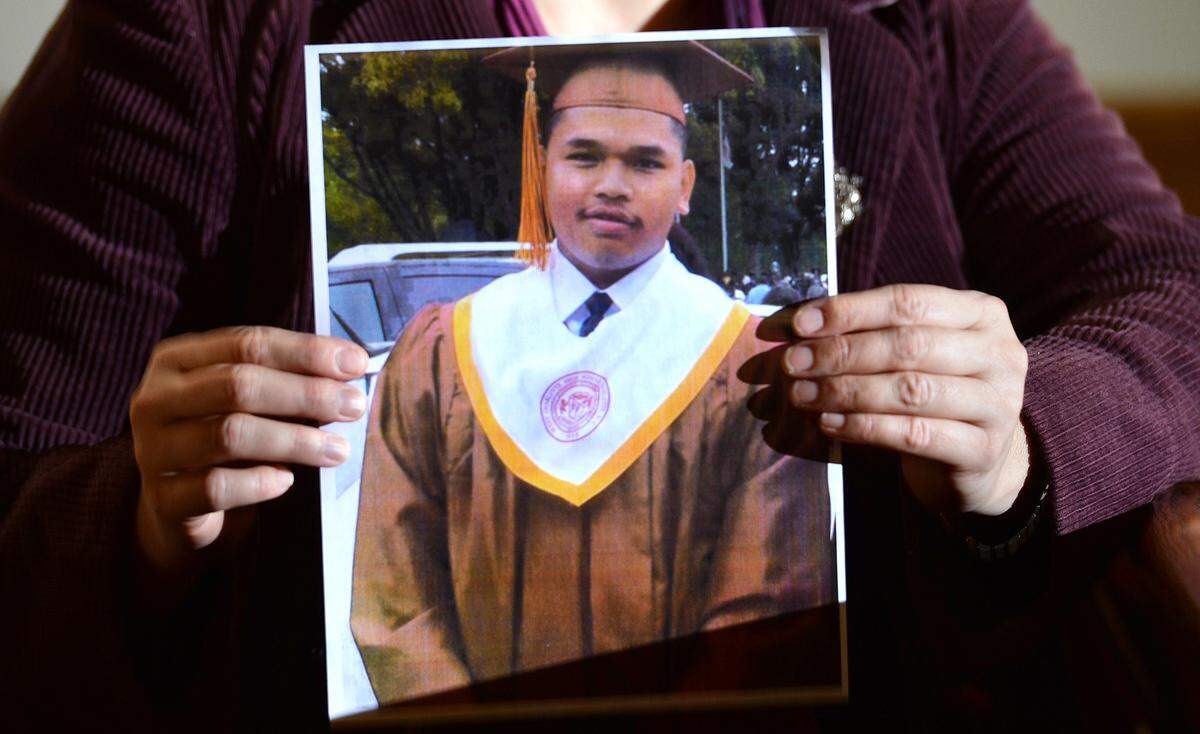
Dalin Adrong moved half a world away from his birthplace in Vietnam’s central highlands, earned a high school degree, became a deacon in a Charlotte church and was bursting with hope at age 19.
In one nightmarish moment, those hopes were obliterated.
A broken safety system at work cost Adrong his life.
How North Carolina’s Occupational Safety and Health (OSH) agency handled the tragedy is emblematic of the way the unit, under state Labor Commissioner Cherie Berry, has shielded many employers from hefty financial penalties for safety breaches.
Adrong had worked for several months at World Stone Fabricators, Inc. when on Nov. 11, 2015, he stood along a wall at the end of a programmable stone-cutting machine, a perilous spot. As he crouched to ensure that large suction cups were holding a granite slab in place, the machine’s high-speed rotating bit ground toward him at two feet per minute, an OSH inspection report said. A laser safety device should have halted the device the instant Adrong came within two feet of it, but it wasn’t working.
Unchecked, the machine ran its course, crushing his head and leaving him lying in a pool of blood.
The inspector found that the safety device had been inoperable for three months, had failed repeatedly over the years and that the company had been cited for a serious violation in 2012 for the same issue.
Yet a complete plant inspection after the fatality resulted in issuance of $13,000 in fines for 10 serious violations — most unrelated to the incident, sparing the company the state’s most severe penalty. In a settlement, the fines were later reduced to $10,000.
“It’s a pitiful amount,” said The Rev. Jolin Wilks McElroy, pastor of the First Christian Church where Adrong worshipped with his family and dozens of other members of the once-persecuted Montagnard tribes in Vietnam.
Nearly half a century after Congress created the U.S. Occupational Safety and Health Administration to protect working men and women, a chasm persists between the enforcement approach of some conservative labor chiefs such as Berry and those who follow the traditional conviction that a heavier hand is needed to deter negligence.
Toughest penalties rare
A self-made entrepreneur, Berry was irked that an OSH inspector slapped her firm with $550 in fines after examining its factory in the late 1990s and at the attitude of an inspector during a followup visit as she ran for labor commissioner in 2000. A Republican who turns 73 Dec. 21, she tends to be opposed to heavily penalizing employers.
On April 2, she announced that she will leave office when her fifth term expires in January 2021. She described her biggest accomplishment as sending the public the message “that we’re not a regulatory agency so much as we’re an agency that will partner with them and will help them achieve safe workplaces.”
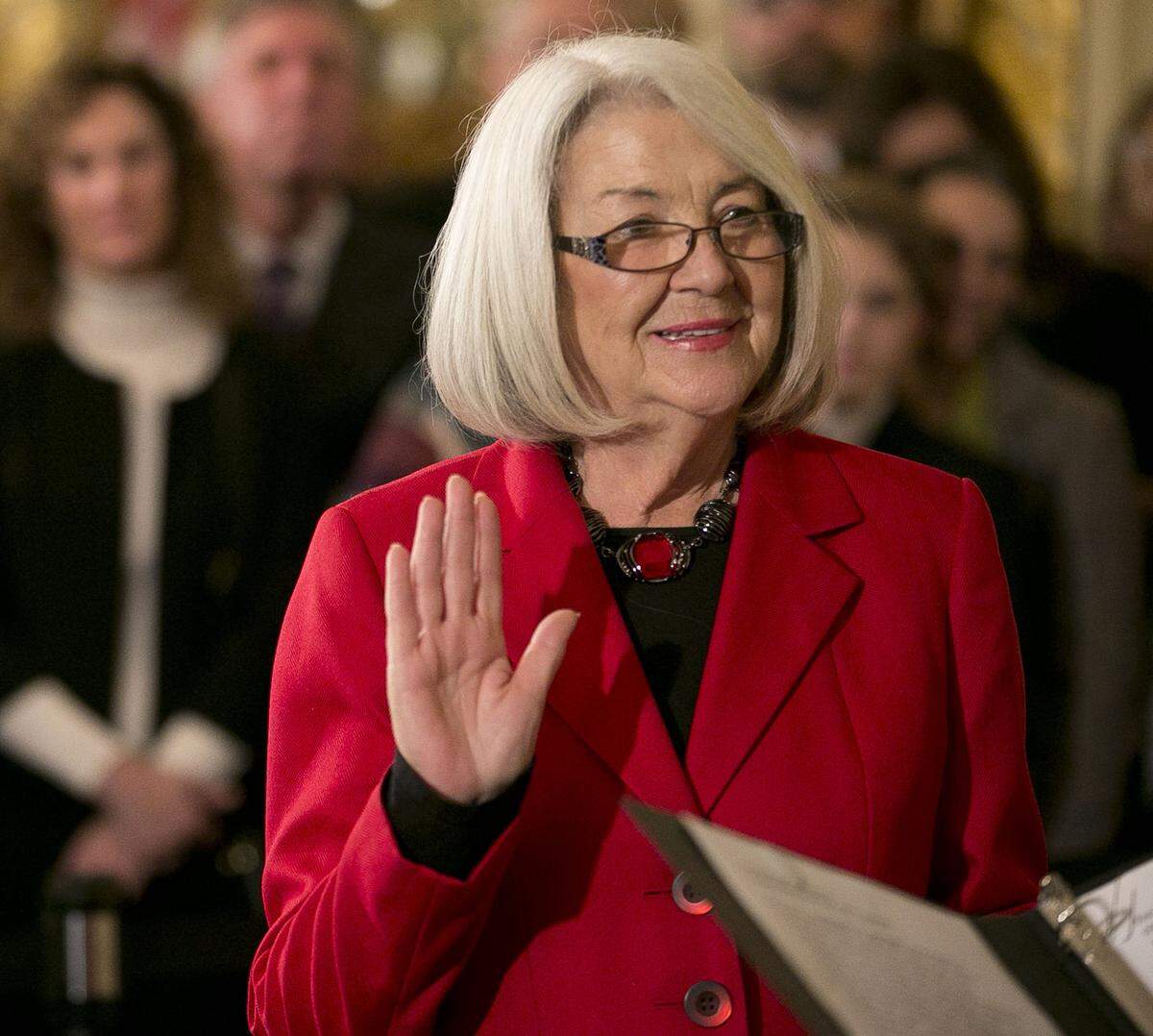
Berry also has said for years that she wants to partner with businesses. Toward that end, she went so far as to refuse a federal order to raise the state’s penalties for employer workplace violations.
The North Carolina Justice Center, in a report released Thursday, has now traced how rarely Berry’s OSH has hit its business partners, even after fatalities, with its stiffest penalty – for those that willfully, or knowingly, put workers in harm’s way.
The liberal social-action group, whose broad mission includes advocating for workers’ rights and safety, analyzed the penalties OSH meted out after examining 247 job-related deaths during the six years ending Sept. 30, 2018. (The figure does not include 60% to 70% of the state’s on-the-job deaths that were not in OSH’s jurisdiction, including those in traffic accidents, homicides, suicides and fatalities of independent contractors, as well as deaths at farms and low-hazard businesses with 10 or fewer employees.)
OSH inspections after the deaths led to 13 citations for willful violations against nine employers, each carrying a maximum penalty of $70,000, said the report made available to McClatchy. But nine of the citations against five companies were later dropped.
In other words, only four employers faced the harshest penalty out of more than 240 firms with fatalities, the group said.
Allan Freyer, the Justice Center’s director of workers’ rights, sees Berry’s talk of partnering with businesses as a smokescreen obscuring the agency’s cozy relationships with those it regulates, even as workplace death tolls have risen.
“The state Labor Department is favoring employers at the expense of working people,” Freyer said. “The workplace death toll continues to rise at exactly the same time that enforcement is failing. Even more troublingly, the Labor Department is pulling its punches by not assessing willful violations — the biggest stick the agency has to enforce compliance under workplace safety laws.”
The next highest penalty, a “serious” violation, carries a maximum fine of $7,000.
In separate studies, the AFL-CIO found that the average fatality-related fines assessed to North Carolina employers in fiscal years 2017 and 2018 were 25.3% and 38.4% of the national average.
McClatchy gathered details about some of these incidents as part of a six-month investigation into the ways the state enforces laws designed to safeguard about 4 million workers. Even in some of the state’s deadliest workplace disasters — incidents that could have been averted with modest corrective actions — employers have been spared severe financial penalties, interviews and documents show.
BEHIND THE STORY
MOREWhy we did this story
We received a tip about working conditions at a rural North Carolina processing plant, and in the course of exploring the allegations, concluded that a close look at the way North Carolina regulates workplace safety, especially after fatalities, was in order.
How we did this story
Greg Gordon retired earlier this year after working 20 years as an investigative reporter in McClatchy’s Washington bureau. He conducted dozens of interviews in an examination of how North Carolina safeguards its workers and treats the injured. The North Carolina Justice Center agreed to share state job safety enforcement data, whose accuracy Gordon verified for the first of his reports. He filed public records requests for state inspection reports to learn details of fatal accidents and reviewed dozens of workers’ compensation cases.
Refused directive on penalties
During the Obama administration, Berry’s resistance to tough penalties put her at odds with the federal OSHA, to which her agency reports. In a little-noticed decision in 2016, she flouted an edict from Washington directing North Carolina and 22 other state-run, job-safety agencies to raise their maximum penalties for the first time in a quarter century to catch up with inflation and match sharp, congressionally ordered increases for 27 federally regulated states.
North Carolina’s maximum penalty for a willful breach sits at $70,000, just as it was 29 years ago and barely more than half the highest current federal fine of $132,260. State OSH plans are required to adopt standards that are as effective as those in federal law.
Former U.S. OSHA chief David Michaels said he expected some conservative state officials to ignore the 2016 order to boost penalties, because they knew the federal agency was toothless.
“OSHA has very few tools other than capital punishment – getting rid of the (state) plan and taking it over, which OSHA doesn’t have the funds to do,” Michaels said in a phone interview. “And state plans know that.
“So OSHA can issue reports criticizing them, but it can’t make them do anything. And states recognize that, and they do what they want.”
Kentucky and several other states joined North Carolina in refusing to comply.
As one of four states with elected labor commissioners over whom governors hold no authority, Berry has bestowed more than 20,000 safety awards over the last decade to employers around the state.
Do penalties work?
Low fines are “the most serious obstacle to effective OSHA enforcement,” Michaels told Congress in arguing in 2015 for penalty hikes.
He said higher maximum penalties would “provide a real disincentive for employers accepting injuries and worker deaths as a cost of doing business.”
But while several studies have found that inspections resulting in penalties deter employer safety lapses, research hasn’t yet settled the debate over the degree to which heavier penalties might reduce deaths and injuries.
“There’s been no empirical data that says a higher penalty results in a lower injury, illness or fatality rate,” Kevin Beauregard, chief of North Carolina’s OSH unit, said in a phone interview.
Duke University researcher Matthew Johnson, however, recently completed a paper on the effects of an Obama administration strategy of “shaming” employers by publicizing large penalties. He said that when local news outlets lent coverage to those news releases, area employers “substantially improved their compliance and experienced fewer occupational injuries.”
North Carolina OSH regulators rarely issue such news releases.
Beauregard strongly defended the agency that he joined 27 years ago at a time when it had drawn criticism over a 1991 fire in an Imperial Foods chicken processing plant in Hamlet. The fire killed 25 workers trapped inside.
He said OSH’s enforcement program has achieved a complete turnaround and is among the largest, most comprehensive and best-regarded state-run plans, because it combines enforcement with employer education and training.
“We have a set structure for penalties,” Beauregard said. “Pretty much the chips fall where they do. If an employer is not in compliance with the standards, they receive our penalties.”
How many injuries and deaths?
He touted North Carolina’s historically low injury rate, which was 2.4 per 100 workers in 2018, and as low as 2.3 a year earlier, well below the similarly declining national average rate of 2.8 per 100 workers, according to the latest available data from the U.S. Bureau of Labor and Statistics.
North Carolina’s fatality rate is another story.
At the end of a six-year period in which OSH issued few willful citations after fatalities, the state’s death rate per 100,000 workers reached 3.9 in 2017, the highest since 2008 and 21st worst in the nation, BLS found. The rate declined slightly to 3.8 in 2018, according to a count released Tuesday.
The actual BLS body counts: 1,493 job-related deaths in North Carolina during the decade ending Dec. 31, 2018, eighth-highest in the nation, but declining from 183 in 2017 to 178 in 2018, BLS’ annual censuses found.
Counting only fatalities within the state OSH unit’s jurisdiction, the 53 recorded in the fiscal year that ended Sept. 30, 2019 represented a climb from 33 in fiscal 2013. The latest toll was exceeded only once over the last decade, by the 54 worker deaths in fiscal 2011.
One family’s anguish
The OSH inspector who looked into Adrong’s death wrote that she considered recommending a willful violation citation for World Stone, but concluded the firm’s management did not behave “in a way which would imply that they acted in total disregard or plain indifference” to the safety of employees, the legal standard.
The inspector blamed the accident on the lack of warning labels at the machine’s “pinch point,” where it came within six inches of the wall, and “the employer not understanding what the hazards were.”
World Stone declined to comment.
A glimpse of the anguish borne by Adrong’s Charlotte family underscores the human impact caused by just one workplace fatality.
The death of the youngest of four children of Wi Ksor and Mut Adrong was so shocking and painful, exacerbated by authorities’ refusal during an ongoing investigation to let the family remove and cleanse his body in keeping with tribal customs, that his parents and siblings still decline to discuss it publicly, the Rev. McElroy said.
Dalin’s death, she said, “was one of the greatest tragedies I’ve ever walked through with a family. There was something so deeply awful about this.”
Simple mistakes, tragic deaths
Even when inspectors find major problems, a substantial fine can look puny by the time the state’s credits are applied and enforcement and adjudication processes are completed.
Automatic penalty reductions of up to 60% are granted to small employers, decreases of up to 25% go to those showing good faith, and firms with no violations over the prior three years get a 10% break.
Beauregard said that the size credits don’t apply if a violation contributed to a death or serious injury, though it’s unclear how strictly that is enforced.
Penalties are often reduced further in negotiations with OSH managers or employer appeals to the state Safety and Health Review Commission, or the state appeals court and Supreme Court.
Reports from dozens of fatality inspections, obtained through public records requests, detail the impact of failures to follow manufacturers’ specifications, conduct sufficient safety training, strap on fall-protection lifelines, wear proper gear when working near hot electrical wires and install steel or aluminum “trench boxes” — structures that shore dirt walls to prevent tons of soil from burying workers during excavations.
Many of those who die are laborers — workers at the bottom pay rung. Training gaps are commonly attributed to language barriers.
On Nov. 10, 2015, 10 months after Pharr Fibers and Yarns’ I-85 plant west of Charlotte received a Labor Department safety award, a factory employee, Tommy Chastain, 59, was killed and a co-worker knocked unconscious when doors to a carding machine blew off and struck them. Inspectors said it wasn’t the first time doors blew off that machine and similar equipment, but limited the fine to $7,000 for a single serious violation. The company referred a caller to its vice president for human resources, Christy Gliddon, who did not respond to multiple phone requests for comment in recent weeks.
In May 2015, Berry personally presented a safety award to SPX Transformer Solutions’ plant in Goldsboro at a local country club, the firm’s second in as many years. On Nov. 30, some six months later, plant workers Dennis Martin, 51, and Daniel Anderson, 33, died of asphyxiation and a third man, William Saviak, 40, nearly lost his life trying to rescue them from a huge tank. The tank had been depleted of oxygen to reduce risks of a chemical explosion while workers searched to learn why it had failed a quality test. Martin, of Goldsboro, was the first to enter the tank and was seen shaking before he collapsed, inspectors reported. The other two men, both of Dudley, tried to save him, one collapsing and the other rescued while gasping for air, the OSH team wrote.The inspectors found that many of the workers had not been given adequate training on precautions to take before entering a confined space and on handling emergencies, even though Anderson had participated in a drill the previous summer for the same type of rescue. Wisconsin-based SPX, one of the nation’s leading manufacturers of large power transformers with 15,000 workers, initially faced $43,000 in fines after a comprehensive, post-incident plant inspection. Two of seven serious safety violations were later dropped, and the fines were slashed to $17,500. SPX’s safety and environmental manager, Craig Fulcher, did not respond to three McClatchy phone messages seeking comment in recent weeks.
A careless mistake cost a worker’s life at a Fayetteville car wash. On Sept. 17, 2016, a patron at the B.U.A. car wash told police he noticed an extension cord lying in a puddle and warned employee Doniell Demetrese Jackson, 40, to be careful as he carried a bucket of soapy water between bays to hand wash a vehicle. But Jackson’s foot got stuck in a narrow space between two metal carport bases, OSH inspectors were told. He fell into the water and was electrocuted. The extension cord had been removed before inspectors arrived, they said. They found a frayed cord with 27 tears in its insulation, two exposing bare copper, but couldn’t confirm it was the culprit. Car wash owners Merlon Lorenzo Palacios and Merlon Malik Palacios were spared a willful citation and fined $12,500 for nine violations, four of them “serious.” The owners did not respond to phone messages seeking comment in recent weeks.
OSH has been tougher in response to some of the most serious tragedies and repeat offenders. Durham-based Associated Scaffolding, Inc. was cited for three willful violations and fined $151,900 after an overloaded, 11-story mobile platform system it erected collapsed in 2015, killing three workers and badly injuring a fourth at the Charter Square construction project in downtown Raleigh. The fines were slashed to $70,000 in a settlement after Associated appealed on grounds the general contractor rushed it to take down the scaffolding.
That year, the agency also imposed $232,000 in penalties on Industrial Fabricators, Inc., the most for any employer in recent years, for bypassing safety systems and other breaches in 2014 and 2015 in its Gastonia plants. One worker died and several were injured.
Sending a ‘very important message’
Data from a sampling of eight state-run workplace safety agencies’ enforcement of the most flagrant employer negligence, obtained through a public records request to the federal OSHA, shows how North Carolina lags behind some states.
During fiscal years 2016 through 2018, North Carolina’s OSH unit issued $337,950 in penalties for willful violations. Three states with lower populations — Washington, Minnesota and Oregon — respectively levied fines for willful violations totaling $4.1 million, $571,120 and $516,250 in those years, according to the data. North Carolina ranked sixth of the eight states in total fines.
The Justice Center found that the number of North Carolina OSH-initiated willful violations that withstood legal challenges totaled 19 in 2012, the year Berry won a fourth term, but just 30 over the next six years.
“In every year since 2013, the department has handed out fewer willful violations than the national average and negotiated these violations away, even in fatality cases,” the center’s Freyer said.
Beauregard denied that OSH has toughened its threshold for bringing willful cases and said Berry “doesn’t interfere with our day-to-day operations.”
Spokespeople for Berry did not make her available for an interview.
Critics note that, as in states across the country, only a tiny fraction of job sites are inspected. The OSH inspection force is funded for 113 positions, down eight since fiscal 2008. At the pace of last year’s roughly 2,400 inspections, it would take the unit more than a century to inspect all 274,000 North Carolina employers.
To compensate, Beauregard said his office has mirrored the federal OSHA’s “special emphasis” programs that focus resources on high-hazard industries, such as preventing falls and trench collapses at construction sites, which account for 50% of injuries and deaths.
As for willful penalties, Beauregard said it’s difficult to develop the proof needed to cite an employer for knowing disregard, a step requiring approval from the state attorney general’s office.
Ex-OSHA chief Michaels said, however, that it’s worth the effort, because it sends “a very important message to other employers: that it’s fundamentally important to prevent or abate hazards, especially if you know that they could hurt workers.”
This story was originally published December 17, 2019 at 1:47 PM with the headline "After workers die, North Carolina shields many employers from biggest penalties."