UNC-Chapel Hill violated federal campus safety law for years. Students made them fix it.
Six years after two students complained about sexual assault investigations at UNC-Chapel Hill, the U.S. Department of Education has found that the university violated federal law and put students’ safety at risk.
UNC misrepresented and under-reported campus crime statistics, including sexual assault, failed to properly alert the campus community to serious crimes and did not adequately operate its system of ensuring campus safety, according to the program review.
When the department started investigating UNC’s practices in 2013, the university started improving the system of how it handles and reports campus crimes. Now, UNC meets the minimum standards set by the Clery Act, a federal law that guides how colleges and universities prevent, respond to and publicly report campus crimes.
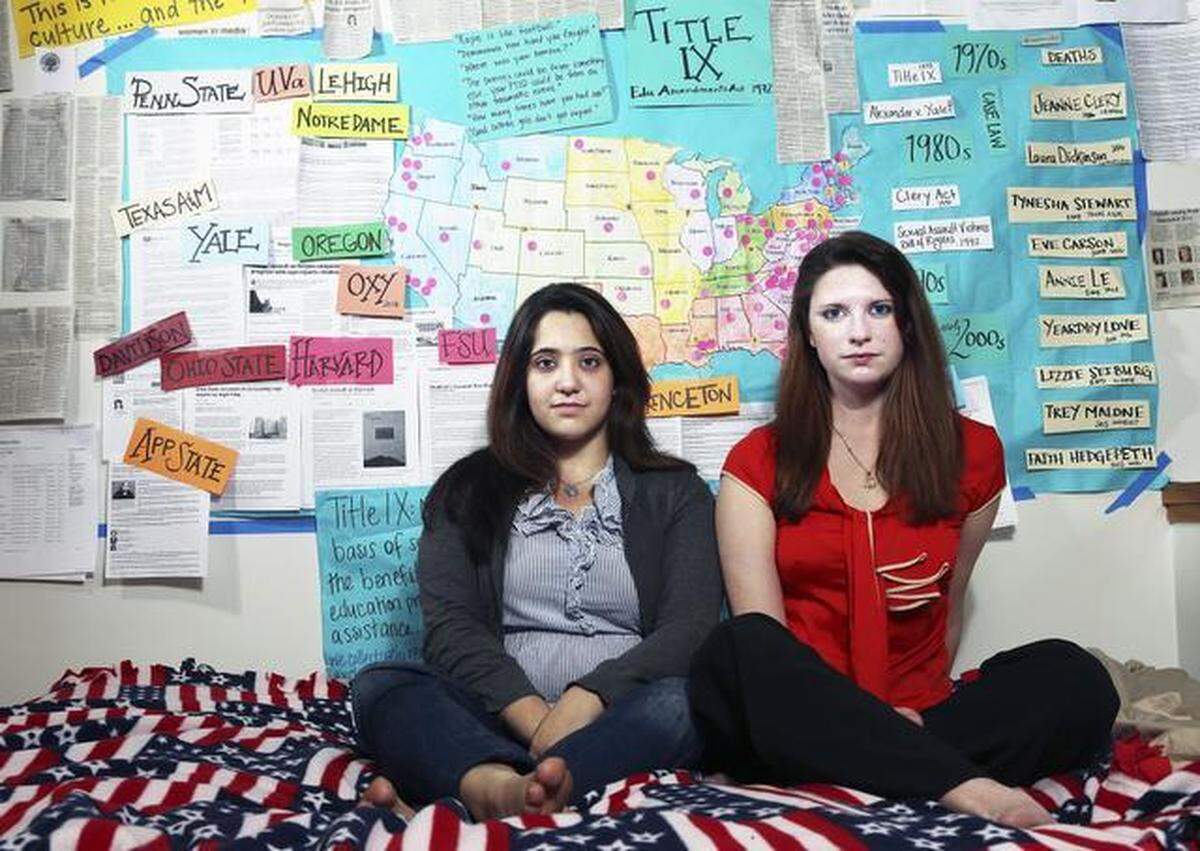
Former UNC students Annie Clark and Andrea Pino sparked that change — and a national movement.
“It should not be incumbent on 18-year-old survivors of rape to hold one of the best institutions in the country accountable for breaking federal law in their own cases,” Clark said. “We need the public and we need allies to recognize the need for culture change and accountability for failing systems nationwide.”
The campus crime program reviewed the UNC’s practices, police reports, disciplinary records and crime statistics reports from 2009 to 2016. It was completed in August and released by the university Monday following inquiries from media outlets, including The News & Observer.
Among the findings for UNC were lack of administrative capability, failure to issue timely warnings, failure to properly compile and disclose crime statistics and failure to follow institutional policy in a case of an alleged sex offense.
As a result of the findings, the university could face hundreds of thousands of dollars in fines. These are assigned per violation and currently go to just over $57,000 each. Multiple fines could be handed down under one finding and the dollar amount could be set to what standard during that year.
That cost is yet to be determined, but the Department of Education’s report noted there is “no way to truly ‘correct’ violations of this type once they occur.”
“The Department remains deeply concerned about the damage done to crime victims, especially sexual assault survivors, by the structural flaws in the Honor Court system and the limitations of the Instrument, particularly with regard to the system’s ability to properly address cases involving student athletes,” the report says.
Though UNC now meets the minimum standards for compliance, the review advised the university to re-examine its campus safety policies and procedures on an annual basis.
During the review process, UNC expanded and improved Clery Act training for employees, hired a full-time Clery coordinator, added Title IX staff, updated its police department’s policies and procedures, implemented new avenues for reporting incidents and complaints, created a Clery Act Compliance Committee, fixed the errors on the crime statistics reports and clarified the map that identifies which campus crimes should be reported.
But the Department of Education said it is still concerned about UNC’s willingness and ability to comply with its rules and will continue to monitor the university’s progress.
The review also stated that the university wouldn’t have taken steps to improve its process without the complaint and the department’s intervention.
“While we have made many safety improvements and staffing changes since 2013, the shortcomings noted in the review are extremely concerning, disappointing, and do not meet the University’s high standards,” UNC interim Chancellor Kevin Guskiewicz said in a letter to the campus community Monday.
Guskiewicz said he and Police Chief David Perry “agree we can and must do more.”
A ‘pattern of behavior’ at UNC
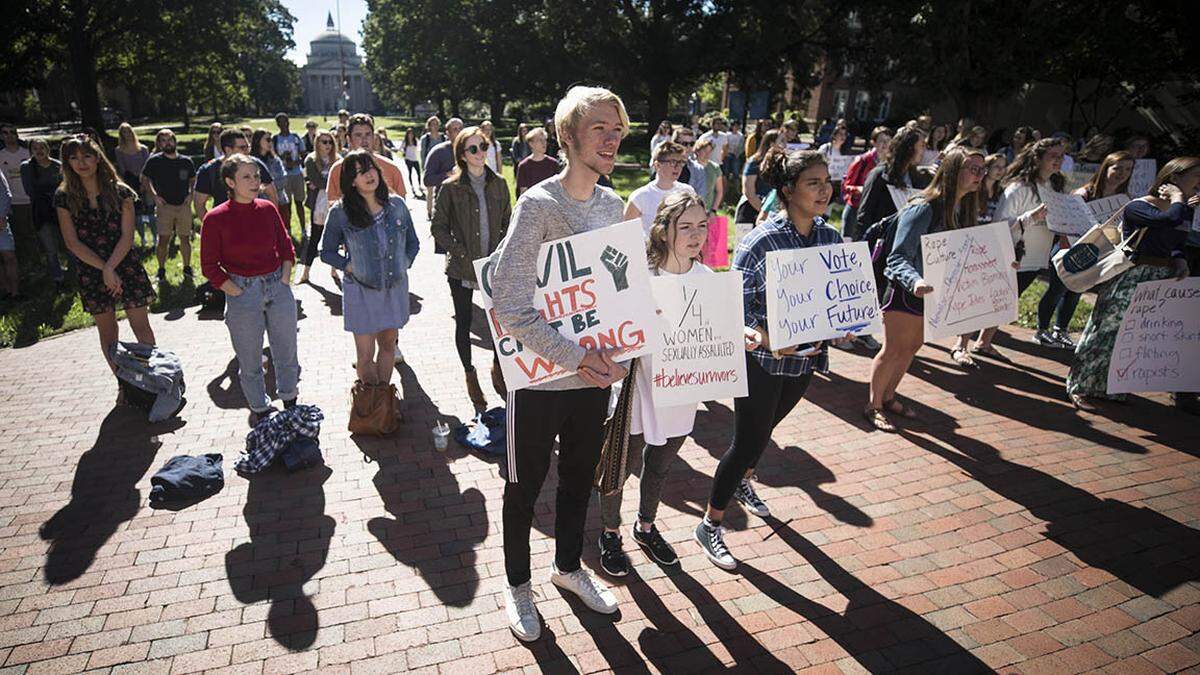
The results of the review come on the heels of an alarming campus sexual assault survey that revealed nearly half of young women in their fourth year or higher at UNC reported experiencing nonconsensual sexual touching or penetration during college. And more than a third of all female undergraduate UNC students reported being sexually assaulted during their time in college, but many of them did not report the incident to the university or police.
“There’s a pattern of behavior of not thoroughly addressing the issue of sexual assault,” said Pino. “Historically at Carolina, students have not felt safe coming forward.”
She said the report and survey show that this happens to so many people at UNC, but some students still don’t come forward. That has to change, she said.
“I hope it continues to be a reminder why this is a priority for all UNC students beyond those of us that were on campus when the complaint was filed,” Pino said.
In 2013, Clark and Pino filed federal complaints that said UNC was violating the Clery Act, specifically the “Campus Sexual Assault Victim’s Bill of Rights.” Clark and Pino were later joined by two other UNC students and former UNC Associate Dean of Students Melinda Manning.
They claimed UNC “persistently failed to develop and implement a functional sexual assault prevent, response, and disciplinary program” that met Clery Act and Title IX requirements. They also alleged that UNC failed to comply with other requirements regarding its policies, procedures, programs, and the accuracy and completeness of its crime statistics.
This review shows that they were right.
“We were ridiculed by the university, and we were ostracized in many ways,” Pino said. “I hope it sends the message that when survivors come forward sometimes we do win, sometimes we are validated.”
Clark also said seeing the results was “extremely validating” and emotional and she hopes it leads to real change for all students.
“This was never about my case, or any individual case. Highlighting UNC served as a microcosmic example to what students all around the country experience,” Clark said. “Using both Title IX and Clery served as a blueprint for other student survivors and as more people came forward and we worked with [the Education Department] more, that blueprint improved.”
Their Title IX complaint also prompted a five-year federal investigation of how UNC handled sexual assault and harassment cases that, in 2018, found the university was in violation of the Title IX anti-discrimination law.
After speaking out about their cases, Clark and Pino became authors, civil rights activists and sexual assault survivor advocates. They co-founded End Rape on Campus to support survivors and ignited a national conversation about campus sexual violence that led to hundreds of other federal investigations at campuses across the country.
Why do these violations matter?
Abigail Boyer, associate executive director of the Clery Center, said that people usually talk about the risk of a fine or campus reputation when these reviews come out. But the real risk is to students who are kept in the dark if these violations aren’t exposed and fixed.
“If somebody has been the victim of a crime, they’re in the most vulnerable position they may have ever been,” Boyer said. “If we don’t have the structures in place to be able to support those members of our community, the potential risk is that they aren’t getting the information and the support that they need and they deserve.”
The goal of the Clery Act is that there will be transparency and education around these issues so that parents and students can make informed decisions about college, Boyer said. Schools have a responsibility to meet these federal standards because they receive federal funding.
Boyer said part of the review process is to work with the campus on what needs to change to correct the issues along the way.
In the case at UNC, these findings and subsequent changes to its system were a direct result of Clark and Pino’s efforts.
“This came from two students who have their lives turned on their heads and decided that they were going to fight and bring this to the attention,” said campus safety expert Alison Dougherty said. “That complaint in particular really spearheaded a national effort to essentially say ‘no more.’”
Over the past decade, UNC made significant changes that are improving the safety of the campus for the community and for students, said Dougherty, who is the Title IX Coordinator at Widener University and former director of the Clery Center.
These findings send a message to the higher education community, she said, and provide an opportunity for other schools to look at what they can do proactively so that they don’t find themselves in this position.
“UNC could serve as an example of what safe higher education could look like if it chooses to do the right thing,” Clark said. “I am optimistic UNC will prioritize student safety over money and press, but I am not certain if it will, which is why continued oversight and the public holding the school accountable is so important.”

A breakdown of the UNC violations
The review looked at UNC’s incident reports, arrest records, and student and employee disciplinary documents between 2009 and 2012, but it was extended to 2015 for further testing of the accuracy and completeness of the university’s crime statistics. Other compliance factors were reviewed through 2016.
UNC received the initial report in 2017 and responded to each finding nearly six months later.
1. Lack of administrative capability
The review team found that UNC failed to develop and implement an adequate Clery Act compliance program during the review period. UNC’s biggest weaknesses that contributed to that problem included poor policies, procedures and training initiatives and a lack of qualified staff and resources. Those deficiencies, the department found, also led to incomplete and inaccurate campus safety and crime prevention information to students, employees, parents and others, including daily crime logs and annual crime reports.
In its response, UNC acknowledged its shortcomings and noted several improvements it made because of the program review.
UNC expanded and improved Clery Act training for employees, hired a full-time Clery Coordinator, expanded Title IX personnel, updated its police department’s policies and procedures, implemented new avenues for reporting incidents and complaints, created a Clery Act Compliance Committee and clarified the map that identifies which campus crimes should be reported.
Despite the improvements, the review “exposed serious weaknesses in UNC’s programs and procedures that were intended to address allegations of sexual violence.”
The finding remains a “serious concern” for the department and will require further monitoring.
2. Failure to properly define the campus/Clery geography
UNC did not identify several buildings and properties that should have been included in the campus crime statistics. Crimes that occurred at the Granville Towers private residential buildings, multiple fraternity and sorority houses, and places adjacent to campus like Porthole Alley were not included in campus crime statistics.
This means that for multiple years the university wasn’t reporting crimes that occurred in those areas and wasn’t sending out emergency alerts when those crimes occurred.
UNC said it corrected the deficiencies, initiated a process to identify the property that is open or controlled by student organizations and made a publicly-available map of the locations associated with campus for Clery reporting.
3. Failure to issue timely warnings
The review found that UNC repeatedly failed to issue timely warnings to students and employees regarding serious crimes that posed an ongoing threat to them, including sexual assaults, aggravated assaults and robberies from 2011-2016.
The university said it regretted not issuing timely warnings in some of those cases and said it improved the procedures and hired the Clery Coordinator to help fix that problem.
4. Failure to properly compile and disclose crime statistics
The review found that UNC failed to compile and correctly disclose the number of crimes in its annual report for each year from 2009 to 2012. The university acknowledged 16 cases including sexual assaults, aggravated assaults, strangulation, kidnapping and a hate crime.
One case involved a group of six men who attacked a victim to the point of unconsciousness and broke bones in his face. Another was an incident of dating violence that included strangulation and left marks on the victim’s neck. A third involved an assault on a student by an athletic trainer.
In 2019, UNC self-identified 27 more incidents that were reported to UNC police or other campus officials but were not included in the crime statistics and annual survey between 2013 and 2017.
The university said it identified and corrected the errors in its reports, improved policies and training and developed new systems to manage the reporting process within student conduct and residence life programs.
5. Discrepancies between crime statistics included in the ASR and the data submitted to the campus safety and security data analysis cutting tool.
The review found several discrepancies in the number of crimes UNC was reporting to different places during the same year. UNC acknowledged the differences and the department accepted that UNC’s revised policies now meet the minimum standards.
6. Failure to collect campus crime information from all required sources
UNC “substantially failed” to collect and report statistics for crimes reported to all campus security authorities. The biggest problem, according to the department, was that there were few of those individuals to report crimes to and they had little or no training.
The result was that in multiple cases the university incorrectly found an incident unfounded. Some of the examples were cases of sexual assault involving a “high-profile football player” — an incident where the alcohol, timing and potential lack of physical evidence in a rape kit led to the investigator dismissing the case. Another involved a “sanitized” report of domestic violence that didn’t include any information about the alleged perpetrator, only the victim. That incident was also not entered in the daily crime log.
The university designated more than 1,000 employees as designated campus security authorities, including staff in residence life, the athletic department and Greek life offices.
7. Failure to follow institutional policy in a case of an alleged sexual offense
The review found UNC violated the Clery Act when it used its Honor Court as a method of retribution against a student who reported an incident of sexual assault and battery. The university did not find her alleged assailant responsible during the Honor Court hearing process and she spoke out about the case. She also filed a complaint with the Department of Education’s Office for Civil Rights and the Clery Act complaint. Then, that student was charged with an Honor Court violation that said she “created an intimidating and hostile environment for her alleged assailant by speaking publicly about her case.”
The university disagreed with the finding, but the department upheld it as a violation of the retaliation provision of the Clery Act.
The review said “the mere act of bringing the charge against the student … had an adverse effect on the complaining student and had a chilling effect on her willingness to further pursue her complaints.” That charge also “likely had a chilling effect on others who were closely tracking the significant number of complaints” and concerns raised by members of the campus community.
It said “basic protections for whistleblowers” and others who raise concerns are essential to the Clery Act functioning properly.
In response to the citation, UNC instituted new policies and procedures for addressing allegations of sexual violence and modified the process that allowed the student to be charged.
8. Failure to disclose accurate and complete disciplinary referral statistics — failure to retain records needed to substantiate Clery Act compliance
The review originally found that UNC failed to compile and disclose accurate disciplinary referral statistics during the review period and didn’t properly maintain student misconduct records. That would have caused an under-counting and under-reporting of incidents, according to the review. UNC fought this claim and the review determined that UNC was likely in at least minimal compliance with the applicable record retention standards.
9. Failure to include required information in the annual fire safety reports
The review team found that UNC did not meet minimum fire safety standards for the private Granville Towers Complex until at least 2014. The biggest issue was UNC’s failure to properly classify it as a campus residential facility.
UNC has taken steps to fix the issues and revise its policies so that it now meets the proper federal standards in this area.
This story was originally published November 19, 2019 at 5:16 PM with the headline "UNC-Chapel Hill violated federal campus safety law for years. Students made them fix it.."