
How Horry County voted in key South Carolina elections, including governor’s race
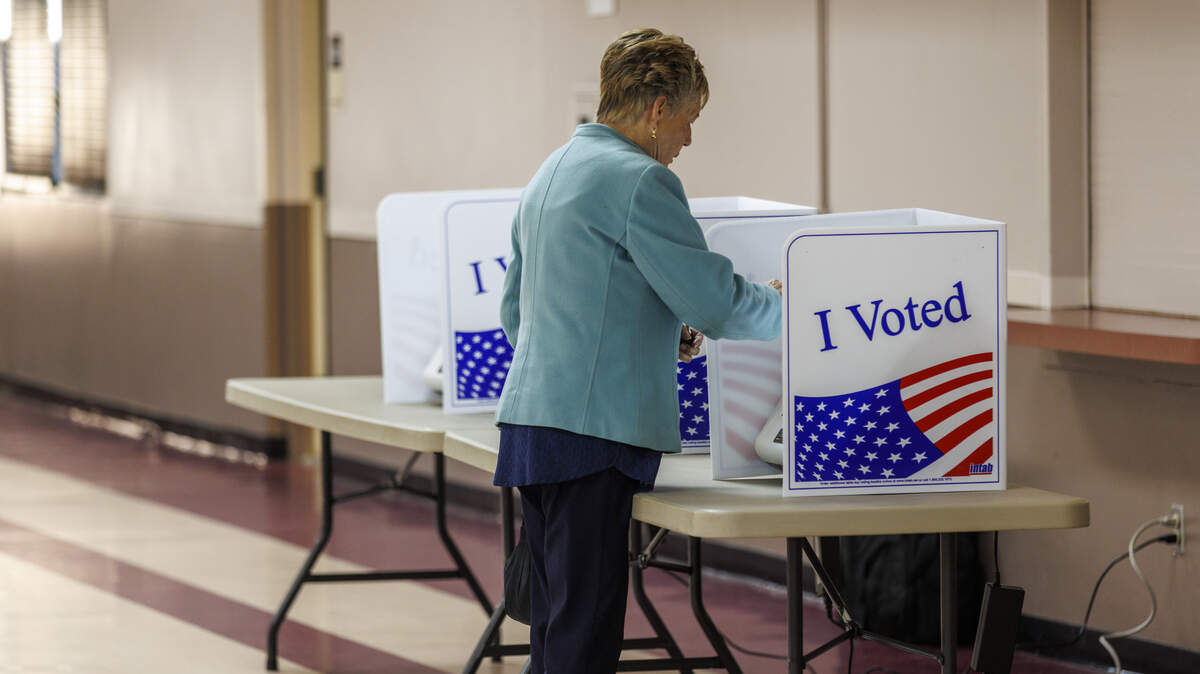
As long-term politicians sought reelection and newcomers vied for top state offices, South Carolina voters made their choices in a range of decisive state races Tuesday.
While vote totals from Horry County show that Grand Strand residents largely shared the same stances as voters across the state, Horry County residents took a few differing stances in key races.
Governor
Republican primary
With no candidates securing more than half of the votes, Pamela Evette and Alan Wilson, the top two candidates in the Republican primary, will advance to a runoff election on June 23.
Evette, South Carolina’s lieutenant governor who formally received President Donald Trump’s endorsement less than two weeks before Election Day, topped the vote counts. She received 28.86% of votes statewide with 136,390 votes.
Wilson, the state’s attorney general since 2011, followed closely behind Evette with 26.15% of the state’s votes with 123,559 votes.
U.S. Rep. Ralph Norman trailed the two candidates advancing to the runoff with 17.08% of votes statewide, followed by Isle of Palms businessman Rom Reddy with 14.16% of the vote, with U.S. Rep. Nancy Mace falling in last place of the actively campaigning candidates after receiving 12.13% of the vote.
South Carolina Sen. Joshua Kimbrell and Hartsville resident Jacqueline Hicks DuBose, who had respectively dropped out and been decertified ahead of election day but remained on the ballot, each received less than 1% of the statewide vote.
While Evette and Wilson showed a close race between them at the state level, Horry County Republican voters decisively voted in support of Evette. Evette received 50.27% of the more than 472,000 votes cast by Horry County residents in the Republican primary.
Wilson, still placing in second for county votes, received just 15.49% of the vote. Wilson has faced scrutiny from Horry County residents after his office stated that South Carolina’s “Stand Your Ground” law would grant Weldon Boyd and Kenneth “Bradley” Williams immunity from prosecution in the 2023 shooting of Scott Spivey.
Locally, Reddy received more support with 13.51% of the vote, followed by Mace, who received 12.24% of the vote and Norman, who received 7.01% of the vote.
Democratic primary
South Carolina and Horry County democrat voters alike strongly supported South Carolina Rep. Jermaine Johnson in his bid to be the Democratic candidate for South Carolina Governor.
Johnson, one of three candidates in the race and the only one with experience in public office, garnered 59.65% of the statewide votes with 221,751 votes.
Billy Webster, a Greenville businessman who previously worked in the White House, received the second-highest number of votes statewide with 29.66%. Mullins McLeod, a Charleston-based attorney, received just 10.68% of the votes statewide.
Johnson secured a similarly dominant victory with Horry County voters, facing just slightly more competition from Webster. Johnson garnered 51% of Horry County’s votes in the Democratic primary, while Webster followed with 37.69% of the vote and McLeod received 11.31% of the vote.
Attorney General
Charleston attorney Richard Hricik was the only Democrat candidate who filed to run for attorney general, guaranteeing him a spot on the November ballot. The three Republican candidates, however, faced a close contest in Tuesday’s primary.
South Carolina Sen. Stephen Goldfinch and South Carolina Eighth Judicial Circuit Solicitor David Stumbo will advance to the June 23 runoff election after receiving 39.99% and 35.66% of the statewide votes, respectively.
South Carolina First Judicial Circuit Solicitor David Pascoe was also vying for a spot on the ballot, but will not advance after receiving the least votes of the night with 24.34% percent of the statewide votes.
Horry County overwhelmingly supported Goldfinch, who represents southern Horry County and Georgetown County voters in the state Senate, with the senator receiving 66.30% of Republican votes in the county.
Stumbo narrowly beat out Pascoe on Horry County voters’ ballots. Stumbo received 16.88% of county votes, while Pascoe received 16.82%.
U.S. Senate
Republican Primary
After six Republican candidates faced off to secure their spots in the general election for U.S. Senate, four-term incumbent U.S. Sen. Lindsey Graham emerged with a win.
Graham received 56.79% of the total statewide votes. Mark Lynch, a Greenville businessman and Baptist deacon, was the only other candidate to garner a significant number of votes, with 28.89%.
York County-based storyteller and leadership coach Thomas Dismukes received 5.2% of the vote, followed by Horry County small business owner Pat Herrmann who received 3.75% of the vote, Duncan Town Council member Calvin Cowen with 3.05% of the vote and Columbia resident Darius Mitchell with 2.33% of the vote.
In Horry County, Graham showed an even stronger lead after receiving 68.38% of the county’s Republican votes. Lynch received 18.68% of the votes.
Herrmann, a Grand Strand local, received more support from area voters than he did statewide, receiving 5.08% of the vote, placing him with the third most votes from local Republican voters behind Graham and Lynch.
Democratic Primary
Only three candidates faced off in the Democratic primary for U.S. Senate.
Charleston County pediatrician Annie Andrews secured a clear victory with 61.53% of the statewide votes.
Greenville-area small business owner Brandon Brown also saw significant support from South Carolina voters with 30.2% of state votes. Columbia-based logistics professional Kyle Freeman received 8.27% of the statewide vote.
Horry County voters favored Andrews, with the candidate securing 73.99% of Democratic votes in the county. Brown received 18.95% of Horry County’s Democratic votes, while Freeman received 7.06% of the county's votes.
Secretary of State
In a neck-and-neck race, Jason Belton, a Columbia area labor rights and union advocate, narrowly beat Edwina Winter, an Irmo-based nonprofit founder, for the Democratic spot in the Secretary of State race.
Belton received 50.57% of the statewide vote compared to Winter’s 49.43%. Belton will go on to face incumbent and Republican candidate Mark Hammond after he ran unopposed by any other Republican candidates.
While Belton may have won South Carolina, Horry County voters showed more support for Winter in the only statewide race where the top vote-getter in Horry County differed than statewide. Winter garnered 52.72% of the vote, while Belton received 47.28% of the vote.
State Treasurer
Republican incumbent Curtis Loftis has already secured his spot on the November ballot with no other Republicans challenging him for the role, but two Democrats ran for the chance to face him in the general election.
Vincent Coe, a financial professional and farm owner, will advance to the November ballot with 55.76% of the state’s votes. Trav Robertson Jr., a political advisor and former deputy state treasurer, received 44.24% of the vote.
Voters in Horry County favored Coe, with him garnering 61.16% of Democratic votes in the county while Robertson received 38.84% of the votes.
Comptroller General
Tiffany Boozer secured the most dominant victory of the statewide races, securing 74.48% of statewide votes in the Democratic primary for comptroller general.
Boozer, a Columbia-based accountant, ran against Bruce Cole, also a Columbia-based accountant, for the Democrat’s spot on the November ballot. Cole received 25.52% of statewide votes.
Boozer will face Republican candidate Mike Burkhold — who proceeded automatically to the general election as no other Republican candidates ran — in November.
Boozer’s strong margin of victory was also seen among Horry County voters, with Cole managing just a slightly stronger turnout than reflected in statewide votes. Boozer received 72.76% of the county’s Democratic votes and Cole received 27.24%.
State Superintendent of Education
Two candidates vied for the Democratic slot on the ballot to run against incumbent South Carolina Superintendent of Education Ellen Weaver.
Sylvia Wright, an educator and current doctoral candidate at the University of South Carolina, won the primary with 61.02% of South Carolina Democratic votes. Lisa Ellis, an educator and advocate for public education, secured 38.98% of the vote.
In Horry County, Wright still showed great success among voters, but the race was closer and was divided by less than 1,300 votes. Wright received 53.97% of the votes in Horry County, while Ellis received 46.03%.
Commissioner of Agriculture
With less than 1% separating the top two Republican candidates for the South Carolina commissioner of agriculture, Cody Simpson and Danny Ford will advance to the June 23 runoff.
Simpson, a Trump-endorsed agriculture professional, received 38.14% of the statewide Republican votes. Ford, a farmer and small business owner, trailed close behind with 37.25% of the vote.
Farmer and businessman Jeremy Cannon, as well as agricultural professional Fred West, also competed for the ballot and received 13.72% and 10.89% of the vote, respectively.
The winner of the June 23 runoff election between Simpson and Ford will face Democratic candidate and farmer DeShawn Blanding in the November general election.
Simpson showed a much more decisive victory among Horry County voters, receiving 46.6% of votes, while Ford received just 25.71% of votes, Cannon received 18.98% of votes and West received 8.72% of votes.
What’s next for Horry County voters
Ahead of the November general election, the top two candidates in primary races where no single candidate garnered more than half of the vote will face off in a runoff election on June 23.
Voters across South Carolina will vote in runoff elections for the Republican candidate for governor, the Republican candidate for attorney general and the Republican candidate for commissioner of agriculture.
Horry County voters will also see runoff races for the District 10 seat on the Horry County Board of Education.