
After legal challenge, where do bathroom restrictions stand in South Carolina?
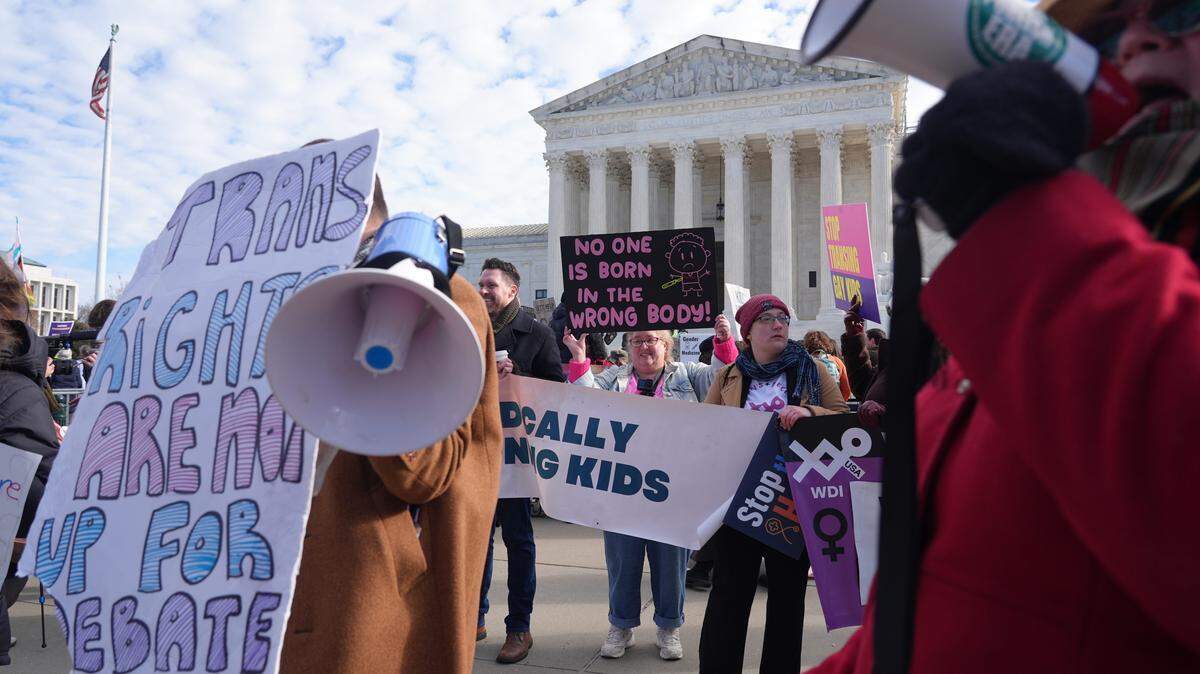
A federal injunction that could make its way to the U.S. Supreme Court allows only one student in South Carolina to use the bathroom that does not align with his gender assigned at birth.
The state legislature has threatened to revoke funding for school districts that do not enforce certain bathroom restrictions, but the policy was challenged in federal court. South Carolina Attorney General Alan Wilson recently asked the U.S. Supreme Court to get involved. If the U.S. Supreme Court takes up the case, it will decide whether a Charleston-area transgender ninth-grader is allowed to use his preferred bathroom.
The court could also create a precedent for whether transgender people can be excluded from the bathrooms that align with their gender, said Elana Redfield, a federal policy director at UCLA School of Law’s Williams Institute.
For two years, South Carolina lawmakers included a one-year budget item that would yank some state funding for school districts that allow students using multistalled bathrooms or changing rooms that don’t match their gender assigned at birth.
It’s a policy that impacts an estimated over 11,300 transgender teenagers in the state, who have to decide whether to use a bathroom that doesn’t align with their gender identity or not use the restroom at all. The Williams Institute, a UCLA School of Law research center focused on LGBTQ+ policy, calculated the number of transgender 13-17-year-olds in the state using the 2021-2023 Behavior Risk Factor Surveillance System and 2021 and 2023 Youth Risk Behavior Survey.
A day before the new school year started, a federal appeals court injunction allowed John Doe, an anonymous transgender teenager in Berkeley County, to use his preferred bathroom at school while the case proceeded. The decision received backlash from conservative politicians in South Carolina, who argued that the transgender student could violate the privacy and safety of students.
“South Carolina will not stand by while ideology is put ahead of children’s safety,” Wilson said in a news release last week. Wilson is competing against Lt. Gov. Pamela Evette, state Sen. Josh Kimbrell and U.S. Reps. Nancy Mace and Ralph Norman for the Republican nomination in the 2026 governor race.
But barring trans students from using the bathroom that aligns with their gender harms their mental health and ability to access an education, Redfield said.
“It doesn’t factor in the safety and privacy concerns of trans people,” Redfield said.
John Doe v. South Carolina
An anonymous transgender boy in Berkeley County left public middle school to take classes remotely after being punished for not using the women’s restroom. The family filed a class action complaint against the budget proviso in federal court last fall, according to a legal filing.
The family decided remote classes were inferior to in-person education, so they enrolled him in public high school for the 2025-2026 school year. He is now a ninth-grader.
The district court, where a class action complaint was first filed, denied to issue an injunction. The Fourth Circuit Court of Appeals granted the student a preliminary injunction in August, allowing him to use his preferred bathroom this school year.
“Doe is a 14-year-old student who simply wishes to use the restroom,” Appeals Court Chief Judge Albert Diaz wrote in a concurring opinion. “Doing so is a biological necessity. Doing so in restrooms that match his gender identity is his right under our precedent.”
Diaz said the boy would face learning losses and “shame and indignity” if he could not use his chosen bathroom this school year.
“To bar him from boys’ restrooms for most of his waking hours is to demean him, day-in and day-out, with no end in sight” Diaz wrote. “Denying relief in these circumstances would subject Doe to humiliation by a thousand cuts.”
The decision cited an earlier precedent, Grimm v. Gloucester County School Board. The case, which went through the U.S. Supreme Court and Fourth Circuit appeals court, involved a Virginia transgender teen who claimed his school district discriminated against him by not letting him use the bathroom of his choice. The courts agreed, setting a precedent that the Equal Protection Clause and Title IX protected transgender students from discrimination.
“The bottom line is that Grimm is binding until the Supreme Court tells us otherwise,” Diaz wrote in the opinion.
Could the U.S. Supreme Court step in?
Last week, Wilson and State Superintendent Ellen Weaver requested the U.S. Supreme Court step in and ban the Berkeley County teenager from using his preferred bathroom.
The request comes as the court with a conservative majority evaluates several cases related to LGBTQ+ rights. This summer, the Supreme Court decided Tennessee legislators could ban gender-affirming care, like puberty blockers, for minors in United States v. Skrmetti. The highest court has also agreed to hear B.P.J. v. West Virginia State Board of Education, which could allow local schools and colleges to ban transgender students from participating in teams that aligned with their gender. Redfield said the court’s decision on B.P.J. could be an indication of how they would interpret bathroom restrictions.
South Carolina Solicitor General Thomas Hydrick argued Skrmetti is the appropriate precedent for Doe’s case, not Grimms, in his application for a Supreme Court intervention. The budget provision does not discriminate on the basis of sex because it applies to all students, Hydrick wrote.
While it is unclear whether the U.S. Supreme Court will take up the state’s case, Redfield said a procedural decision on whether the state can enforce its ban is the most likely outcome.
“If they say anything at all, the court’s probably more likely to say the state should be able to go forward with their policy, and we’ll continue litigating the case,” Redfield said.
Among other arguments, the application says the bathroom policy promotes privacy and safety for students.
“This application seeks to restore the status quo, thereby preserving voters’ will and protecting the privacy of South Carolina public school students while this case is litigated on appeal,” Hydrick wrote.
Judge Diaz wrote that the Berkeley County teenager using the boys’ restroom did not harm any other students at the school. A study from the Williams Institute, which researches LGBTQ+ policy, did not find evidence that transgender people using their preferred bathroom aligned with increased risks to safety in those restrooms.
“There’s zero evidence that Doe’s use of boys’ restrooms presents even a remote possibility of harm to anyone. But the evidence of state hostility toward him overwhelms,” Diaz wrote.
The current state of bathroom restrictions will remain in place until a court decides the anonymous teenager must use the girls’ bathroom. The state policy is a one-year budget law, so lawmakers will also have to renew the restrictions for next fiscal year to maintain the status quo.
This story was originally published September 5, 2025 at 5:30 AM with the headline "After legal challenge, where do bathroom restrictions stand in South Carolina?."