Myrtle Beach area governments may be violating employees’ 1st Amendment rights. Here’s how
Getting timely and accurate information to the public can be helped or hampered when all roads lead to a spokesperson.
Residents and readers often question the lack of details, costs and background information of projects undertaken by local governments. That is sometimes complicated when department heads, employees with direct knowledge and leaders refuse to speak to the media or public and cities issue statements that tell journalists to “not contact staff members directly” in bold lettering, like the City of Myrtle Beach did.
But, the City has no official written policy in their employee handbook that prevents staff from contacting local outlets directly, according to Director of Communications Meredith Denari.
In a “cheat sheet” hand-delivered to local reporters, Denari wrote, “Please do not contact city staff members directly. All interview requests and questions need to come through the city’s communications team.”
The sentence directing local reporters to not contact city employees directly was written in bold lettering on the sheet.
That leads to the question: Are government employees allowed to talk directly to the media? If so, could they face potential repercussions from their employer?
The Sun News asked the Public Information Offices in Surfside Beach, North Myrtle Beach, Myrtle Beach, Conway, Georgetown County and Horry County if they have official written policies for their employees about directly talking to the media.
Each municipality has something different.
The City of Myrtle Beach, Surfside Beach and Horry County having no formal written policies that prevent employees from speaking directly to the press or public without an intermediary.
None of the policies given to The Sun News had any clear or specific written repercussions if an employee spoke out in their official capacity.
‘No, but also yes.’ What do the specific policies say?
Surfside Beach’s policy was primarily aimed at protecting confidential information, including ongoing criminal investigations, computer passwords and private information that’s exempt from state Freedom of Information Act laws.
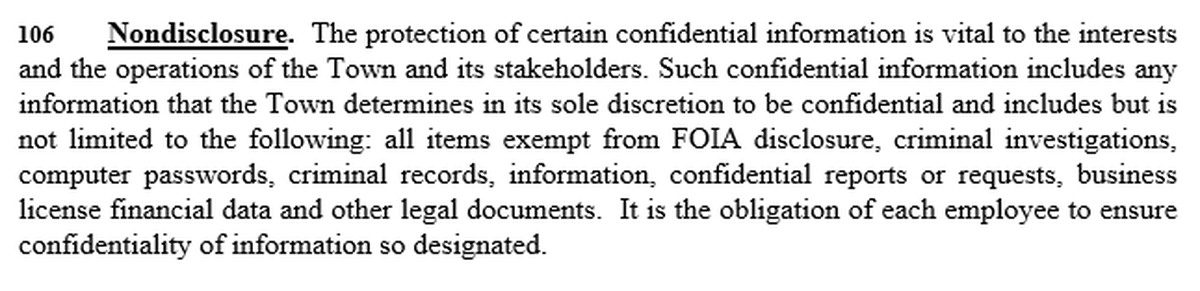
According to its written policy, there are no rules for staff speaking directly to the media without going through the public information department first.
Georgetown County’s policy states that only approved spokespeople can speak directly with the media, including the county’s public information officer, the county administrator and directors and their designees.
“This of course refers specifically to employees speaking on behalf of the county or as a representative of the county,” the county’s Public Information Officer Jackie Broach said about the policy. “If they speak to the media on personal or other matters outside their role with the county, we have no say or involvement with that.”
For Georgetown’s northern neighbor Horry County, the answer is a bit more complicated.
“The answer is no, but also yes,” lead Horry County Public Information Officer Mikayla Moskov said in response to if the county has a written policy for county employees regarding talking to the media.
At this point, Moskov said the county doesn’t have an official written policy for employees to follow when it comes to media, but they have also not formally removed or retracted an old policy from 2006.
This old policy, outlines situations when employees might be contacted by reporters, and what next steps they can take.
“By and large, our system is such that, to ensure quickness and consistency of any response, we request all media inquiries for non-elected-led departments (and their related subject matter) to go through the consolidated Public Information Office,” Moskov wrote via email. “In essence, my team is here to streamline getting media team members what they need; however, we can only streamline a process if we know someone is engaging in it.”
Both North Myrtle Beach and the City of Conway had the most specific written policies out of the bunch. According to copies of both of their policies, city employees should obtain permission before speaking to the media.
“Employees must contact the Office of Public Information before giving any press statements, announcements, or other public information to mass media news agencies; and must obtain approval from the city manager before releasing information to the media,” a section of the North Myrtle Beach Personnel Manual states.
Conway’s policy also states that an employee must get permission from top city staff before releasing information to the media.

The Town of Pawleys Island, where now-acting North Myrtle Beach City Manager Ryan Fabbri used to be town administrator, did not respond to requests for comment about its media policy with staff.
Is it legal to block employees from speaking to the press?
The short answer to this large question is no.
Multiple cases that have reached the United States Supreme Court, including Garrison v. Louisiana, show that a ban on an employee speech violates their First Amendment rights protected by the U.S. Constitution.
The First Amendment Clinic at the University of Georgia Law School claims that the protected First Amendment rights of freedom of speech and freedom of the press are abridged when government agencies prohibit their employees from talking to the press about their jobs.
“Although the practice of gagging public employees from giving unapproved interviews is pervasive across all levels of government, decades’ worth of First Amendment case law demonstrates that blanket restrictions on speaking to the media are legally unenforceable,” Brechner Center for Freedom of Information Director Frank LoMonte said about the issue in an article for Poynter.
LoMonte continues to say that based on his team’s research as of 2019, no agency has prevailed against the press when a policy forbidding unauthorized interviews was challenged in court as a First Amendment violation.
His claim is substantiated by the law firm Kohn, Kohn & Colapinto LLP, a nationally known group known for winning whistle blower protection suits. In a chapter from their publicly available law library, attorneys note that government employees have a constitutional right to talk to the media.
“State and local government employees experiencing retaliation for whistle blowing through the media can file a federal case under the Civil Rights Act of 1871,” the firm said.
According to LoMonte’s team, no federal circuit court has ever upheld a policy that forbids employees from speaking to the press in a First Amendment challenge case.
“Journalists should pin down exactly what the agency envisions doing – to the employee or to the reporter – if an ‘unauthorized’ interview takes place,” LoMonte wrote. “If the policy is backed up with punitive consequences, there’s every chance it is unconstitutional, and that anyone punished for violating it could successfully sue.”
This story was originally published November 19, 2024 at 5:00 AM.