
After years of fits and starts, a school voucher bill is headed to SC governor’s desk
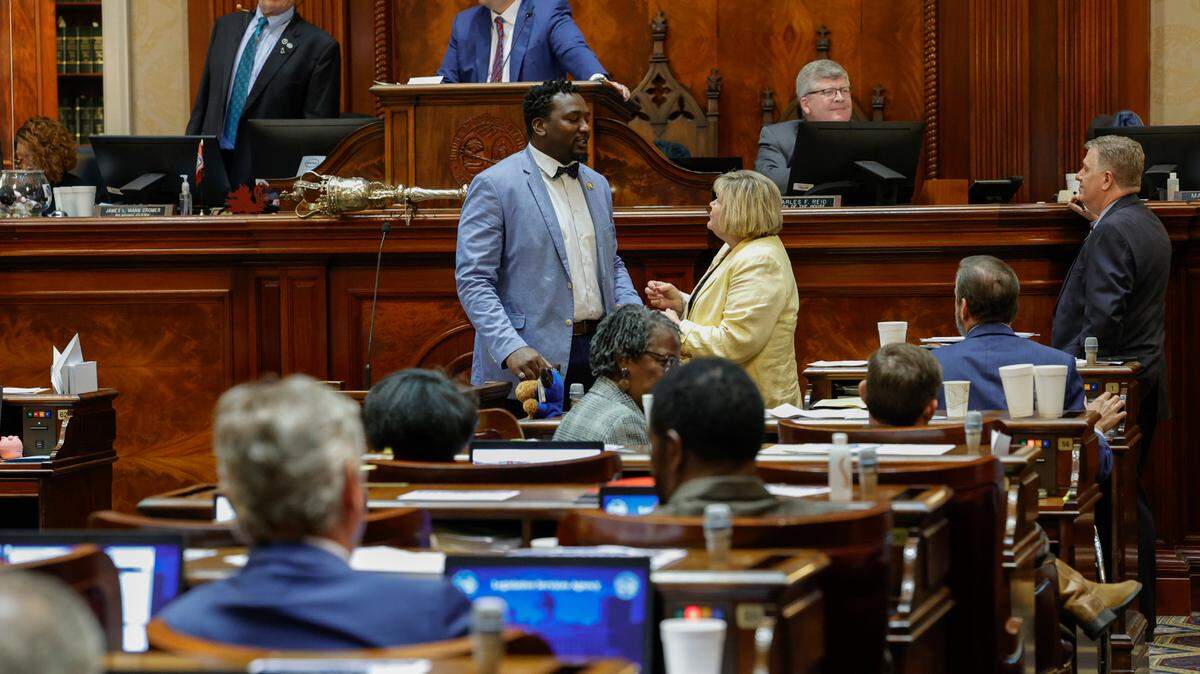
The decades-long push to bring private school choice to South Carolina cleared a major hurdle Wednesday when the House passed a bill that subsidizes education expenses for parents who pull their children out of local public schools.
S. 39, which the Senate passed in late January, gives qualifying families entree to a $6,000 voucher they can use at private schools, public schools outside of their zoned districts and for a variety of other educational expenses.
Private school choice proponents argue that vouchers provide choice to families who can’t afford alternative education options that may better suit their children, while opponents claim they divert taxpayer dollars to unaccountable private schools and hurt public education.
House Education Committee Chairwoman Shannon Erickson, R-Beaufort, who shepherded the bill through the House, said school choice was important because no single school could meet the unique needs of every child.
“Having folks compete for students and letting parents vote with their feet on where they want their children to be educated is not a bad thing,” Erickson said. “It will not disintegrate the public school system.”
Unlike last year, when each chamber passed its own version of ESA legislation and then failed to reach a compromise bill, the House this year adopted the Senate’s bill 79-35 without changes.
While there were aspects of the bill she acknowledged she didn’t like, Erickson said she preferred to pass it as is and avoid the need for additional Senate debate that could delay and possibly derail the legislation.
“There are some areas in there that probably wouldn’t have been my choice, but that’s the way it goes with legislation, usually,” she said. “When we have compromise we usually get a good product.”
Debate on the bill, which ate up two full weeks in the Senate earlier this year, lasted only an afternoon in the lower chamber because Republicans voted to limit discussion of the bill.
Many Democrats took exception to the curtailed debate, arguing it was a disservice to forgo serious discussion of such a consequential issue.
Several offered amendments to the bill and spoke against it, even while acknowledging the futility of doing so. All of the proposed amendments were tabled.
“This is the first step to the death of public education,” warned state Rep. John King, a York Democrat and funeral director who said he wore black to mark the grim occasion. “You will soon have to be calling on my business because of what we are about to do to destroy public education in this state.”
State Rep. Neal Collins, R-Pickens, the lone Republican who spoke against the bill, called it unconstitutional and cited research to argue it also would be ineffective.
“We were not confronted with any evidence today — and I listened closely — of how this system would improve education in South Carolina,” he said. “So, why?”
Afterward, House Speaker Murrell Smith, R-Sumter, said the decision to limit debate stemmed from the belief that Democrats weren’t interested in constructive discussion and because the chamber had already debated and passed similar legislation last year.
What’s next?
The ESA bill now heads to the governor’s desk for his signature.
Gov. Henry McMaster, a private school choice champion, has long supported ESA legislation and allocated $25 million in his executive budget to establish an education scholarship trust fund in anticipation of the bill’s passage.
“I’m very much for that,” he said Wednesday, when asked about the bill. “It’s worked very well in Florida and other states, and I think it’ll work very well here.”
Once signed into law, the ESA bill is likely to face a legal challenge from opponents who argue it violates the South Carolina Constitution’s prohibition on public money being spent on private educational institutions.
The Constitution’s “no-aid” clause, which some call the Blaine Amendment — named for the Maine congressman who unsuccessfully proposed it as an amendment to the U.S. Constitution in the 1870s — derailed McMaster’s 2020 plan to send federal COVID-19 aid to private and religious schools and is what some argue would invalidate an ESA program.
Republican leaders say they’ve crafted the ESA bill to circumvent the “no aid” provision and are confident it would fare better before the state Supreme Court than the governor’s tuition grants proposal.
Rather than sending voucher money directly to private schools, as McMaster had proposed, the ESA bill would give qualifying parents access to a state-funded account they could tap to pay for education expenses at the providers of their choice.
Indirect funding of private schools is not expressly prohibited by the state Constitution.
Erickson said Wednesday she welcomed a legal challenge.
“I believe that (the bill) is fashioned in a way that the funding follows directly what our Constitution would require,” she said. “It does not go to any organization, it goes to a qualified child.”
How would the ESA program work?
South Carolina’s ESA program would start small, enrolling a maximum of 5,000 of the state’s most economically disadvantaged students in the 2024-2025 school year, before gradually growing in size and scope.
By the 2026-2027 school year, families making up to four times the federal poverty level — $120,000 for a family of four — would qualify for vouchers, and as many as 15,000 would receive them.
Participating students must have attended public school during the prior year, unless they’re entering kindergarten. Their families would be able to spend ESA money on a wide range of educational expenses, including tuition, tutoring, transportation and technology.
Private schools that accept voucher students won’t be required to alter their curricula, admissions policies or standardized testing protocols, as long as they administer nationally norm-referenced tests that align with state standards and include a linking study to enable comparison to public school students.
The state would spend up to $30 million on vouchers in the program’s first year, not including initial startup costs, and up to $90 million annually at full implementation, according to an analysis by the state Department of Revenue and Fiscal Affairs.
Under the bill, the state Department of Education may take up to 2% of that scholarship money to pay for costs associated with its administration of the program.
After three years, lawmakers would evaluate the ESA program and could choose to expand it further, as many states with income-limited voucher programs have in recent years.
“If it becomes popular with parents and the children are performing well, then I think you do expand it,” Senate Majority Leader Shane Massey, R-Edgefield, said last month. “But you first need to make sure that it’s gonna work.”
Whether or not school vouchers work depends on whom you ask.
Early studies conducted on small, carefully controlled voucher programs showed modest gains in student achievement, but more recent evaluations of expansive statewide programs have found large negative effects on participating students.
Voucher programs in other states also have been criticized for primarily subsidizing the tuition of students who already attend or would have attended private schools rather than benefiting the most disadvantaged public school students who, for a variety of reasons, may be precluded from participating.
While research shows that private school choice programs often attract students from low-performing public schools, they do not generally attract those schools’ top students and may actually spur competitive effects that boost academic achievement at such schools.
Editor Maayan Schechter contributed to this story.
This story was originally published April 26, 2023 at 5:59 PM with the headline "After years of fits and starts, a school voucher bill is headed to SC governor’s desk."