
SC’s Spearman promised a positive, collaborative approach to education. Did she succeed?
When state Superintendent Molly Spearman was elected in 2014, educator morale was cratering.
Her predecessor, Mick Zais, had made a habit of antagonizing teachers groups and district administrators while seeking to slim the education bureaucracy and impose more accountability.
He hollowed out the state Department of Education, rejected federal funding that many said could have saved teachers’ jobs and pushed for educators to be evaluated based, in part, on student test scores.
Spearman, a former teacher, state lawmaker and executive director of the South Carolina Association of School Administrators, promised to be different.
“Many educators saw Molly as one of us,” said Kathy Maness, executive director of the Palmetto State Teachers Association, who ran unsuccessfully to replace Spearman.
In an interview she gave just prior to taking office, Spearman expressed admiration for teachers and school leaders and pledged to seek their counsel on all policy decisions.
“I want to get the positive message out to our citizens about the many wonderful things that are happening in schools all across the state,” she told the Associated Press in late 2014. “I don’t think we have thanked our teachers and our principals enough for the jobs they’re doing.”
Eight years and an education-transforming pandemic later, some of the state’s top teacher advocates say Spearman has lived up to her promise to give them a seat at the table.
Her commitment to public education and steadfast support of teachers — while called into question at times, such as when she skipped the 2019 teachers march at the State House — will likely come to define her tenure more than any signature policy achievement, they said.
“Part of her legacy is elevating the importance of education in policy discussions,” said Patrick Kelly, PSTA’s director of governmental affairs. “She fits into that arena of people who have elevated discourse about education and best serving all of our students.”
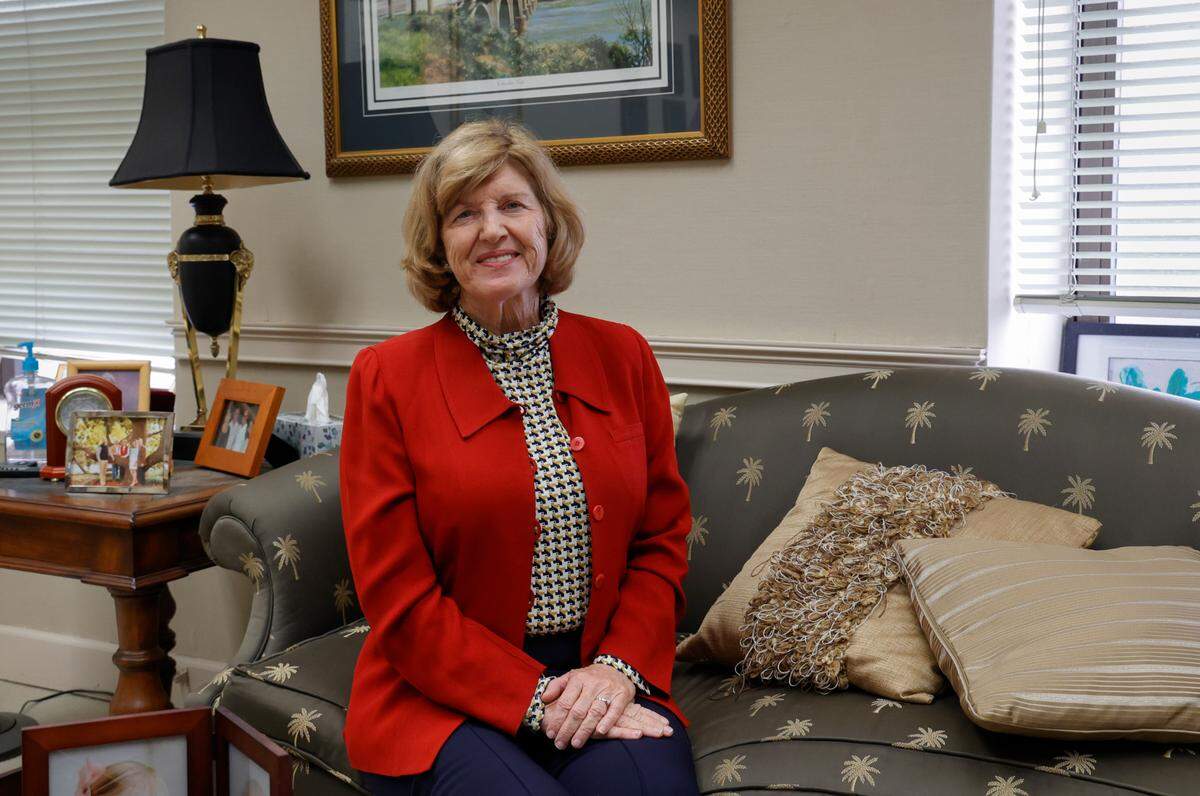
Spearman, who next month will pass the department’s reins to state Superintendent-elect Ellen Weaver, sat down with The State this week to reflect on her time in office, share her concerns about the future of education and discuss her next steps.
Spearman’s accomplishments
Spearman inherited the oldest school bus fleet in the nation.
South Carolina, the only state where education department officials purchase and maintain school buses, had underfunded the system for years, leaving it in desperate shape.
“Two weeks into office, we started having buses with thermal events,” Spearman said. “They were catching on fire because they were worn out.”
She asked the Legislature for help and used the money she received to “lease purchase” — leasing with the option to buy — buses at very low interest rates that allowed the agency to put more vehicles on the road. The department also tapped into grant funding and money from the Volkswagen settlement to buy buses that not only were newer, but more fuel efficient.
As the fleet got younger and cleaner, maintenance costs dropped and those savings were reinvested into the system.
Eight years later, South Carolina has replaced roughly 80% of its fleet — more than 4,000 buses — with newer, cleaner models and expects to replace the remaining aged buses with $58 million received from the Environmental Protection Agency’s Clean School Bus Program.
The transformation of the state’s bus fleet is important, Kelly said, even if it doesn’t garner a ton of a attention.
“You can’t talk about student education improving if you can’t get them to school,” he said.
Kelly also credits Spearman for pushing the Legislature to raise teacher salaries in South Carolina, which had ranked near the bottom of the country in educator pay when she took office in 2015.
Minimum starting teacher salaries have risen from $29,500 to $40,000 in those eight years, or nearly 36%. Some of the gains have been wiped out by inflation — starting teacher pay, in real dollars, is actually down since 2019 — but Kelly said he doesn’t blame Spearman for that.
“She’s been a primary driver of the gains that have been made,” he said.
Spearman acknowledged that teacher pay still isn’t where it needs to be, but said she’d done everything in her power to advocate for better educator compensation and is proud of the “huge” improvement in that area.
“I couldn’t raise salaries on my own,” she said. “But I tried to nudge and push the Legislature to do as much as they possibly could do.”
Spearman’s administration also will be remembered for pushing shared services and controversial district consolidations and state takeovers of struggling districts, education leaders said.
Since taking office, Spearman has overseen the consolidation of 11 districts into five, and taken over three underperforming districts — Allendale, Florence 4 and Williamsburg. Florence 4 was returned to district control this past summer when it consolidated with Florence 1, but Allendale and Williamsburg remain under state control.
Their futures rest in the hands of incoming schools chief Weaver.
“I was seeing a lot of school districts, particularly small districts, that were not very efficient,” Spearman explained of her desire to combine districts.
After an agency-commissioned study found small, rural districts were spending too much on administration and could benefit by working together, she began pushing shared services in those areas, and eventually, advocated for the consolidation of entire districts with fewer than 1,500 students.
“It was tough because people take pride in their school district, in their schools,” Spearman said. “Really nobody even wanted to mention the ‘C word,’ consolidation.”
The consolidation process has been bumpy, she admits, and it hasn’t always saved money in the early going, but she thinks it will pay off in the end.
“I think the infrastructure foundation is much stronger now out in our rural areas because we’ve combined some districts,” she said. “So I’m really proud of that work.”
South Carolina Education Association President Sherry East agrees with Spearman’s assessment and credits her for moving forward with consolidation efforts amid considerable pushback
“She saw what would be better for children and tried to work on getting some of those smaller districts consolidated,” East said. “It wasn’t a popular thing to do, and it’s still not finished, but I hope they’ll continue to look at that.”
Kelly also highlighted Spearman’s efforts to increase efficiency and opportunities for students in some of the state’s smallest districts through consolidation, despite it not being a “political winner.”
Consolidation, he said, had been a “third rail” of South Carolina politics for years because districts often are the largest employers in small communities and residents feel deep ties to their public schools.
“That’s really hard for an elected official,” Kelly said. “But she has, even during her first term when she very much had to be thinking of reelection, been adamant that South Carolina needed to consolidate, and she was right.”
Spearman’s disappointments
Despite investing heavily in improving student achievement in South Carolina schools, especially in the state’s poorest districts, the results eight years later have been modest.
Spearman has grown the agency’s Office of School Transformation, which deploys coaches to foster continuous improvement in the state’s lowest-performing schools, but the effort remains a work in progress.
“We’ve done better, but we’re nowhere near where we need to be with student achievement in some areas of the state,” she said.
Interpreting the changes in student test scores over time is further complicated by the COVID-19 pandemic, which interrupted in-school learning and set back student progress, especially in mathematics.
SC Ready scores and end-of-course assessment results in English and reading have ticked up over the past four years, but math scores have sunk, 2022 student report card data shows.
The National Assessment of Educational Progress, a long-running large scale assessment of reading and math scores that allows researchers to evaluate student achievement over time and compare it across states, found that South Carolina actually had regressed slightly in both reading and math since 2015.
While concerning, education experts largely attribute that backsliding to pandemic-related learning loss.
More encouraging is the finding that South Carolina has experienced smaller declines in reading and math scores than many other states, and as a result now ranks higher nationally in both metrics than it did in 2015.
The state, which had been well below the national average in 4th grade reading and math scores in 2015, according to the Nation’s Report Card, is now right around the national average.
“I think that is attributed to our schools opened back up quickly (after COVID),” Spearman said of the comparative improvements in test scores. “And I tried to push that as much as I possibly could.”
One of the biggest barriers to raising student achievement in poor, rural districts has been finding teachers willing to work in them.
“We can send the resources, we can send the money to support the things that need to be purchased, but the bottom line is having the high quality instructor there,” Spearman said. “That gets harder and harder.”
Teacher retention and recruitment has been a major challenge for Spearman’s administration.
Vacancies in teaching and school-based service positions have increased significantly in recent years, according to the Center for Educator Recruitment, Retention and Advancement.
Educators fed up with low pay, stressful working conditions and escalating political rhetoric are leaving the profession in droves and there aren’t nearly enough college students graduating from education schools to replace them, recent CERRA survey data shows.
“It’s getting harder and harder to get qualified teachers, particularly out in the areas where the students need the qualified teachers the most,” Spearman said. “We’ve tried to think of everything possible to do — paying off loans, helping with housing, giving bonuses, buying new reading materials. We’ve done a little bit of all of that.”
Those efforts have not paid off, however, and as Spearman freely acknowledges, there’s more work to be done.
She’s largely tried to steer clear of the political fights over masks, critical race theory and book bans, but believes they’re making teachers’ lives more difficult and causing them to question how much longer they want to remain in their jobs.
“There are teachers right now who are scared to death to teach about some parts of history because they’re afraid they may say something that’s going to offend somebody and their parent’s going to report them,” Spearman said.
While she’s not sure how best to reverse the state’s growing teacher shortage, Spearman said she’s certain the demonization of public educators isn’t helping.
“I’m concerned,” she said. “I just think our policymakers, all of us, community leaders, faith community, all need to come together and try to support our local schools and make it as calm and safe an environment so that young people will want to go there and work.”
Kelly and East said they don’t hold Spearman directly responsible for exacerbating the state’s teacher shortage because many of the factors contributing to it are beyond her control.
There are, however, educators in the state who believe Spearman didn’t always live up to her pledge to support teachers and that her actions, or in some cases inaction, made their jobs more difficult.
Many were angered by the way Spearman handled the 2019 teachers rally, where thousands of educators massed outside the State House in Columbia to demand better pay and working conditions.
She voiced support for the teacher’s goals, but opposed the event because it took teachers out of classrooms.
“I cannot support teachers walking out on their obligations to South Carolina students, families, and the thousands of hardworking bus drivers, cafeteria workers, counselors, aides and custodial staff whose livelihoods depend on our schools being operational,” Spearman said in a statement days before the rally.
Rather than attend, Spearman spent the day substitute teaching at Lexington’s Midway Elementary School.
“Teachers felt like Molly should have been out there with us, she should have been speaking to the masses that day, she should have been supporting our actions,” East said. “A lot of teachers lost a lot of faith in her on that day.”
Spearman told The State this week that she doesn’t regret her decision to skip the rally, but is saddened that her actions upset so many teachers and caused them to lose confidence in her leadership.
She said she would have attended the rally had it been held after school hours, but that as leader of the state’s public school system she could not condone closing or hampering school operations.
“It makes me sad that some people judge me because of that action,” Spearman said.
East said she understands Spearman’s position, even if she doesn’t agree with it, but wishes the superintendent had conveyed her message differently or said nothing at all.
“It felt like all the issues we were trying to bring awareness to, it felt like she just didn’t think they were worthy — which I know is not true of her,” East said. “And that’s been my frustration with her all along. I know she cares about the issues we care about, but sometimes it doesn’t get conveyed in public the way it should.”
Lisa Ellis, founder of SC for Ed, the grassroots teachers group that planned the rally, echoed East’s sentiment, saying in a statement that “there were times I wish she removed politics from her role.”
Ellis, who lost to Weaver in last month’s election for Spearman’s seat, said she nonetheless felt the outgoing superintendent had served with the best interests of South Carolina’s students in mind amid a tough political climate.
Looking at legacy
For all of Spearman’s good intentions and efforts to change the climate in education, educator morale remains abysmal and pressing issues like the state’s teacher shortage continue to get worse.
“Part of that is shaped by the challenges of COVID that nobody could have expected or navigated perfectly, and part has been shaped by increased national polarization over policy,” Kelly said.
He doesn’t blame Spearman entirely for the crisis in education, because she didn’t cause it, but said it’s still something that needs desperately to be addressed.
“She could have leaned in harder on some topics to push back on attacks on educators and on our schools,” Kelly said. “But I also readily acknowledge that there was not a perfect way for anyone to navigate what the past two-to-three years have brought.”
Spearman’s legacy, he said, will hinge in part on what happens over the next few years.
“We’re just now at the point where some of her more significant initiatives around literacy, around consolidation, around the takeover efforts for school districts, we’re just starting to see the outcomes of those things,” he said. “So I think part of Superintendent Spearman’s legacy is still to be written.”
For Maness, whose candidacy Spearman endorsed in the Republican primary, the outgoing superintendent will be remembered as a leader who listened to all education stakeholders and staunchly defended public education.
“Molly Spearman was very inclusive in doing whatever she could to improve the public schools of South Carolina — bringing the clergy together, bringing the business community together, working with teachers, always putting the best interests of children first,” Maness said. “Molly is definitely going to be a hard one to follow.”
Looking ahead
Spearman faced myriad challenges during her tenure, from disagreements with Gov. Henry McMaster over mask mandates and in-person learning to overseeing an education system with an overburdened and underpaid workforce increasingly opting to leave the profession.
But her decision not to seek reelection this year came down to family and age, she said.
Spearman, who will be 69 in January, wants to spend more time with her retired husband and two grandchildren who were born while she’s been in office.
“It wasn’t because the job’s hard,” Spearman said of her decision to retire. “I thrive on that, and I loved being in this role, and it’s kind of sad to step away. But it was family, age and the fact that I’ve given a lot.”
She’s been meeting with Weaver, her successor, who’s been working out of an office in the Department of Education, to help with the transition.
Among other things, Spearman has been getting Weaver’s team up to speed on work the agency has been doing in low-performing districts, including the two it currently manages.
“We’ve made huge improvements (in Allendale and Williamsburg),” she said. “I had hoped to have both of those districts transitioned to local boards … but we’re not quite there yet, so I will not finish that work before she comes into office.”
Spearman’s own future plans include a little rest and relaxation — she’s got a Hawaiian vacation booked — but the outgoing state superintendent won’t be out of work long.
She’ll start part-time at the John Maxwell Leadership Foundation in mid-January, working to build up the leaders of tomorrow in public schools across the country. Her inspiration, Spearman said, comes from a desire for a future where young people respect one another and can have productive relationships, regardless of their backgrounds.
She doesn’t plan to wade into South Carolina education politics, at least for a while, so that Weaver can make her own mark on the office.
“I want to be fair to her and let her enjoy the good and the bad of her administration,” said Spearman, adding that she’s been impressed by her successor’s approach.
“She certainly has come in with the right spirit here of learning from all the folks and saying, ‘Teach me, I want to do a good job, work with me,’” Spearman said.
This story was originally published December 11, 2022 at 5:00 AM with the headline "SC’s Spearman promised a positive, collaborative approach to education. Did she succeed?."