SC Supreme Court sides with McMaster, jobs chief on ending COVID unemployment benefits
The South Carolina Supreme Court sided Wednesday with Gov. Henry McMaster and the state’s workforce director, ruling the governor was within his rights to order the state to stop participating in federal COVID-19 unemployment benefit programs.
In the four-page opinion released Wednesday, the high court unanimously affirmed the lower court’s decision to toss out a lawsuit from four South Carolina residents, calling the section of law by which the residents sought to block the governor’s action “unambiguous and clear on its face.”
“We are very happy with the Supreme Court’s decision,” state Department of Employment and Workforce Director Dan Ellzey said in a statement. “As South Carolina employers ramped up their hiring in the spring of this year and employment opportunities continued to outnumber individuals looking for work, it became evident that it was time for the state to focus more on reemployment.”
In July, when the suit was filed by the South Carolina Appleseed Legal Justice Center and Kassel McVey law firm, McMaster’s spokesman Brian Symmes said the state cannot “continue to incentivize able-bodied South Carolinians to stay home rather than accept one of the tens of thousands of available jobs in the state.”
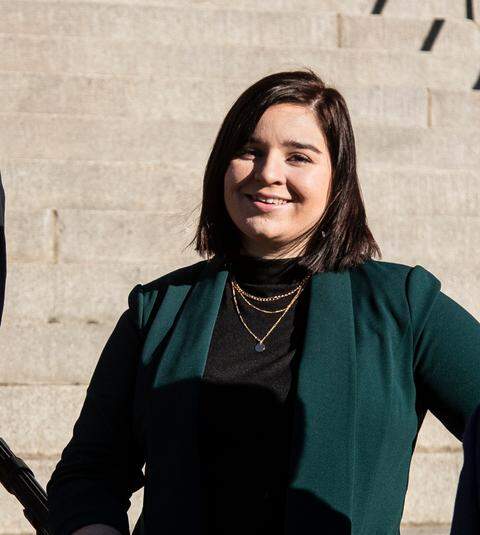
Appleseed’s Director Sue Berkowitz called the high court’s ruling Wednesday disappointing.
“We’re disappointed, and sorry that 70,000 to 80,000 people who are hurting still, especially during this time of increased numbers, are not getting the help,” she said. “But we’re glad we took the steps to try to protect and them. We hope before agencies, the governor does anything like this again they’ll confer with people who are truly impacted.”
Back in May, McMaster ordered the state Department of Employment and Workforce to withdraw from the federal government’s pandemic unemployment programs, most of which were implemented under the federal CARES Act.
Initially, the pandemic unemployment plan gave recipients an added $600 every week in addition to state unemployment benefits. That number was later reduced to $300. Earlier this year, Congress passed another COVID-19 aid package that extended the unemployment benefits until Sept. 6.
In particular, state leaders argued recipients could earn more money on unemployment rather than through working, pointing to thousands of job openings in South Carolina. The governor’s rationale was that ending the federal benefits by June 30 would help alleviate a labor shortage, particularly in the service industry.
“Our goal has always been to usher in a rapid economic recovery that will lift all South Carolinians and benefit generations to come, and we’ve done that,” McMaster said in a statement Wednesday. “Rather than working to incentivize South Carolinians to accept one of the thousands of available jobs in our state, these federal benefits presented a clear danger to the health of our state’s businesses by keeping people home.”
In July, advocates sued McMaster and Ellzey for “prematurely” ending those federal unemployment benefits for people who lost their jobs during the coronavirus pandemic. The group argued that DEW broke its legal requirement to “act as necessary to secure all benefits under the Social Security Act.”
“By directing DEW to reject these funds and violate its legal obligations, he has overstepped his authority and done significant harm to the tens of thousands of South Carolinians who still rely on these benefits,” Adam Protheroe, Appleseed’s litigation attorney, said after the lawsuit’s initial filing.
A judge threw out the lawsuit in August, finding that the governor’s move did not violate Social Security laws.
In his dismissal, Judge Lawton McIntosh wrote that the governor and Ellzey have “discretion to determine what benefits from the federal government actually put the State and its citizens in a ‘superiority of position or condition.’”
The Supreme Court affirmed McIntosh’s decision, saying the unemployment benefits don’t fall under the category of Social Security funds and, therefore, don’t fall under existing state laws requiring the workforce agency to secure all possible benefits.
“The only connection the Programs have to the SSA is that the funds to be distributed to recipients pass through bank accounts of the Social Security Administration. This is not sufficient to render benefits paid under the Programs to be ‘advantages available under the provisions of the (SSA),’” the court wrote. “To construe section 41-29-230(1) otherwise would be to expand the scope of an unambiguous statute beyond the manifest intent of the legislature.”
This story was originally published October 13, 2021 at 11:09 AM with the headline "SC Supreme Court sides with McMaster, jobs chief on ending COVID unemployment benefits."