Why SC’s ousted disabilities and special needs director asked court to void her firing
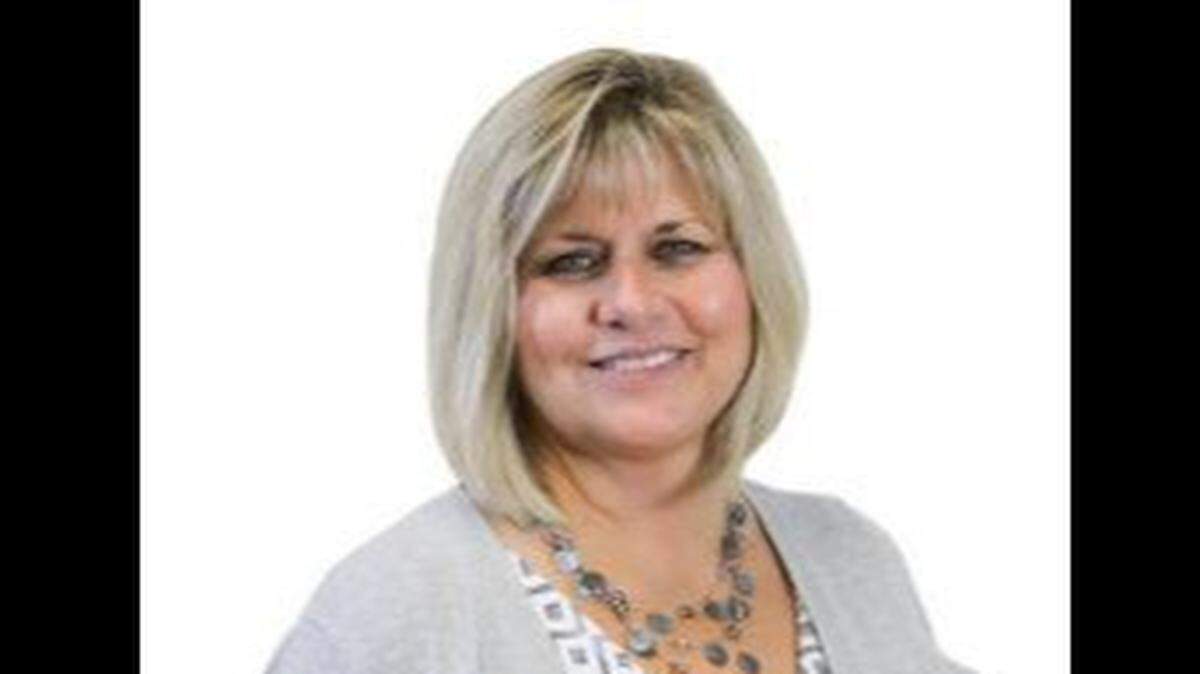
The former director of the state agency that oversees services for people with disabilities and special needs is asking a court to void the decision to fire her.
Mary Poole, who was fired in February over her handling of a sexual harassment claim within the executive office of the agency, has filed a lawsuit against the Department of Disabilities and Special Needs, four of its commission members and an internal auditor, alleging the board members held an illegal electronic meeting and conspired to terminate Poole’s employment with the agency.
Poole in her lawsuit names four of the then six commissioners — Stephanie Rawlinson, David Thomas, Barry Malphrus and Robin Blackwood — and accuses them of holding a meeting electronically without notifying the public of the meeting, including having a group email with a plan for questioning ahead of a Feb. 18 executive session.
The group email included planned questions for Poole, the board chairman and the DDSN human resources director over how a sexual harassment situation was handled. It also included statements board members planned to make during the executive session.
“It’s just troubling beyond reality that our executive director has such a lack of leadership ability that she has not been able to handle this type of behavior or follow the explicit request for complete transparency we requested from her in the fall,” Thomas was slated to say, according to an email released by DDSN through an open records request.
Poole’s attorney, Jack Cohoon, declined to comment beyond the lawsuit filing.
DDSN spokesman Robert McBurney said the agency would not comment on pending litigation.
Sexual harassment claim
A week-and-a-half after Poole was fired, the commissioners issued a letter stating they terminated her because of her handling of a sexual harassment allegation within the office.
According to documents obtained by The State, a lawyer representing the employee making the sexual harassment complaint said inappropriate behavior had taken place over the course of 14 months, including comments about the female employee’s body, inappropriate leering and an unprofessional hug.
In the lawsuit, Poole defended her handling of the sexual harassment allegation. She said she placed the staff member in question on leave the day she received the complaint.
She said she had outside counsel investigate the sexual harassment claim and kept Board Chairman Gary Lemel updated on the investigation. After the nearly three-week investigation, the outside counsel gave Poole advice on actions to take, which she followed. The matter was resolved without liability to DDSN, the lawsuit said.
But commissioners questioned why all of them weren’t made aware of the sexual harassment allegation.
“It disturbs me greatly that every month this commission seems to be faced with something that’s a serious problem,” Rawlinson was scripted to say during the Feb. 18 meeting, according to emails obtained by The State. “However, we as a commission have not been read anything in advance and people wait until the problem implodes, then we are expected to fix something we didn’t approve to start with. When’s it going to end? I talk to other state commissioners from other agencies and they don’t have these problems. We cannot continue to function like this.”
Ultimately during the Feb. 18 meeting, commissioners made plans to ask Poole to resign and if she did not they would opt to terminate her.
Yacobi and Poole relationship
The lawsuit and other documents obtained by The State depict a tense relationship between Poole and Internal Audit Director Kevin Yacobi, who is named as a defendant in the suit.
Poole contends Yacobi was angry at her for initially denying his request to reclassify at least two employees in the internal auditors office, which would have meant pay increases for those workers.
Poole denied a 15% raise for one employee and a 7.5% raise for another employee because she believed the staff members did not qualify for a higher classification and was concerned about the agency’s history of giving unwarranted raises, according to the lawsuit.
Yacobi lambasted Poole, according to the lawsuit and because of “Yacobi’s verbal outburst and continued bullying, (Poole) eventually capitulated and agreed to a modest raise for ... Yacobi’s staff,” the lawsuit says.
In the months leading up to Poole’s ouster, Yacobi reported Poole did not report potential conflicts of interest to the agency’s ethics officer and created a division without telling commissioners, among other things.
The concern was among five issues brought up by DDSN’s internal auditor as board members explored whether to terminate Poole over her handling of a sexual harassment case in the DDSN executive office.
Other issues included whether Poole kept a compliance report from DDSN commissioners, created a new risk division without telling the commission that added costs to the agency and required an employee to attend one of her child’s case management meetings, among other things.
Poole, in a response to the internal auditor report, said the new risk division she created is really a ”re-branding of an existing division” and said she notified the board of an interim reorganization plan in 2019 with a formal proposal to come in the future.
Poole, who has adopted children with Down Syndrome who are eligible for DDSN services, said she offered Director of Case Management Lori Manos an opportunity to attend a meeting with a case manager with one of Poole’s children to see how a new training was being implemented.
“Manos attending my child’s meeting was done for the complete benefit of the agency, which was only possible by voluntarily opening my home and privacy to allow Ms. Manos to observe a case manager implement the new Person Center Description,” Poole wrote in response to Yacobi. “Neither I nor my family obtained any benefit from permitting her to observe the meetings. I never directed her to attend — that is just a flat out lie.”
The internal auditor submitted a report on DDSN compliance with the Workforce Innovation and Opportunity Act to Poole’s executive assistant. The report was never distributed to commissioners because Poole never gave permission for the report to be distributed, according to a report from Yacobi to commissioners.
Poole said ahead of a June 2020 commission meeting that she did not immediately distribute the audit report because she was responsible for answering questions stemming from the report, and not having the opportunity to provide her own comment.
The auditor also raised concerns that Poole’s daughter was named as director of support services for Maxabilities in York County, potentially creating a conflict of interest.
The auditor said Poole’s daughter had no prior case management or early intervention experience. Poole’s daughter is supervising case managers who provide services to Poole’s other children receiving DDSN services.
“This establishes circumstances where services may go unchecked,” the auditor wrote.
‘I was recused from oversight’
In response to Yacobi’s report, Poole said her daughter, Jennifer Poole, was first hired as a contractor at MaxAbilities in 2018 when Mary Poole was still the executive director of the York County agency. When Jennifer Poole was hired, DDSN weighed in and said the MaxAbilities board of directors would have to review and approve Jennifer Poole’s contract.
“The board approved the contract with the stipulation Michele Shafer would be her supervisor and I was recused from oversight” Mary Poole wrote.
Jennifer Poole was eventually hired full-time with the understanding she would not supervise approvals for Mary Poole’s other children, whose cases are handled by other supervisors and Shaffer.
“I never involved myself in Maxabilities hiring of Jennifer Poole nor did I even serve as a reference for her,” Mary Poole said. “I have never kept her employment a secret and I am very proud of the work Jennifer has done.”
The internal auditor also said Poole pressured staff members into making sure the city of Rock Hill won the 2019 Silver Palmetto Award, creating a conflict of interest with staff members.
The Silver Palmetto Award is given by DDSN to thank and recognize municipal governments in the state for making the lives of people with disabilities a priority. DDSN staff judge who wins the award.
“Rock Hill better win this year,” Poole said to the executive staff, according to Yacobi’s report.
Poole said she made the comment in an effort to be humorous.
“I had no intent to influence a decision,” she wrote.
“(Internal auditor) Yacobi’s inaccurate findings driven by his bias or incompetence have irreparably damaged my reputation,” Poole wrote to commissioners in a memo before she was fired. “These allegations could have easily been resolved if (internal audit division director) Yacobi had just walked down the hall and gave me the opportunity to provide ‘the other side of the story.’”
Poole did have at least one ally on the DDSN commission.
Chairman Gary Lemel was the only board member to vote against Poole’s termination. He also wasn’t named in the lawsuit.
In her annual performance evaluation, Poole in 2019 and 2020 fiscal years met or exceeded her performance goals, according to agency documents obtained by The State.
Lemel wrote in a 2019 letter to the Agency Head Salary Commission that DDSN had struggled with low morale and questionable outcomes. However, Poole worked to update the agency’s payment system, which is a multi-year project. He also said Poole had put together a new management team and new systems were being created to “accurately collect, process and act on performance data.”
“Undoing years of inertia does not happen overnight,” Lemel wrote to the commission in 2019. “It is a painful process. We have taken the first steps to achieving that goal. ... I am very satisfied with the actions of our executive director to start us on the path and keep us on that path.”
This story was originally published July 1, 2021 at 6:00 AM with the headline "Why SC’s ousted disabilities and special needs director asked court to void her firing."