SC’s population has grown since 2010 – by a lot. What those numbers mean for you
People are moving to South Carolina — a lot of them — and that shows in new U.S. Census population data released on Monday.
South Carolina rolled out the welcome mat to almost 500,000 new residents over a 10-year period, growing its population to more than 5.1 million — or 5,118,425, to be more specific — according to the 2020 U.S. Census population figures released Monday.
That’s a 10.7% growth over 2010 figures, when South Carolina reported more than 4.6 million residents. However, that’s a slower growth rate compared to the past four decade-to-decade head counts when the rate exceeded 15% and once, 20%.
The U.S. population grew to 331,449,281, a 7.4% increase and the second-slowest growth rate since 1940, the Census reported.
But South Carolina’s population boom was not enough for South Carolina to add one more seat to the 435-member U.S. House of Representatives, unlike the state’s North Carolina neighbor which added one, the Census reported.
South Carolina was not expected to gain a seat in this year’s reapportionment process, based on a decade’s-worth of population data.
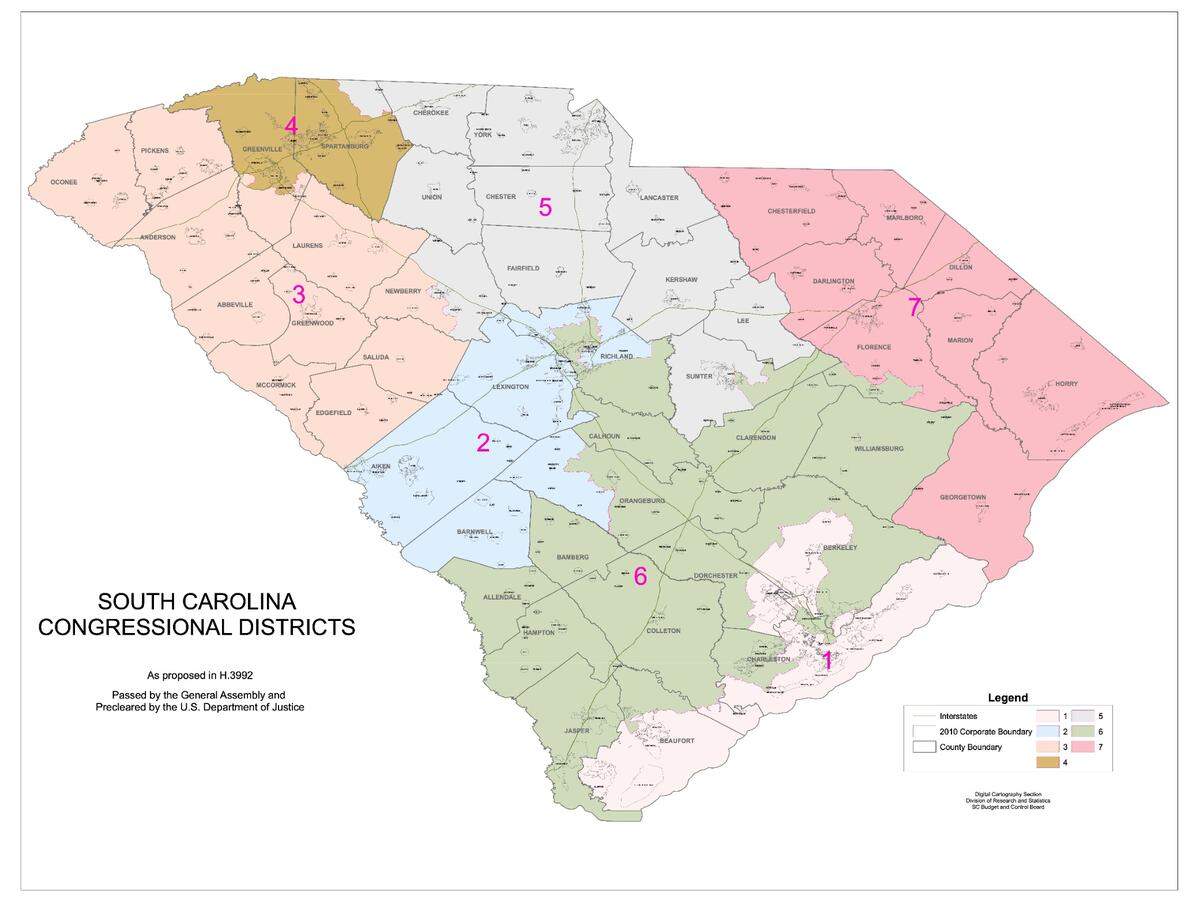
But it was not expected lose one seat either, keeping the state’s U.S. House districts at a solid seven, set after the 2010 Census when the 7th Congressional District in Horry County was added. That seat is now held by Republican U.S. Rep. Tom Rice of Myrtle Beach.
With the population bump, each representative’s district will have a population of just above 732,000 people — increasing by about 68,000 from population totals in 2010.
Those numbers matter because it helps determine political power in Washington, but it also determines how the federal government divvies out $1.5 trillion in federal program spending each year that includes education and health care programs such as Medicare and Medicaid.
The population growth — likely to show around the coast and the state’s shared border with North Carolina — gives observers a glimpse of how the maps could change when the state Legislature tackles redistricting.
Voters will want to pay particularly close watch on how the traditionally contentious redistricting fight will play out later this year, when the state House and Senate chambers get their hands on district-wide data that will be used to redraw congressional maps and House and Senate seats. That will help determine whether districts with decreasing population get absorbed by another and whether areas with growing population get another lawmaker.
The Census numbers released on Monday only included total population figures for the country and states. The Census Bureau is scheduled to release more statewide demographic breakdown data by May 4.
Monday’s release did not include district-by-district or county-by-county population breakdowns, or race, age and gender totals.
Those numbers also have far greater consequences.
“It impacts what type of resources are available to their local governments to the extent that flow is based on population,” said Bob Oldendick, a political science professor at the University of South Carolina. “A lot of times, people focus on what happens at the national level, but it’s the government that’s closest to you that has (more) impact on your lives.”
SC population mirrors South’s growth
Exceeding growth even in the West, the South grew by 10.2% since 2010, outpacing every other region, according to the Census Bureau.
The West only grew 9.2% over 2010, and the Midwest and Northeast, even lower by 3.1% and 4.1%, respectively.
South Carolina has continued to clip at about the same rate, a combination perhaps of weather, business climate, low taxes, proximity to the beach and to the mountains, among other factors, Census data shows.
In 1910, the state’s population hovered at about 1.5 million people, only surpassing 2 million people in the 1950 Census.
The most dramatic growth was between 1970 and 1980, when the population increased more than 20% to about 3.1 million people.
Those population numbers — specifically where the growth in the state is occurring — will matter later this year when the Republican-controlled Legislature begins redrawing district lines based on not only population size but by race, gender, housing, known as redistricting.
Lawmakers say they do not anticipate to get more data until about mid-August and more data will be released by September’s end.
Typically, that data is released sometime in March, but the Census suffered COVID-19 pandemic setbacks. For some states, that posed a problem because a number of state or county- and city-wide elections were scheduled this year.
With those setbacks, Census officials remained confident Monday that they did a thorough job to count everybody.
“The fun is yet to come,” Oldendick said.
The Associated Press contributed to this report.
This story was originally published April 26, 2021 at 4:00 PM with the headline "SC’s population has grown since 2010 – by a lot. What those numbers mean for you."