
COVID messed with Horry County’s garbage system. Now your taxes could go up.
Growth has been one of the overarching themes of Horry County in recent decades. New people have moved here in droves each year, new houses have sprung up in neat subdivisions and new businesses have opened their doors.
Now, that growth, combined with the COVID-19 pandemic, is causing a problem: There’s too much garbage.
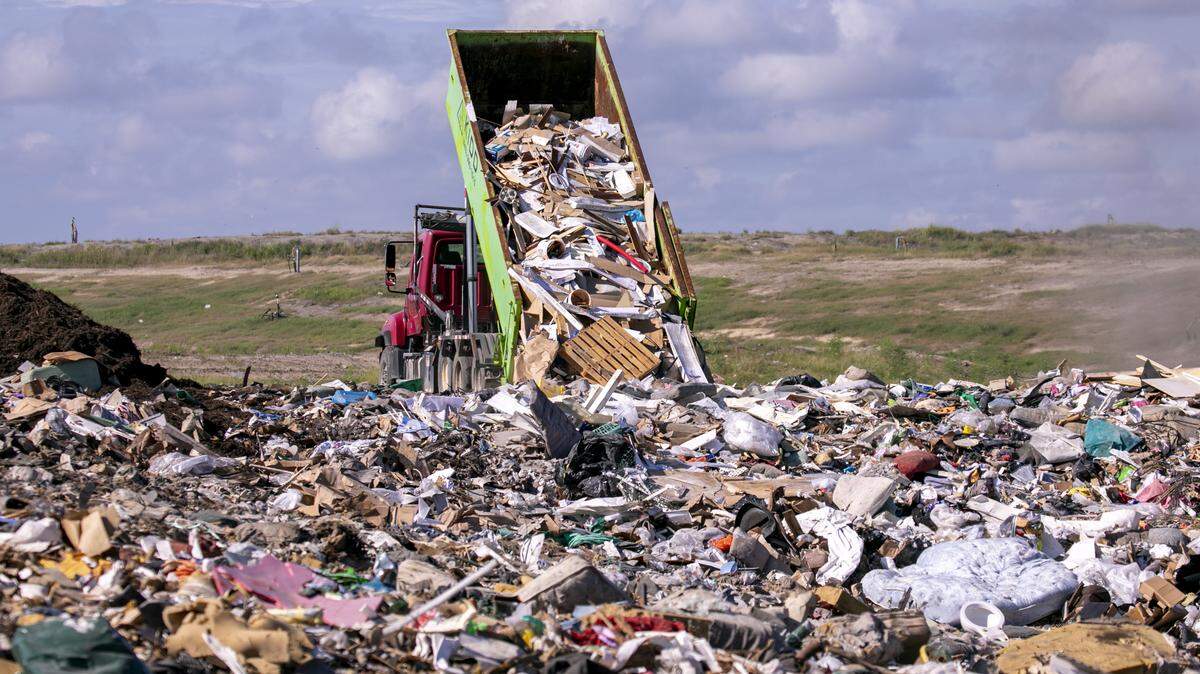
Garbage that once made its way to the county’s massive landfill along Highway 90 via businesses or city-owned dumpsters instead reached its final destination via garbage bins at residents’ homes and Solid Waste Authority-run collection centers. More time and meals at home meant more garbage at home, and, eventually, more garbage in the collection centers. More garbage in those collection centers meant more trips back and forth to the dump for the county-funded waste hauler, Unlimited Sanitation. And that, in turn, has meant bigger garbage bills for the county.
Increasing garbage costs is not a new problem, or a pandemic-only problem. But now, that problem could mean higher property taxes for some Horry County residents.
“It’s a can that (Horry County) Council has been kicking down the road for some time now,” said Horry County Council member Dennis DiSabato, whose district includes part of the unincorporated area of the county, which the garbage issue primarily affects. “It’s something our finance department notified us that this is a problem that we’ll see the future if we don’t do anything. Now we’re at a point where its in the red completely.”
The pandemic, however, exacerbated the problems. More time at home — plus more take-out from local restaurants — meant more trash in the county’s municipal system, rather than that trash flowing through a workplace or restaurant’s commercial system. The waste would have ended up in the same location, but via different dumpsters and different trucks that different entities would have paid for.
One solution proposed by county administrators is a property tax increase of two mills, an amount equal to a few extra dollars per property per year in the unincorporated areas of Horry County. If your home is valued at $200,000, for example, you’d end up paying $16 extra per year, or $61.60 total into the waste management fund.
That increase could raise an additional $2.5 million, Assistant County Administrator Barry Spivey said, money that could be spent on additional trips from collection centers to the landfill or on building additional collection centers.
“Council will give us their thinking on if we want to just bite the bullet and try to provide (the increase), or do we want to step into this,” Spivey said. “It could vary from that, I think (2 mills) is probably a minimum.”
However, that millage increase would only stabilize the fund, Horry County spokesperson Kelly Moore noted. Funding for additional projects or service would require additional funding, she said in an email. Some collection centers are consistently overfilled, Solid Waste Authority Executive Director Danny Knight said, and building a new collection center could be needed.
Some council members, like DiSabato, said they’re not committed to a tax increase at this point and want to hear what other options the county might have first. The issue is due to be discussed by County Council’s Infrastructure and Regulation Committee in coming weeks and months ahead of the council voting to pass a final budget before a June 30 deadline.
“I’m not ruling out increasing revenue to keep the recycling centers open, (but) I think we need to look at it a little further,” said Council member Cam Crawford, who represents the Socastee area.
A problem that’s been piling up
Even before the COVID-19 pandemic struck, the garbage was piling up at Horry County’s collection centers in the unincorporated areas of the county, where the problem primarily exists. Cities like Myrtle Beach and Conway have their own garbage trucks that collect residents’ waste at their homes. In the unincorporated areas, a household can pay for their own garbage pick-up from a private hauler, or they can haul it themselves to waste and recycling centers around the county, which Horry County then pays Unlimited Sanitation to haul to the Solid Waste Authority’s landfill.
In a budget presentation last week, Spivey noted that the amount of garbage in the county increased 13% between fiscal year 2018 and 2019, and increased another 7% between fiscal year 2019 and 2020. The county is continuing to estimate a 6.8% increase in trash for each year going forward.
“With the growth we have had, with new people coming in, it has pushed a lot more trash through the existing centers,” Spivey said. He explained that operating the collection centers spaced throughout the county is relatively inexpensive, but that hauling trash — more trash equals more trips — and maintaining equipment is driving costs up.
“That’s where the costs have really just spiked up and (have) just continued to escalate much quicker than our revenue is in that regard,” he said.
In addition to the growth, disastrous hurricanes in the recent past — notably Hurricanes Matthew and Florence — have also affected county monies for waste removal. When a major storm causes serious damage, the Solid Waste Authority will find space for piles of debris to be hauled until workers can break it down and process it through the system, according to Knight. But it still takes trip after trip to haul all of that material to the staging area, and Spivey said Hurricane Matthew forced the county to spend $6 to $7 million just on that debris removal. That’s a huge hit to a fund that has annual operating costs around $12 million currently and a savings account that’s ranged between $1 million and roughly $4.5 million in recent years.
According to county budget projections, it will cost between $12 and $17 million to operate waste management in the county between now and 2025, with revenues of only $12 to $14 million. And the waste management fund’s savings account — known as the fund balance — is projected to fall past $1 million after this fiscal year, well below the fund’s $4 million goal.
Up until now, the county has opted to cover shortfalls with other revenues, like part of the increased business license revenue it received last year. Those options could be running out, though.
“We knew this day was coming,” Spivey said. “We proactively tried to use other alternatives first and get as far as we could before this point had to come. “
The pandemic problem
With more trash flowing through the county’s system due to the pandemic, the strain was quickly felt.
“We saw a big impact with COVID that we did not anticipate because schools would have collected their trash for lunch, from the school room, and disposed of that commercially,” Spivey said. “Or the city would have disposed of something at a restaurant, now (people) got takeout and went back home in the rural area.”
Thankfully, funding from the federal CARES Act filled in funding gaps. But that money was a one-time injection of cash that the county couldn’t use past Nov. 10, Spivey said, meaning the county has since been managing the pandemic bump without the federal aid.
“We are probably today still experiencing that (bump) but we don’t have a means to get additional reimbursement for the additional cost,” Spivey said.
Other funds in need?
Spivey added that two other special revenue funds in the county — the storm water fund that helps combat flooding and the recreation fund that helps pay for county parks and recreation programs — could soon be in need of additional funding, too.
The storm water fund, he said, can maintain its current level of service for now. But as heavy rain and serious floods become more frequent, he said, “we feel like those are not sufficient for the needs of the community.”
The biggest problem, he said, would be another major hurricane. Those events require significant one-time spending for clean-up and repairs and additional money is needed to ensure the county has enough in that fund to cover those expenses.
It’s a similar situation with the recreation fund, Spivey said. The fund is in good shape for now, but residents or council members want additional infrastructure or programming, more money will be needed.
How a tax increase would work
Horry County Council will have the final say on whether or not the county raises property taxes to cover the increasing waste management costs, and council members have signaled they’ll study all available options before doing so. Crawford, for example, said if the increased strain on the system is more pandemic-based than growth-based, there could be other ways of covering costs until the coronavirus vaccine roll out is complete and the county is back to normal.
“I guess my questions are, is it because we’re taking in more trash? Has (our intake) just increased? Are we being as efficient as we need to be with the trucks going back and forth?” he said. “If it’s just because the intake is greater, okay. And show us measurable data.”
Spivey said at council’s budget retreat that a minimum increase of two mills to the waste management fund — bringing the total millage from 5.7 to 7.7 mills — is needed to stabilize the fund in coming years. If the council agrees to an increase this year, it will be implemented by July 1, meaning the tax bills that go out in August and October would include the increase.
But other options exist.
DiSabato, for example, floated the idea of refreshing discussions on a so-called impact fee — a fee developers would pay when they sell a home, condo, hotel room or other new construction in the unincorporated areas of Horry County — and using some of that money to cover the gaps in the waste management fund. Council members paused discussion on implementing an impact fee when the pandemic began worsening last April.
In addition to covering the cost of more back-and-forth trips to the landfill, Knight, of the Solid Waste Authority, said he hopes extra money could be available for an additional trash and recycling drop-off center, perhaps along Highway 90 or Highway 9.
A tax increase, Knight said, “will benefit everyone in the unincorporated areas” because there’s “no space” in the more “jammed up centers.”
“It’ll have a positive affect on us.”