Food banks to law firms, SC businesses get $5.7B in COVID-19 Paycheck Protection aid
For nearly 40 years, Harvest Hope Food Bank has been focused on feeding the hungry in South Carolina. But it’s never seen a disruption quite like COVID-19.
The food bank — which distributes 33 million pounds of food each year across the state — has reinvented the way it works since the pandemic started, swapping open arms for open trunks and transitioning from indoor distribution to drive-thru pickup. The South Carolina National Guard even sent personnel to help the Columbia-based nonprofit distribute food to a line of dozens of cars along Shop Road, as its usual group of volunteers, mostly seniors, stayed home to protect themselves from the virus.
“We’re tired. We haven’t stopped,” said Taylor Davids, a development and communications specialist for the food bank.
Facing financial hardship like many S.C. businesses, Harvest Hope received a federally backed loan of between $350,000 and $1 million and was able to keep 75 employees on the payroll despite the pandemic’s effects.
The food bank was one of more than 7,600 South Carolina-based entities to receive at least $150,000 in Paycheck Protection Program money through the Small Business Administration, which awarded South Carolina businesses $5.7 billion in forgivable loans.
The funds helped the nonprofit continue putting food on the table of families, said Mia Thomas, director of financial development and marketing at the food bank.
“Harvest Hope only used the funds for payroll expenses, enabling us to focus on sourcing and distributing food to our many neighbors in need.”
About the loans
Established with the passage of the federal CARES Act in March, the Paycheck Protection Program was designed to help businesses rebound as pandemic-induced restrictions are lifted. Businesses apply for federally-backed loans to keep employees on payroll or bring laid-off or furloughed employees back to work.
Places of businesses in South Carolina that received loans include law firms, charitable organizations, private schools, engineering firms, construction companies, restaurants and even a local sports franchise, among others.
Loans received through the PPP are forgivable, so long as employers use at least 60% of the loan on employee wages, according to the SBA website. Money from the program can also be used for rent payments, interest on mortgages and utility bills, among other things.
Companies with fewer than 500 employees who live in the United States, small businesses and tax-exempt nonprofits operating on Feb. 15 are eligible to receive the loans, according to an SBA ruling.
Around the state, nearly 3,100 corporations, 2,450 limited-liability corporations and 500 nonprofits were among the organizations approved for loans, according to SBA data.
For businesses based in Columbia alone, the SBA approved anywhere from $388 million to as much as $736 million in federally-backed loans, according to data from the SBA, which provides ranges, rather than exact amounts, for each loan.
More than 4,800 loans were approved through the program, preserving more than 57,500 jobs within Columbia-based businesses, according to data released by SBA.
The SBA released the loan data last week after weeks of pressure from lawmakers, government watchdog organizations and news outlets. However, the release caused some dismay about possible incorrect information in the massive information release.
Businesses in Columbia were approved for $53 million to $125 million in loans ranging from $150,000 to $350,000, and an additional $140 million from loans of less than $150,000 were also sent to Columbia businesses. The names of businesses that received less than $150,000 in loans were not released by the SBA.
SBA officials said it had no notices of issues with information in South Carolina. Gregg White, SBA district director for South Carolina, told The State in an email that his office had received no complaints from businesses in the state about inaccuracies in the data released by SBA.
However, small discrepancies in the data exist. For example, leaders from two nonprofits in Columbia told The State that the loan they received helped keep dozens of people on payroll, while the “jobs retained” listed by SBA for their business were “0” and blank respectively.
Among those with a discrepancy was the United Way of the Midlands, which received a loan between $350,000 and $1 million. Sara Fawcett, the nonprofit’s CEO, said it was able to keep 53 people on the payroll with the PPP money, dozens more than the “0” SBA listed.
There was also an error in the data released by SBA for the South Carolina Whitmore School, according to the online, public charter school’s executive director John Loveday. SBA left the “jobs retained” category on the school’s listing blank, but Loveday told The State the school received $381,000 which allowed it to retain all 38 of its employees.
Loveday said the money has been used only on payroll so far, and that it will continue to be helpful because “we have a lot of unknowns in front of us.”
Maria Aselage, a spokesperson for Cardinal Newman Catholic School, another school that received between $350,000 and $1 million, said the private school used the loan it received for similar things. Aselage did not report any errors in the data SBA released related to the school’s loan.
“The loan proceeds were used to cover payroll costs so that the school was able to retain all 123 of its teachers, coaches and staff members,” she said in a statement emailed to The State.
Who received financial help?
Some of the state’s elite professional businesses were among recipients of the loans.
For example, seventeen law firms in Columbia received at least $350,000 in loan funding. They include Nexsen Pruet, which received $7.9 million to retain jobs between eight offices in the Carolinas specializing in economic development, corporate law and construction law, among other areas.
“The PPP money will not cover our law firm’s reduction in revenue due to the economic downtown and its impact on the companies we serve, but the money is helping us bring back furloughed employees faster,” said Leighton Lord, Nexsen Pruet’s board chair. “This money is also allowing us to continue to serve our clients who are having to defer payments, or request reductions in legal fees, while they continue to restart operations.”
Nexsen Pruet applied for the $7.9 million, an amount that helped pay for 2.5 months of payroll, including health benefits and profit sharing, the law firm said. The firm only used PPP money to pay support staff and attorneys who are not partners in the firm.
The company, which has 376 employees, reported it retained 348 jobs with the loan.
Turner Padget Graham & Laney, another Columbia-based law firm, received a loan between $2 million and $5 million, according to SBA data.
The law firm, which did not disclose its loan amount, reported it retained 162 jobs, according to the SBA.
“This funding allowed us to retain our entire team of attorneys and staff without furloughs or layoffs,” said Pierce Campbell, CEO of Turner Padget Graham & Laney.
Campbell said the firm also worked with other businesses in the state to obtain PPP loans.
The SBA program also helped a local sports franchise meet staff payroll.
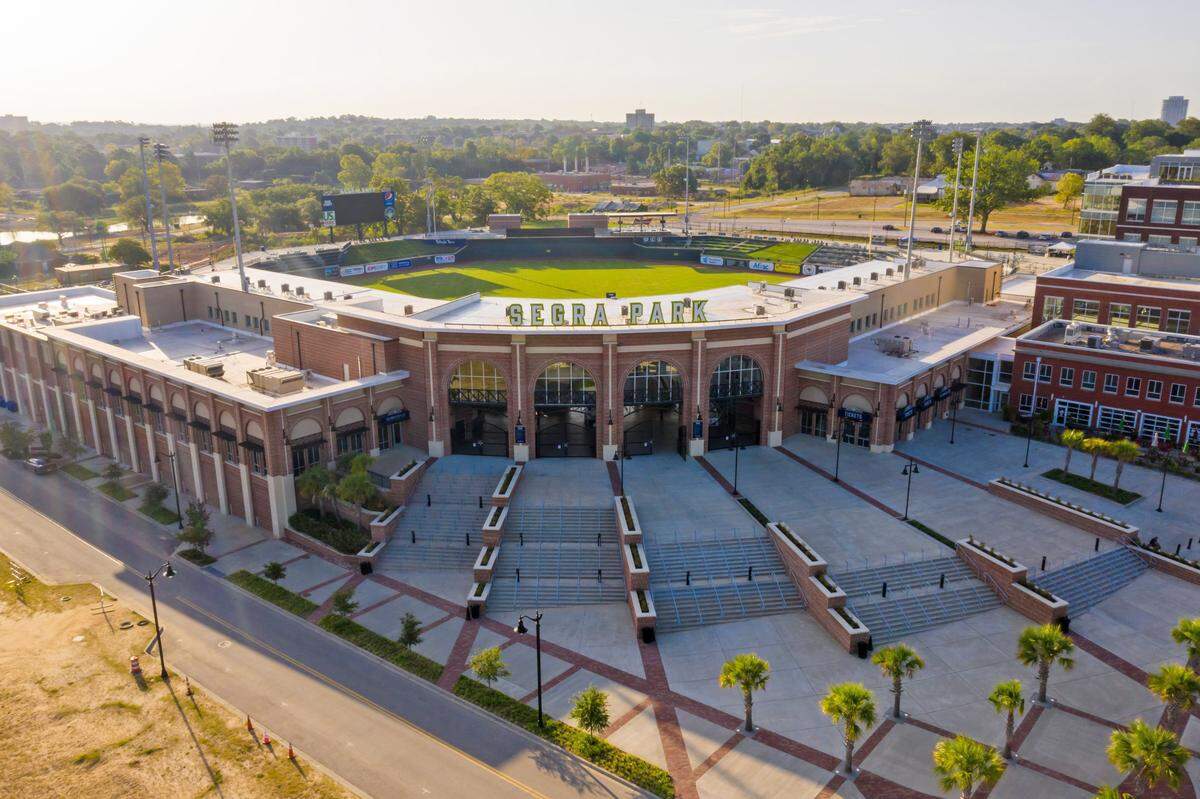
The federal agency approved a loan of between $350,000 to $1 million for the minor league Columbia Fireflies, which had its season canceled by Major League Baseball because of the pandemic.
To receive the loan, which covered 2.5 months of payroll, the club reported it had 41 employees on the payroll in January and February before the pandemic began, said Jason Freier, the managing owner of the team. He added that businesses also have to provide proof that the money is being used for eligible items to keep a business open, such as providing a copy of utility bills and canceled checks.
The team lost revenue because games and events cannot be held at the ballpark, even though money was spent during the off-season preparing for baseball games during the summer, Freier said.
“When that season got canceled, it meant we incurred most of the expenses but see none of the revenue. As you can imagine that is the worst possible position in which to be put,” Freier said in an email. “It is hard to think of another industry where the virus was so perfectly (badly) timed.”
Even a company that specializes in loaning money received financial assistance.
Lima One Capital, based in Greenville, which specializes in lending money to residential rental property owners, received a loan between $2 million and $5 million.
“We applied because our niche mortgage lending was materially disrupted because of the capital markets shut down,” said Robert Neely, the marketing director for Lima One.
Neely said 98% of the company’s loan business stopped during the second quarter of the year.
The company was able to retain its 169 full-time employees and provide two months of payroll and a portion of its office rent for three months using the PPP loan it received, Neely said.
“Without the assistance of PPP we would not have been able to retain our employees jobs and protect their families through the crisis and we may perhaps would have been forced to shutter portions of our operations because we had no material revenue in Q2 for lending operations,” Neely said.
This story was originally published July 17, 2020 at 5:00 AM with the headline "Food banks to law firms, SC businesses get $5.7B in COVID-19 Paycheck Protection aid."